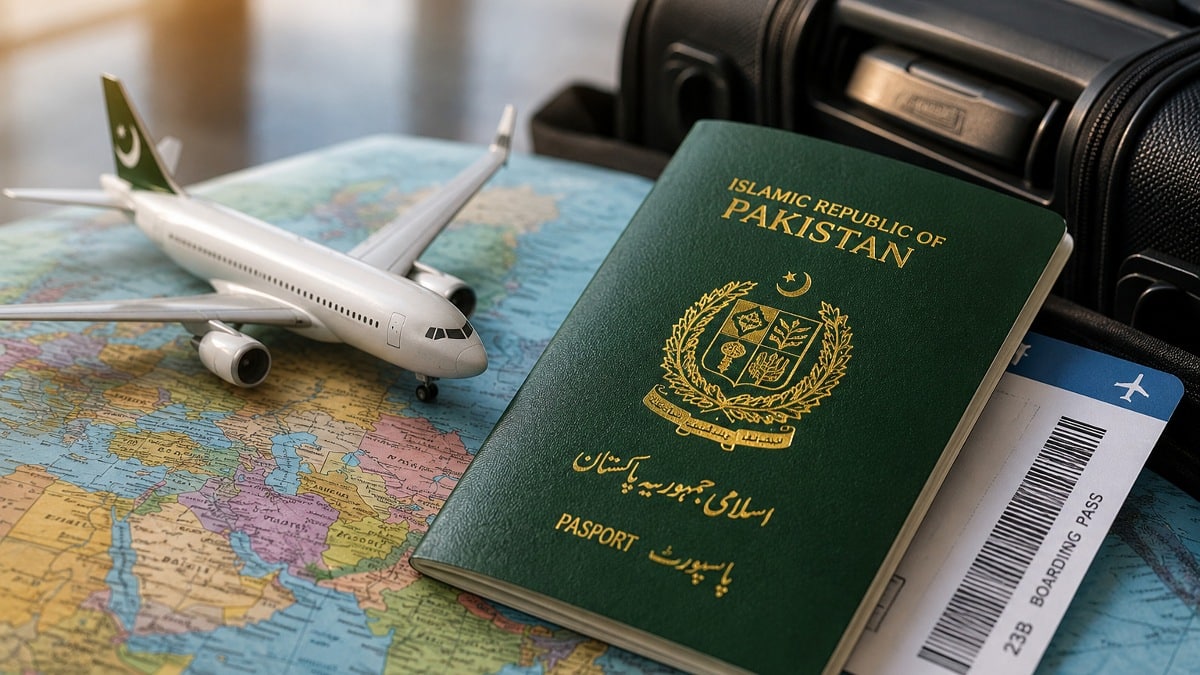
Global mobility serves as a primary metric for a nation’s structural standing within the international hierarchy. The latest data from the Henley Passport Index confirms that the Pakistani passport ranking has experienced a significant downward trajectory, plummeting from 79th in 2006 to 101st by July 2026. This 22-position decline reflects a divergence between global connectivity trends and national diplomatic outcomes.
Mapping the 20-Year Pakistani Passport Ranking Trajectory
The July 2026 edition of the index highlights a widening gap in global mobility. While the average global passport now grants visa-free access to 108 destinations—up from 58 in 2006—Pakistan’s access remains calibrated at a lower baseline. Consequently, our national mobility hasn’t kept pace with the accelerating international standard.
| Year | Global Ranking | Change or Status |
|---|---|---|
| 2006 | 79th | Initial Baseline |
| 2011 | 99th | Initial 20-place drop |
| 2015 | 107th | Sustained decline |
| 2021 | 113th | Historical nadir |
| 2024 | 101st | Recovery of 12 places |
| 2025 | 103rd | Minor 2-place drop |
| 2026 | 101st | Current Standing |
The Translation: Decoding Global Mobility Logic
A Pakistani passport ranking of 101st indicates that the nation’s diplomatic leverage has not evolved alongside global shifts. While countries frequently negotiate visa-free waivers, Pakistan has remained tethered to 29 accessible destinations. This includes 11 visa-free locations, 15 visa-on-arrival spots, and 3 Electronic Travel Authorizations (eTA). The index effectively measures the international community’s trust in a nation’s internal security and economic stability.

The Socio-Economic Impact: Obstacles to Human Capital
The stagnation of the Pakistani passport ranking creates structural friction for Pakistani citizens. For students, this translates to increased administrative hurdles when applying for international research opportunities. For professionals, it limits the ability to participate in global conferences or pursue swift business expansion. Ultimately, the restricted mobility acts as a precision barrier to the seamless exchange of ideas and capital across borders.

The Forward Path: A Stabilization Challenge
From a STEM-driven perspective, the current Pakistani passport ranking represents a Stabilization Move rather than a momentum shift. Although the rank improved from the 2021 low of 113th, the 2026 performance remains volatile. In early 2026, the rank peaked at 97th before receding to 101st by mid-year. To catalyze a genuine upward trajectory, Pakistan must synchronize its security protocols with international digital standards and aggressively pursue bilateral visa waivers.