
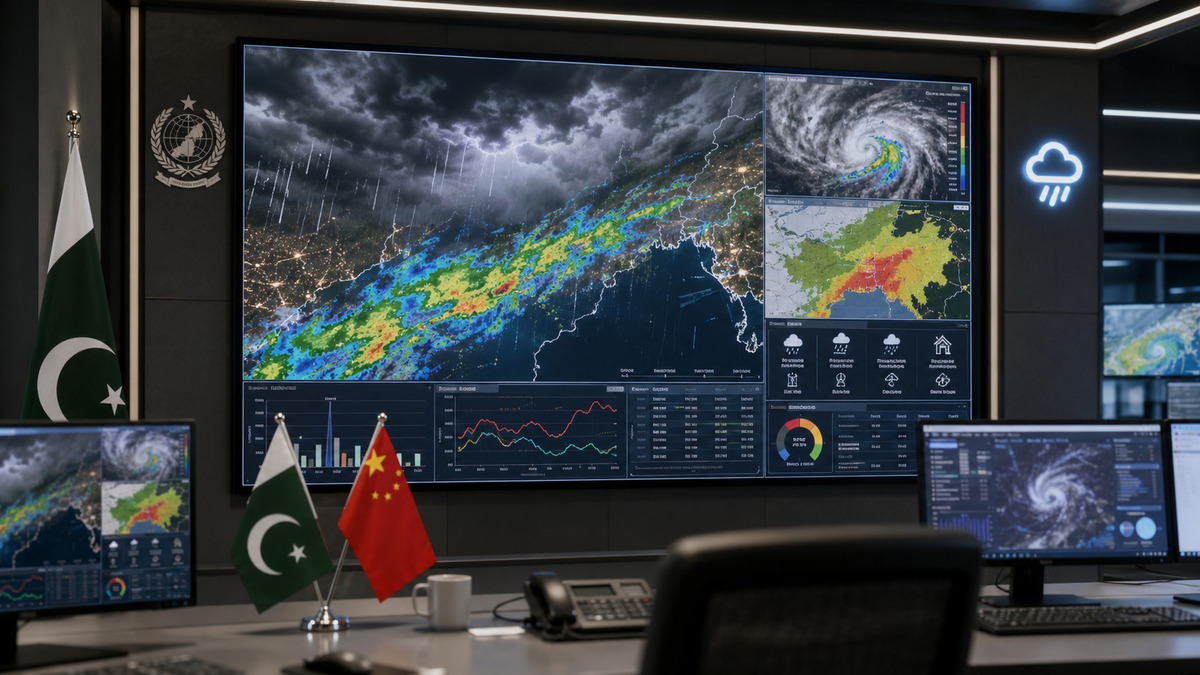
A Calibrated Defense: Pakistan’s New AI Weather System
Pakistan is strategically integrating China’s MAZU-Urban AI weather system to bolster its national defense against the unpredictable monsoon season. This multi-hazard early warning platform represents a structural shift in how the state manages climate-related risks, moving from reactive reporting to precision forecasting. By leveraging artificial intelligence, the country aims to reduce the devastating impact of seasonal floods and agricultural disruptions through high-density data analysis.
The Translation: Deciphering the MAZU-Urban Framework
MAZU-Urban is not merely a forecasting tool; it is a sophisticated AI-powered engine designed for rapid disaster mitigation. Consequently, it converts massive climate datasets into real-time emergency plans for floods, typhoons, and droughts. Because the system utilizes an open-source architecture, the Pakistan Meteorological Department (PMD) can customize the model to the unique topography and climate variables of our region. This flexibility ensures that the baseline data is perfectly calibrated to local needs.
Strategic Deployment of the AI Weather System
According to Frukh Bashir, head of research and development at the PMD, this AI weather system serves as a catalyst for developing more effective forecasting products. The system provides authorities with the foresight required to predict extreme events before they escalate into crises. Furthermore, China’s commitment to open-source access means that Pakistan can adapt these intelligent products without the prohibitive costs often associated with proprietary technology.
- Real-Time Monitoring: Continuous assessment of hazard scenarios.
- AI-Generated Response: Automated emergency protocols for disaster management.
- Localized Adaptation: Ability to adjust parameters for specific provincial risks.
The Socio-Economic Impact: Safeguarding the Citizenry
Precision in weather forecasting directly correlates with the structural stability of the nation. For a Pakistani farmer, this AI weather system provides a critical baseline for protecting crops against flash floods and irrigation failures. For urban households, it means receiving early evacuation warnings that save lives and preserve family assets. Economically, reducing disaster impact by even a small percentage preserves billions in infrastructure and agricultural output, ensuring that the national budget is spent on progress rather than repair.
The Forward Path: A Momentum Shift in Climate Defense
This development represents a significant Momentum Shift for Pakistan’s technological landscape. By adopting open-source AI infrastructure, Pakistan is not just receiving international aid; we are building a foundation for digital sovereignty in climate science. This move signals a transition toward a more resilient, data-driven governance model. The next logical step is to scale this technical capacity across all provincial departments to ensure systemic efficiency remains the national standard.








