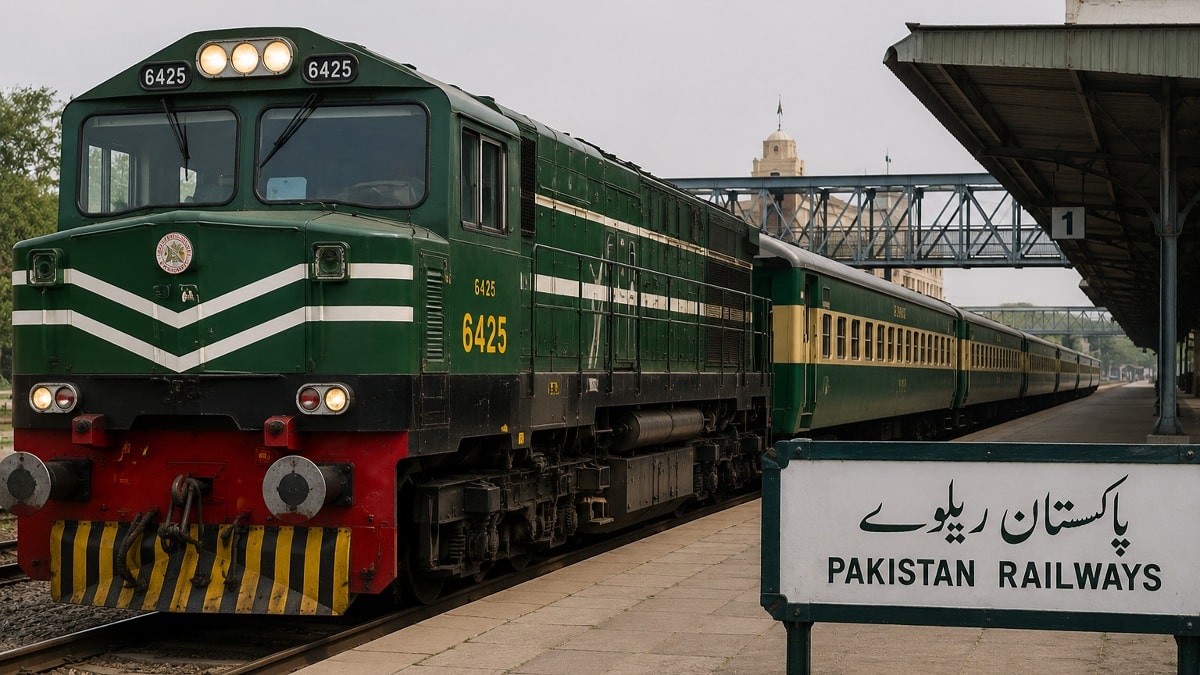
The recent Pakistan Railways outsourcing initiative marks a calibrated shift toward fiscal sustainability and operational precision. By handing over the commercial operations of five passenger trains to the private sector, the department has secured agreements worth Rs. 10.75 billion. This strategic realignment aims to transform a historically underperforming asset into a catalyst for national revenue growth while simultaneously upgrading the commuter experience.
Analyzing the Logic Behind Pakistan Railways Outsourcing
Before this transition, these specific train routes generated revenue levels significantly below their structural baseline. Consequently, the state faced a widening gap between operational costs and actual earnings. By adopting the Public-Private Partnership (PPP) model, Pakistan Railways transfers the commercial risk and management responsibilities to private entities. This transition includes major routes such as the Awam Express, Millat Express, and Karakoram Express, alongside local services like the Mianwali and Narowal Passenger trains.
The Translation: Modernizing Governance
In “Next Gen” terms, this move represents the de-monopolization of service delivery. Instead of the state attempting to manage every micro-detail of onboard hospitality and ticket sales, it now acts as a regulator. Private operators, driven by market competition, must optimize service quality to maintain profitability. Essentially, the government provides the infrastructure—the tracks and locomotives—while the private sector provides the “customer-first” management layer.
The Socio-Economic Impact: Precision for the Citizen
- For Professionals: Improved operational reliability means fewer lost hours and predictable travel schedules between major economic hubs.
- For Households: Private management typically results in higher hygiene standards and upgraded onboard facilities, making long-distance travel safer and more comfortable for families.
- For the Taxpayer: The Rs. 10.75 billion influx reduces the burden on the national exchequer, allowing for potential reinvestment into critical rail infrastructure and safety technology.
The Forward Path: A Momentum Shift
We categorize this development as a Momentum Shift. While a “stabilization move” would merely maintain the status quo, this outsourcing strategy actively disrupts the cycle of state-run inefficiency. For Pakistan to achieve a modern transportation grid, it must leverage the agility of the private sector. This agreement serves as a blueprint for future infrastructure projects where the state provides the foundation and the private sector builds the value. The success of this phase will likely dictate the speed at which the remaining 15 trains are transitioned to this optimized model.