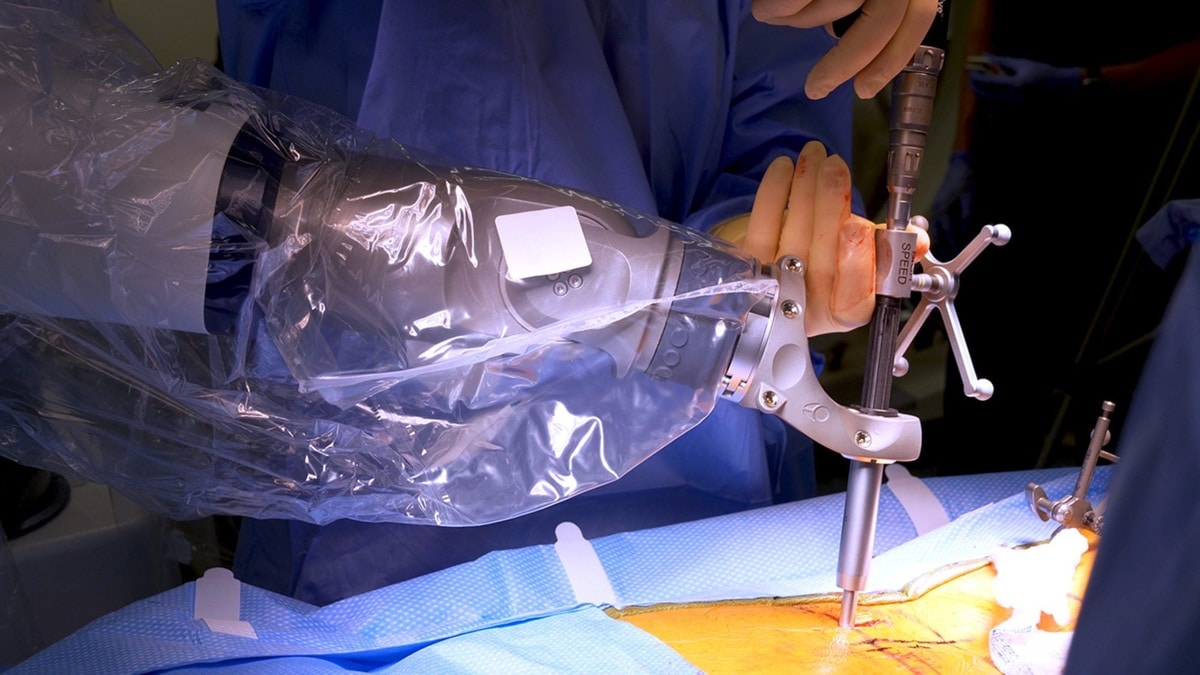
Pakistan has achieved a historic breakthrough as the Gambat Institute of Medical Sciences (GIMS) successfully performed the nation’s first-ever semi-active robotic spine surgery. This landmark procedure marks a critical calibration of the country’s healthcare infrastructure and surgical precision. Consequently, the integration of robotics into surgical workflows positions Pakistan as an emerging hub for medical innovation within the public sector.
The Translation: Precision Through Robotics
Traditional spine surgery requires extensive manual maneuvering, which naturally increases the risk of human error. In contrast, semi-active robotic technology acts as a calibrated catalyst for precision. The robot provides a stabilized platform, allowing surgeons like Dr. Pir Asad Aziz to execute complex movements with sub-millimeter accuracy. Furthermore, this system minimizes tissue trauma during the procedure. As a result, patients experience significantly reduced blood loss and accelerated recovery times compared to conventional methods.

The Socio-Economic Impact: Democratizing Specialized Care
Localized Advanced Treatment
This technological advancement directly improves the baseline of specialized care for Pakistani citizens. Previously, households often had to seek such advanced robotic spine surgery treatments abroad, incurring massive financial strain. By localizing these services, GIMS ensures that high-tier medical interventions are accessible to both urban and rural populations. Therefore, this development helps democratize healthcare, providing international-standard precision to the average citizen without the burden of international travel costs.
The Forward Path: A Momentum Shift in Healthcare
This achievement represents a clear Momentum Shift in Pakistan’s medical trajectory. While many facilities focus on maintenance, GIMS has opted for a structural upgrade of its surgical capabilities through strategic investment from the Sindh government. Moving forward, the expansion of this robotic program will serve as a catalyst for future medical research and technological adoption. We view this as a vital step toward achieving long-term system efficiency in the national health sector.
- Strategic Precision: Enhanced accuracy in high-risk neurospine procedures.
- System Efficiency: Faster recovery leads to higher patient turnover and reduced hospital stay costs.
- Technological Sovereignty: Reducing the national reliance on foreign medical facilities.