

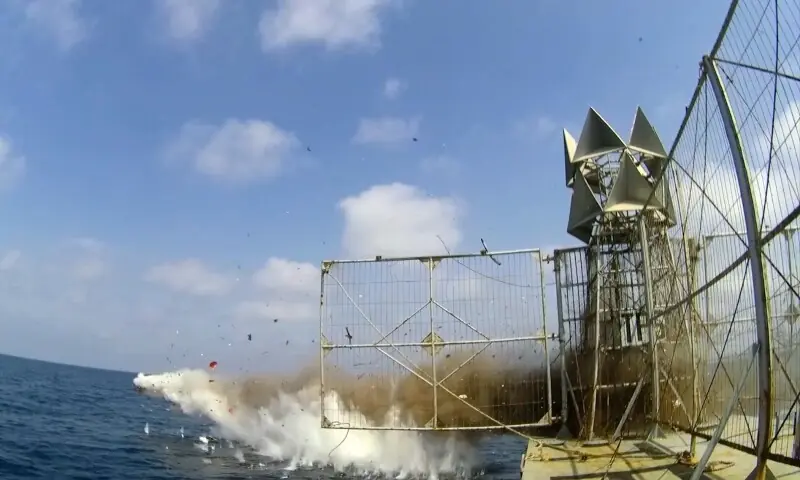
The Pakistan Navy successfully calibrated its maritime defense strategy by conducting a live weapon firing of the indigenously developed Taimoor Cruise Missile. This strategic deployment marks a baseline shift in the nation’s ability to execute precision strikes against sea-based threats at extended ranges. Consequently, the test validates Pakistan’s operational readiness and multi-dimensional coordinated strike posture within the conventional domain.
The Translation: Structural Logic of the Taimoor Cruise Missile
The successful launch of the Taimoor Cruise Missile represents a precision-engineered leap in indigenous military technology. By developing an Air-Launched Cruise Missile (ALCM) locally, the Pakistan Navy has reduced reliance on foreign supply chains. Furthermore, this system allows for a “stand-off” capability, which means naval aircraft can engage enemy targets from distances that keep our personnel out of immediate danger. The integration of such advanced weapon systems creates a catalyst for enhanced regional stability through credible deterrence.
The Socio-Economic Impact: Protecting the Blue Economy
Precision in maritime defense directly correlates to economic security. Pakistan’s Exclusive Economic Zone (EEZ) serves as a vital lifeline for international trade and local fishing communities. A robust naval posture ensures that these trade routes remain open and secure from external disruptions. Consequently, the technological success of the Taimoor Cruise Missile fosters an environment conducive to blue economy growth. For the average citizen, this translates to more stable supply chains and protected maritime resources, which are essential for long-term national prosperity.
The Forward Path: A Momentum Shift in Indigenous Tech
This development represents a clear Momentum Shift for Pakistan’s defense industry. Transitioning from asset acquisition to the indigenous production of high-tech tools like the Taimoor Cruise Missile demonstrates strategic maturity. While maintenance of existing systems is necessary, this move toward self-reliance acts as a powerful catalyst for future STEM innovation. Our defense architecture must continue this trajectory to ensure sustained systemic efficiency across all armed branches.
- Precision: Validated strike capabilities at extended ranges.
- Sovereignty: Strengthening maritime interests and territorial waters.
- Innovation: Indigenous development by Pakistani scientists and engineers.








