
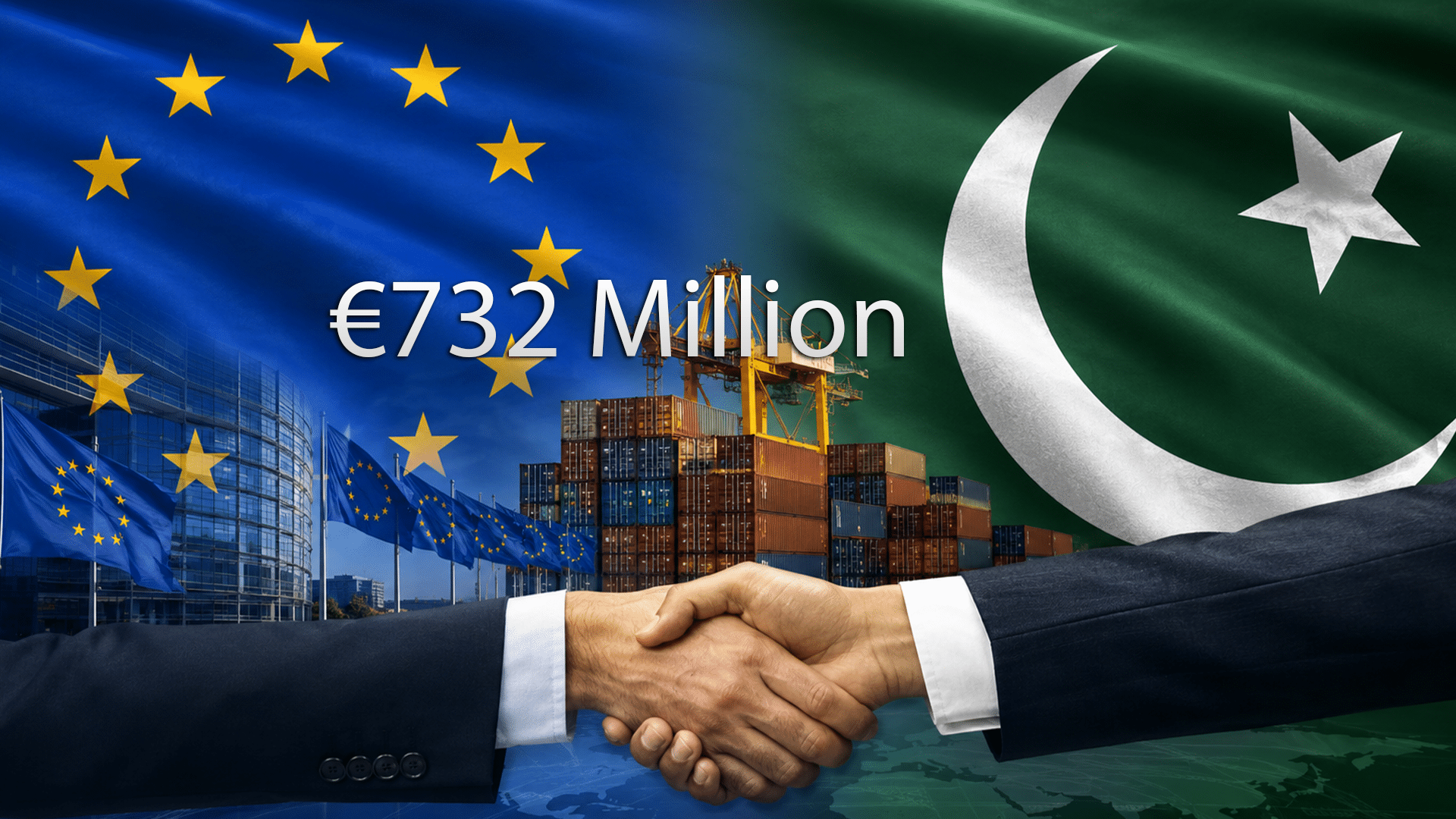
National economic resilience depends on the precise calibration of international trade agreements with domestic policy benchmarks. Currently, Pakistan continues to maintain its critical EU trade benefits through the GSP+ scheme. However, the European Union recently warned that uneven progress in governance and human rights commitments could jeopardize this preferential status. The latest monitoring report indicates that while legislative frameworks have improved, ground-level implementation remains a significant hurdle for sustained economic preference.
Analyzing the Current Status of EU Trade Benefits
Pakistan remains the largest beneficiary of the EU’s Generalized Scheme of Preferences (GSP+) since 2014. In 2024 alone, the country exported goods worth EUR 7.5 billion to the European market. Consequently, Pakistani exporters saved approximately EUR 732 million through tariff exemptions. Since receiving this status, total exports to the EU have surged by over 91%, with the textile and clothing sector accounting for 75% of these shipments.
Despite these economic gains, the EU’s fifth monitoring report highlights a period of limited positive change. While the state utilized 95% of available trade preferences, the European Commission noted regression in several key areas between 2023 and 2025. This creates a structural vulnerability as the revised GSP framework prepares to take effect in 2027.
Legislative Progress vs. Ground Realities
The report acknowledges specific administrative milestones achieved by the Pakistani government. These include:
- Establishment of the National Commission for Minorities.
- Implementation of Anti-Torture Act rules.
- Introduction of domestic violence legislation specifically for the Islamabad Capital Territory.
- Expansion of labor inspections and updated provincial action plans to combat child labor.
Furthermore, the EU highlighted the nation’s first marital rape conviction and the ratification of the ILO Protocol on Forced Labour. However, the report stresses that these improvements are primarily legislative. To retain EU trade benefits, these laws must translate into tangible protections for citizens. Concerns persist regarding enforced disappearances, restrictions on freedom of expression, and declining judicial independence.
The Situation Room Analysis
The Translation (Clear Context)
In “Next Gen” terms, the GSP+ status is not a gift; it is a performance-based contract. The EU grants Pakistan “Zero-Tariff Access” to its markets in exchange for the rigorous enforcement of 27 international conventions. When the EU cites “uneven progress,” they are signaling that the economic “discount” we receive is no longer aligned with our governance “output.”
The Socio-Economic Impact
The European Union is Pakistan’s largest export destination, absorbing 28% of our total exports. A loss of these EU trade benefits would immediately increase costs for textile manufacturers by roughly 10-12%. For the average Pakistani, this means potential job losses in the industrial heartlands of Punjab and Sindh, a wider trade deficit, and increased pressure on the PKR exchange rate.
The Forward Path (Opinion)
This development represents a Stabilization Move that is dangerously close to a regression. Pakistan has successfully built the “Legal Infrastructure” (the laws), but lacks the “Operational Execution” (the enforcement). To convert this into a Momentum Shift, the state must treat human rights compliance not as a foreign demand, but as a catalyst for internal systemic efficiency. Professionalizing the labor force and securing judicial independence are the only ways to safeguard our €732 million strategic advantage.








