

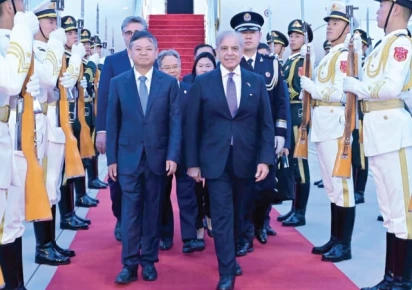
The architecture of Pakistan’s economic framework is undergoing a precision recalibration. During a high-stakes B2B conference in Hangzhou, Pakistani and Chinese firms finalized over $7 billion in Pakistan-China investment deals. This structural shift targets information technology, agriculture, and battery energy storage systems to catalyze long-term economic stability. Prime Minister Shehbaz Sharif emphasized a move away from the traditional loan-based model, inviting Chinese industries to relocate manufacturing units to Pakistan to leverage local labor and strategic geography.
Strategic Scaling: The Logic of Pakistan-China investment deals

Consequently, the government is prioritizing high-value sectors to bridge the trade deficit. Key developments include:
- Fertilizer Production: Haolu Engineering and Fauji Fertilizer signed a $1.12 billion agreement to boost domestic agricultural inputs.
- Agrochemical Hubs: IBI Beijing and RIC inked a $100 million MoU for machinery and a new regional office in Multan.
- Industrial Relocation: The Prime Minister invited Chinese firms to move labor-intensive industries to Pakistan, creating a “win-win” model for export to third countries.
Furthermore, officials revealed that over 200 MoUs, potentially worth $20 billion, have emerged from five consecutive B2B sessions. These agreements signify a baseline for a broader industrial transformation.
Expanding the Digital Frontier: The Alibaba Synergy

In addition to industrial manufacturing, the digital ecosystem received a massive catalyst. Prime Minister Shehbaz met with Alibaba Group Chairman Joe Tsai to solidify cooperation in cloud computing, artificial intelligence, and financial technology. This partnership aims to provide Pakistani businesses with global market access while digitizing healthcare through smart hospitals and telemedicine systems.
Specifically, the establishment of a new 6,000-acre Special Economic Zone (SEZ) in Karachi will serve as a dedicated hub for these joint ventures. This zone provides the physical infrastructure required to support high-tech industrial relocation at scale.
The Situation Room Analysis
The Translation (Clear Context)
This development marks a calibrated transition from “State-to-State” (G2G) aid to “Business-to-Business” (B2B) equity. Instead of accumulating debt, Pakistan is offering land and labor in exchange for Chinese technology and market access. By relocating Chinese manufacturing to Pakistani soil, the country becomes a strategic production node for global exports, bypassing rising labor costs in mainland China.
The Socio-Economic Impact
For the average Pakistani citizen, this shift converts into baseline economic security. Industrial relocation directly creates high-skilled jobs for engineering and IT graduates. In the agricultural sector, the use of advanced Chinese seeds and mechanization will increase crop yields. Consequently, this could stabilize food prices and increase the household income of rural farmers by targeting China’s $100 billion agricultural import market.
The “Forward Path” (Opinion)
This is a definitive Momentum Shift. While previous years focused on infrastructure (roads and power), the current focus on B2B manufacturing and IT integration addresses the root cause of economic volatility: the lack of exports. Success now depends on the precision of SEZ implementation and maintaining a stable policy environment to ensure these $7 billion in deals translate into operational factories.








