

The Punjab government has confirmed the completion date for the strategic Ichhra Bazaar revitalization project, targeting May 25 for a full operational launch. This Rs800 million initiative, currently 92% complete, represents a precision-engineered overhaul of one of Lahore’s most historic commercial hubs. By integrating modern infrastructure with cultural heritage, the project aims to stabilize local trade and catalyze economic growth before the festive season. Consequently, the Lahore Development Authority (LDA) is working at an accelerated pace to finalize the structural benchmarks within the next 12 days.
Calibrating Lahore’s Urban Infrastructure and Ichhra Bazaar Revitalization
The LDA has executed this 2,650-foot revitalization with strategic precision. The project scope includes uniform shop facades, weather-resistant coatings, and modernized vertical louvres across nearly 350 establishments. Furthermore, authorities have installed patterned cobblestones and tactile tiles to create a pedestrian-friendly environment specifically designed for high-volume foot traffic. Moreover, the addition of a culturally inspired grand entrance serves as a visual anchor, blending Lahore’s historical identity with modern system efficiency.
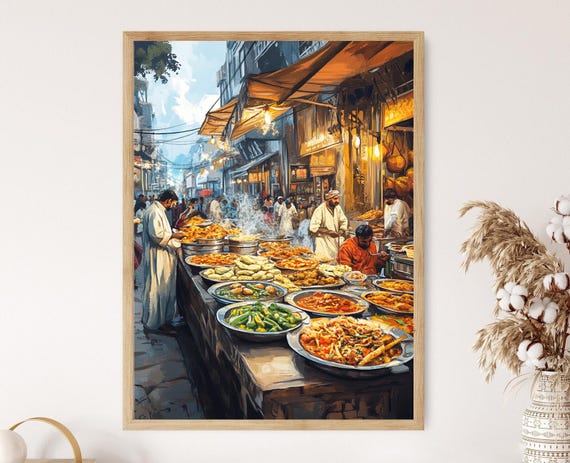
Beyond aesthetics, the project addresses long-standing civic bottlenecks. The renovation includes upgraded drainage systems, renovated public washrooms, and the strategic placement of concrete boulders to manage vehicular flow. By implementing these structural upgrades, the Metropolitan Corporation Lahore (MCL) aims to eliminate the congestion that has historically plagued the Zaildar Road and Ferozepur Road intersections. Therefore, the modernization effort serves as a baseline for future urban renewal projects across the province.
The Situation Room: Strategic Analysis
The Translation
While “revitalization” often implies cosmetic changes, this project serves as a structural overhaul for urban efficiency. It converts a chaotic, high-density market into a calibrated retail ecosystem. By standardizing signage and signboards, the LDA is effectively professionalizing the informal economy, creating a systematic flow that benefits both vendors and consumers through better spatial management.
The Socio-Economic Impact
For the average citizen, this development translates to reduced transit friction and enhanced safety. Specifically, the inclusion of wheelchair ramps and tactile pathways for the visually impaired sets a new standard for inclusive urban design in Pakistan. Residents will experience a more efficient shopping environment, while local business owners can expect a momentum shift in customer retention due to improved accessibility and modernized facilities.
The Forward Path
We categorize this development as a Momentum Shift. This is not merely a stabilization move; it is a blueprint for how historical districts can be modernized without losing their cultural soul. This precision-focused model should serve as the catalyst for future renewals across other congested urban corridors in Pakistan to drive national commercial progress.








