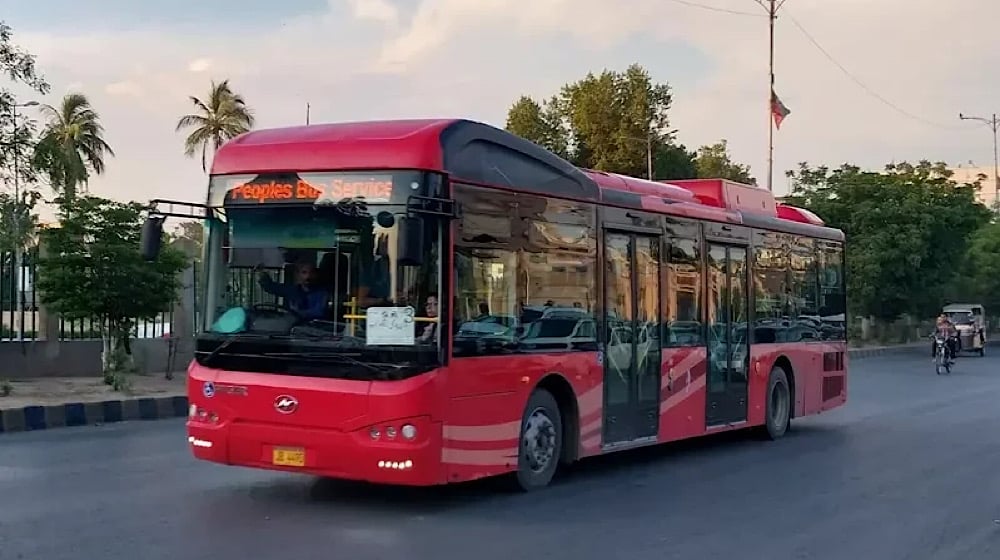
The Sindh government’s strategic expansion of the Peoples Bus Service represents a calibrated effort to enhance urban mobility within the province’s secondary economic hubs. Minister Sharjeel Inam Memon confirmed that the new route connecting Latifabad to Hyder Chowk will launch following Eid ul Adha 2026. This development acts as a catalyst for local connectivity, integrating key residential sectors with the central business district of Hyderabad.
Modernizing the Peoples Bus Service Baseline
During a recent Sindh Assembly session, Minister Memon outlined a vision for a modernized provincial transit network. While a shortage of vehicles has temporarily capped expansion in Karachi, the government has approved a public-private partnership to procure 500 new electric buses. Consequently, these assets will serve as the structural foundation for future routes across Sindh once the units are delivered and deployed.
Strict operational discipline remains a core priority for the department. Minister Memon directed that the Peoples Bus Service must only utilize designated stops to maintain system efficiency and prevent vehicle damage. Currently, unauthorized boarding attempts often lead to disputes, which the ministry aims to eliminate through tighter enforcement of transit protocols.
The Translation
This announcement clarifies the government’s shift from traditional transit models to a data-driven, sustainable network. By prioritizing the Latifabad-Hyder Chowk corridor, the state is addressing high-density demand zones with precision. The transition to a 500-unit electric fleet signifies a move toward lower operational costs and a reduced carbon footprint, aligning provincial infrastructure with global STEM standards for urban planning.
The Socio-Economic Impact
For the citizens of Hyderabad, this route provides a reliable baseline for daily commutes, directly benefiting students, professionals, and low-income households. Efficient public transport reduces individual spending on fuel and decreases traffic congestion on arterial roads. Furthermore, the emphasis on designated stops fosters a culture of civic discipline, ensuring that public assets remain functional and safe for long-term use.
The Forward Path
We classify this development as a Momentum Shift. The integration of a massive electric bus fleet through public-private partnerships is a forward-thinking move that transcends mere maintenance. If the 500-unit rollout is executed with precision, it will serve as a national model for sustainable urban transformation in Pakistan.