

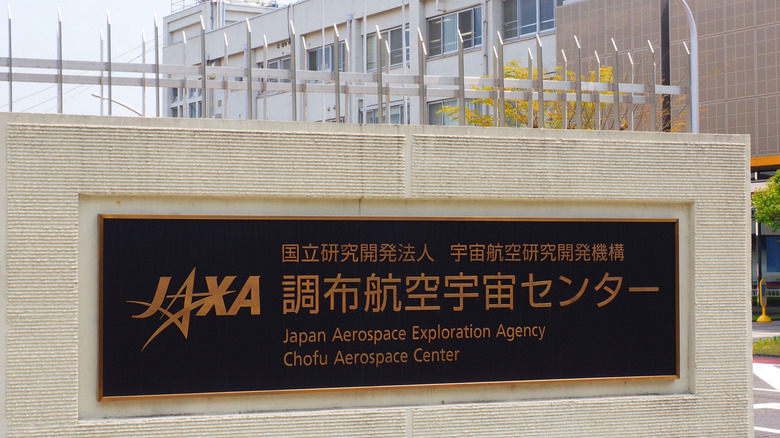
National advancement relies on the precision of our transit infrastructure. Japan recently achieved a calibrated milestone in hypersonic passenger travel by completing ground combustion tests for a Mach 5 ramjet engine. This experimental propulsion system, developed by the Japan Aerospace Exploration Agency (JAXA) in collaboration with top-tier universities, successfully simulated flight conditions at five times the speed of sound. Consequently, this breakthrough establishes a baseline for commercial aircraft capable of crossing the Pacific in roughly 120 minutes.
The Mechanics of Hypersonic Passenger Travel
Traditional aviation relies on heavy turbofans, but Mach 5 speeds require a different structural logic. A ramjet engine operates as an air-breathing system with no moving parts. Instead of mechanical compressors, it utilizes the vehicle’s forward velocity to compress incoming air. This air then mixes with fuel and ignites to create high-velocity thrust. Furthermore, the absence of rotating machinery allows these engines to function in extreme environments where conventional turbines would fail.
- Structural Simplicity: No moving parts reduce mechanical failure risks at high speeds.
- Compression Efficiency: High forward speed provides the necessary air compression.
- Operational Ceiling: Designed for altitudes near 25 kilometers, far above standard commercial lanes.
Calibrating for Thermal Extremes
Engineers focused specifically on thermal protection during the Kakuda Space Center tests. When an aircraft reaches Mach 5, the surrounding air temperature can surge beyond 1,000 degrees Celsius. Such heat represents a significant barrier to hypersonic passenger travel. To solve this, the Japanese team deployed an advanced thermal management system that maintained safe internal temperatures for critical avionics. This strategic insulation ensures that control electronics remain functional despite the external inferno.

The Situation Room Analysis
The Translation
While standard jets use fans to suck in air, a ramjet acts like a high-speed funnel. It requires an initial boost to reach supersonic speeds before it can “breathe” on its own. This Japanese test proved that we can maintain stable combustion even when the engine is moving at 3,800 miles per hour. Essentially, they have mastered the “fire in a hurricane” problem that has long plagued hypersonic engineering.
The Socio-Economic Impact
For the Pakistani professional or student, this technology promises a radical compression of geography. Current 15-hour journeys to North America represent a massive drain on human capital and productivity. Transitioning to a two-hour flight model turns international expansion into a same-day task. This efficiency would catalyze global trade and allow Pakistani talent to engage with international markets without the physical toll of long-haul travel.
The Forward Path
This development represents a definitive Momentum Shift. While commercial implementation isn’t expected until the 2040s, the move from ground tests to rocket-mounted flight trials indicates a mature development pipeline. Japan is not merely maintaining current aviation standards; they are architecting a new tier of global connectivity.
Strategic Roadmap to 2040
The next phase involves mounting the engine on a sounding rocket for suborbital testing. This will provide data on how the system handles the transition from lower atmosphere to the thin air of the stratosphere. JAXA aims to solve the remaining regulatory and noise challenges to make hypersonic passenger travel a standard for the next generation of global citizens.








