
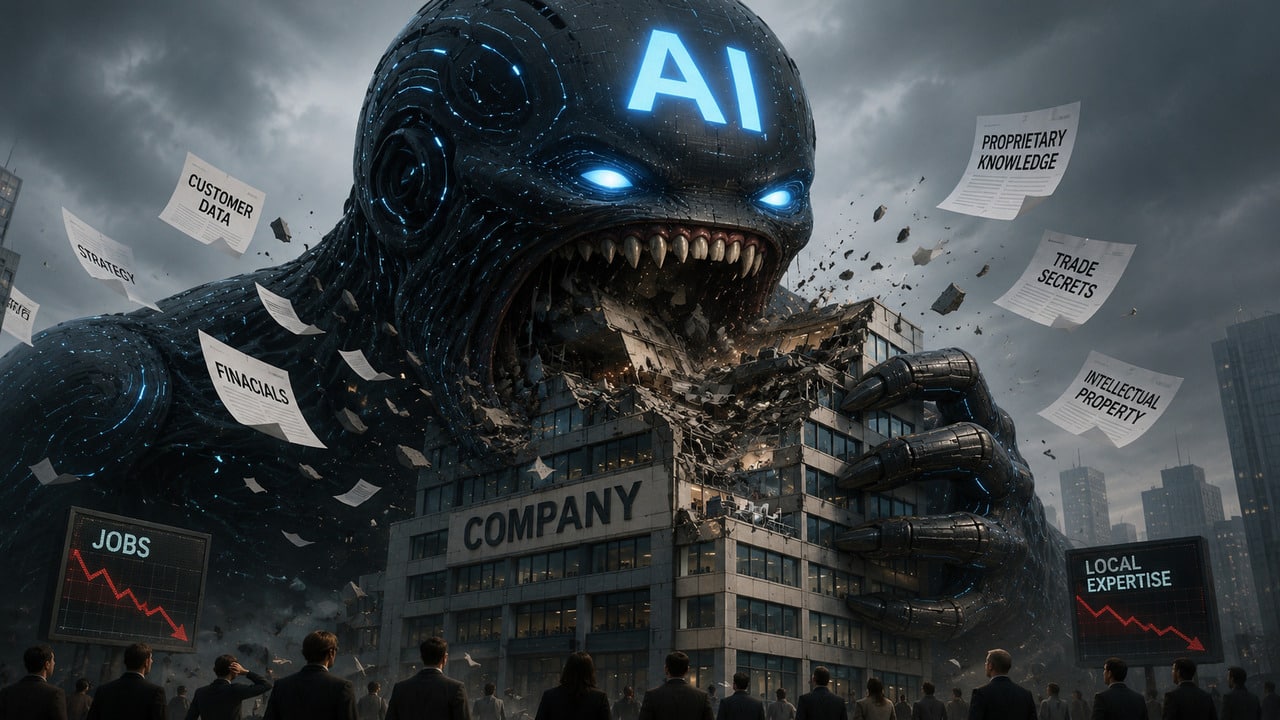
The rapid evolution of artificial intelligence represents a structural catalyst for global markets. However, Microsoft CEO Satya Nadella recently issued a calibrated warning regarding the AI economic impact on traditional business models. Nadella argues that advanced AI models possess a unique capacity to absorb specialized corporate knowledge. Consequently, this shift potentially disadvantages the very organizations that created that expertise. The concentration of economic value within a few tech giants poses a significant risk to global industrial stability.
How AI Risk Mirrors Globalization Challenges
Nadella compares the current trajectory of AI to the early stages of globalization. Specifically, while outsourcing increased global GDP, it often weakened local industrial bases and diminished regional expertise. Furthermore, he warns that AI must not repeat these historical errors. If value continues to flow exclusively toward technology giants, traditional companies may lose their competitive edge entirely. We must ensure that the AI economic impact strengthens the broader ecosystem rather than hollows it out.
Protecting Industry Through Decentralized AI
To mitigate these risks, Nadella advocates for a more decentralized approach to AI development. He suggests that businesses must maintain control over their own “learning systems.” By combining human capital—judgment and creativity—with “token capital,” or proprietary AI trained on internal data, companies can preserve their structural value. This precision-focused strategy ensures that innovation remains distributed across sectors rather than centralized in a few models.
The Translation: Contextualizing AI Dominance
In technical terms, Nadella is describing a “knowledge capture” scenario. Large Language Models (LLMs) are trained on massive datasets, often including the specialized outputs of various industries. Consequently, the AI becomes capable of performing tasks that previously required years of corporate experience. The logic here is simple: if your company’s unique knowledge is absorbed by a third-party AI, your business risks becoming a mere data supplier rather than a value creator.
The Socio-Economic Impact: Effects on Pakistan
For the Pakistani professional and student, this development is a baseline indicator of future job security. If global AI models dominate every sector, local expertise in urban centers like Karachi or Lahore could lose its market premium. However, a decentralized AI framework offers a catalyst for growth. By developing localized AI capabilities, Pakistani startups can leverage their own data to solve regional problems. This ensures that the economic gains from AI benefit local households rather than flowing out of the country.
The Forward Path: Our Expert Opinion
We view this development as a Momentum Shift. The era of passive AI adoption is ending. To ensure national advancement, Pakistani enterprises must transition from using generic AI tools to architecting proprietary systems. We believe that maintaining “token capital” is a strategic necessity for our digital frontier. Those who build their own internal AI capabilities today will be the leaders of the precision-driven economy tomorrow.








