
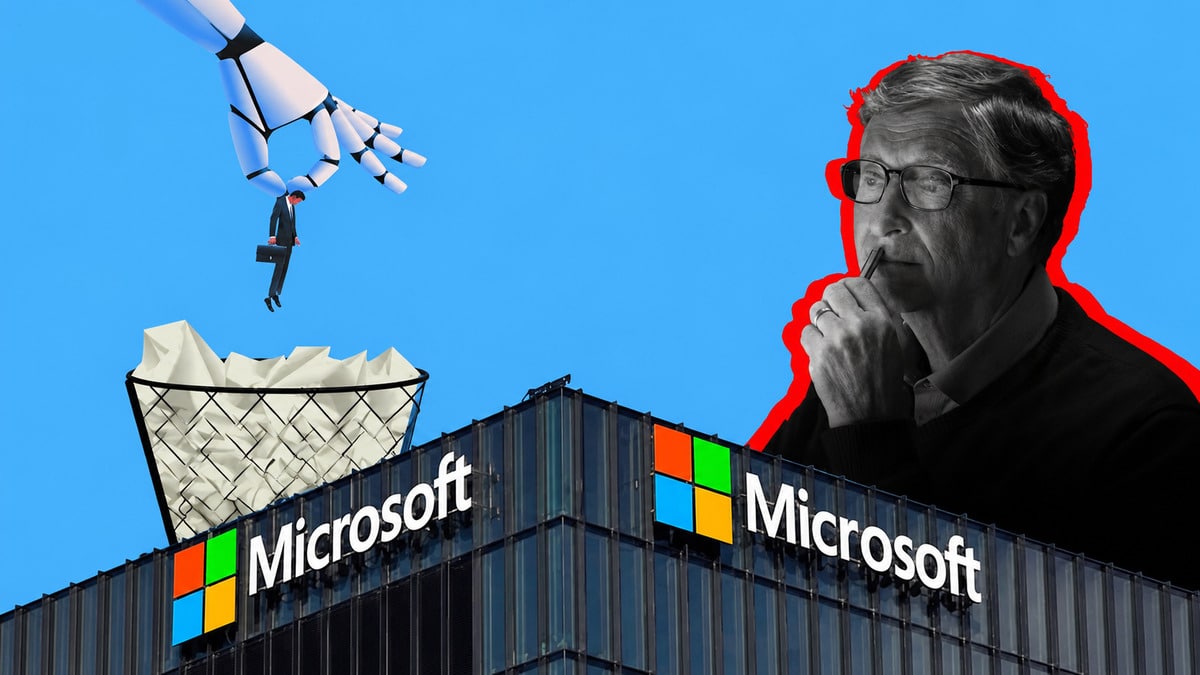
Structural realignment serves as the catalyst for technological evolution in the modern digital landscape. Microsoft plans to announce a significant round of Microsoft job cuts as early as next week to recalibrate its operational baseline and optimize for future growth. Consequently, these layoffs will likely affect thousands of positions across global sales, consulting, and the Xbox gaming division, representing a strategic shift in resource allocation.
Calibrating the Workforce and Microsoft Job Cuts
The upcoming reduction phase will target less than 2.5% of Microsoft’s estimated 220,000-person workforce. While significant in volume, this precision move is smaller than the workforce reductions executed during the previous fiscal year. Microsoft typically synchronizes these decisions with the start of its new fiscal year on July 1.
Last year, the company eliminated 6,000 positions in May, followed by a deeper cut of 9,000 roles in July. In contrast, the current strategy utilizes a more tiered approach, offering some affected employees immediate opportunities in alternative divisions. This methodology ensures that critical talent remains within the corporate ecosystem while streamlining underperforming sectors.
The Financial Logic of Artificial Intelligence Investment
Market volatility and the rapid rise of generative AI have forced a structural rethink at Microsoft. Although the company is reducing its traditional workforce, it is simultaneously increasing capital expenditure on AI infrastructure. Furthermore, Wall Street has applied pressure on the tech giant to prove that AI can enhance, rather than cannibalize, its existing software services.
Currently, the company’s stock has faced a 19% decline over the past month. This performance represents the most significant downward trend since the dot-com era. To mitigate compulsory Microsoft job cuts, the organization implemented a voluntary retirement program earlier this year. The program targeted US employees at Level 67 and below whose age and service years totaled at least 70.
- Eligibility: Approximately 9,000 workers qualified for the buyout.
- Take-up Rate: One-third of eligible staff accepted the program, meeting internal benchmarks.
- Exclusions: Commission-based sales staff were excluded to maintain revenue-generating momentum.
Xbox Division and Operational Resets
The Xbox gaming division is preparing for a specific operational reset. Gaming chief Asha Sharma recently issued a internal memo indicating that a thorough review of division operations is underway. As a result, the expected cuts within Xbox form a core component of Microsoft’s wider effort to eliminate redundancies and improve system efficiency.

The Situation Room: Strategic Analysis
The Translation (Clear Context)
Microsoft is essentially trading “Legacy Human Capital” for “Future AI Capacity.” By cutting roles in traditional sales and consulting, they are freeing up billions in liquid capital to fund GPU clusters and neural network development. This is not a sign of corporate weakness, but rather a disciplined transition to a more automated, high-margin business model.

The Socio-Economic Impact
For the average Pakistani professional or student, this highlights a critical baseline: technical roles are shifting toward AI proficiency. While these specific Microsoft job cuts occur globally, they signal a shrinking market for traditional IT consulting. Pakistani freelancers and tech graduates must pivot toward AI integration and specialized software engineering to remain competitive in a landscape where Big Tech prioritizes algorithmic efficiency over headcount.
The Forward Path (Opinion)
This development represents a Momentum Shift. Microsoft is aggressively shedding the weight of its legacy structures to win the AI arms race. While the short-term market reaction is negative, the long-term structural health of the company depends on this precision scaling. We view this move as a necessary evolution to maintain global dominance in the next generation of computing.








