
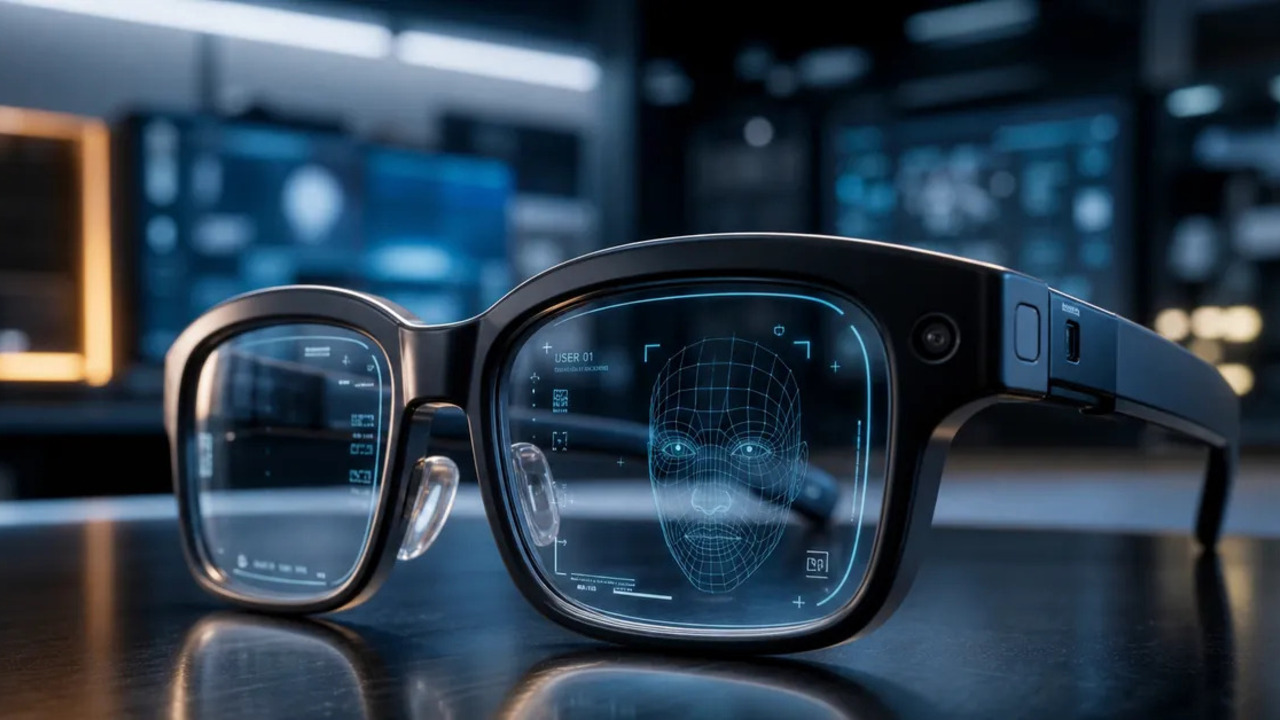
The advancement of wearable hardware requires a calibrated balance between utility and systemic privacy. Recent technical audits have revealed that the companion application for Meta smart glasses contains dormant facial recognition code. This discovery challenges the current baseline for consumer trust and suggests a strategic potential for real-time biometric identification. Consequently, researchers have identified a feature internally titled “NameTag” that has been integrated into updates since January 2026.
The Translation: De-Coding NameTag
In technical terms, NameTag serves as a digital identifier system. Although the feature is currently inactive, the code architecture allows the device to capture facial data and compare it against a local database stored on the user’s smartphone. Unlike previous centralized systems, this precision-focused approach processes biometric identifiers locally to minimize latency. However, the presence of such code in an app installed over 50 million times indicates a massive, pre-positioned infrastructure for future deployment.

The Structural Impact of Meta Smart Glasses
Researchers investigating the software found references to three distinct AI models calibrated for face detection. During testing, the system generated sample recognition alerts, proving the code’s capability to identify specific individuals. Meta remains firm that this represents internal experimentation rather than a pending consumer launch. Nevertheless, the historical context of facial recognition technology suggests that such “dormant” features often serve as the catalyst for future policy shifts.
- Local Processing: Biometric data is stored on the handset, not a central cloud.
- AI Model Integration: Three specific models handle face detection and verification.
- Historical Friction: Meta previously paid $1.4 billion in settlements over biometric privacy claims in Texas.

The Socio-Economic Impact
For the Pakistani citizen, this development signals a shift in the concept of public anonymity. As Meta smart glasses become more prevalent in urban centers like Karachi and Islamabad, the potential for “unauthorized identification” increases. This technology could fundamentally alter social dynamics, where professionals or students could be identified instantly without consent. Consequently, the lack of robust local biometric protection laws makes the presence of such dormant technology a significant risk to personal agency.
The “Forward Path”: Momentum Shift or Stabilization?
This development represents a Stabilization Move masquerading as experimentation. Meta is likely maintaining this code to ensure technical parity with competitors, even if regulatory environments currently prohibit a full launch. While the company promises transparency, the structural reality is that the hardware is already equipped for surveillance. For Pakistan to navigate this digital frontier, we must move beyond passive consumption and demand clear engineering safeguards against non-consensual biometric processing.









