
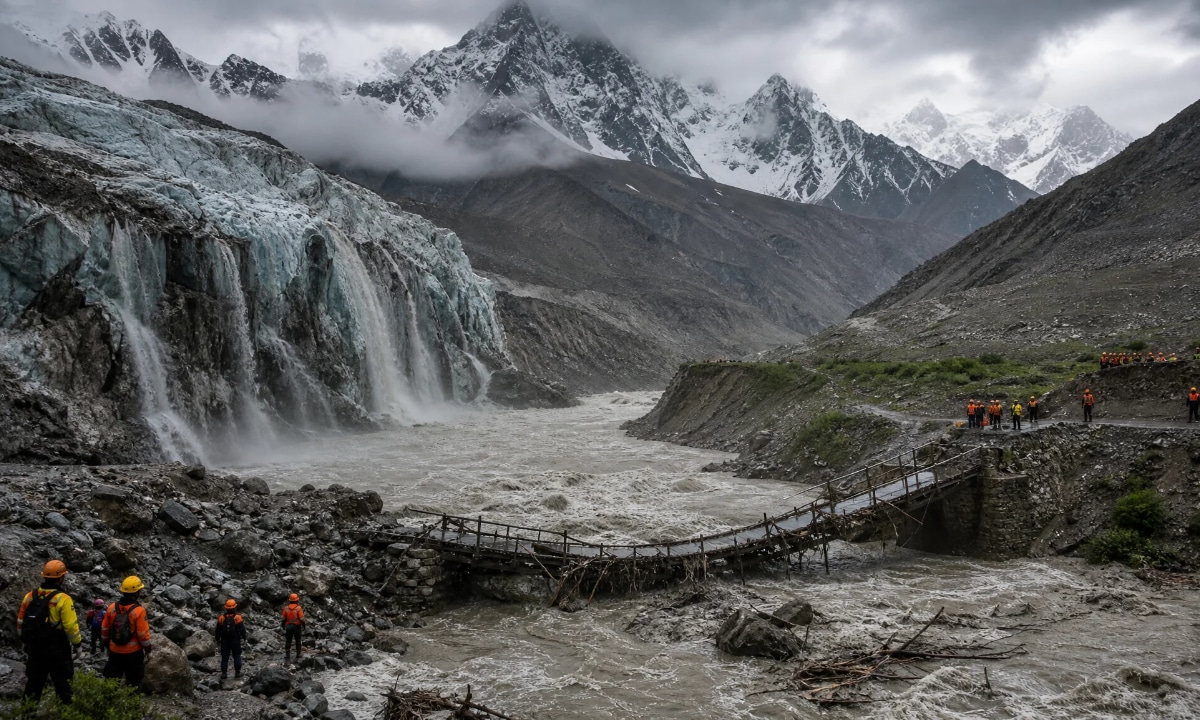
The structural integrity of Northern Pakistan faces a calibrated threat as glacier melting floods surge across Gilgit-Baltistan. Furthermore, the National Disaster Management Authority (NDMA) issued critical Glacial Lake Outburst Flood (GLOF) alerts for the Hoper and Hisper valleys. Consequently, the ongoing heatwave serves as a catalyst for accelerated snowmelt, sharply increasing river flows and mudslides across the regional baseline.
The Strategic Crisis: Understanding Glacier Melting Floods
Data from the NDMA confirms that extreme temperatures are destabilizing the cryosphere. Specifically, these flash floods and debris flows threaten downstream communities with significant riverbank erosion. Consequently, the damage extends to vital irrigation infrastructure and strategic road networks. Authorities have calibrated their response to mitigate the risk to human life in these vulnerable high-altitude zones.
Infrastructure Vulnerability and Regional Impact
Floods and mudslides have already compromised bridges and electricity infrastructure in several districts. In Ghanche, rising water levels submerged a critical suspension bridge over the Hushe Nallah. Additionally, flash flooding temporarily blocked the Karakoram Highway near the Khunjerab Pass, stalling essential cargo transit. Furthermore, Ghizer district reported significant damage to agricultural land and private residences as water levels rose in artificial lakes.
The Situation Room Analysis
The Translation
A “GLOF” event occurs when a natural dam—made of glacial ice or terminal moraine—fails due to excessive meltwater. This technical phenomenon converts stagnant mountain lakes into high-velocity flood surges. The current heatwave is not merely a weather event but a precision stress test for our natural water management systems.
The Socio-Economic Impact
For the average Pakistani citizen, these floods represent a disruption of the national supply chain. Blocked transit routes like the Karakoram Highway increase the cost of goods and stall the tourism economy. Furthermore, the loss of agricultural land in Ghizer directly impacts the baseline income of rural households, creating a ripple effect of economic instability across the province.
The Forward Path
This development represents a Momentum Shift that demands a transition from reactive relief to proactive structural engineering. Ultimately, Pakistan must invest in satellite-monitored early warning systems to calibrate our disaster preparedness. We must view these climatic shifts as a prompt to modernize our northern infrastructure for a high-temperature future.
Rescue 1122 advises all residents and tourists to avoid riverbanks and glacier areas during this high-risk period. Specifically, travelers should refrain from unnecessary movement until the NDMA signals a stabilization of water levels. Precautionary measures remain the primary defense against the increasing frequency of GLOF events.








