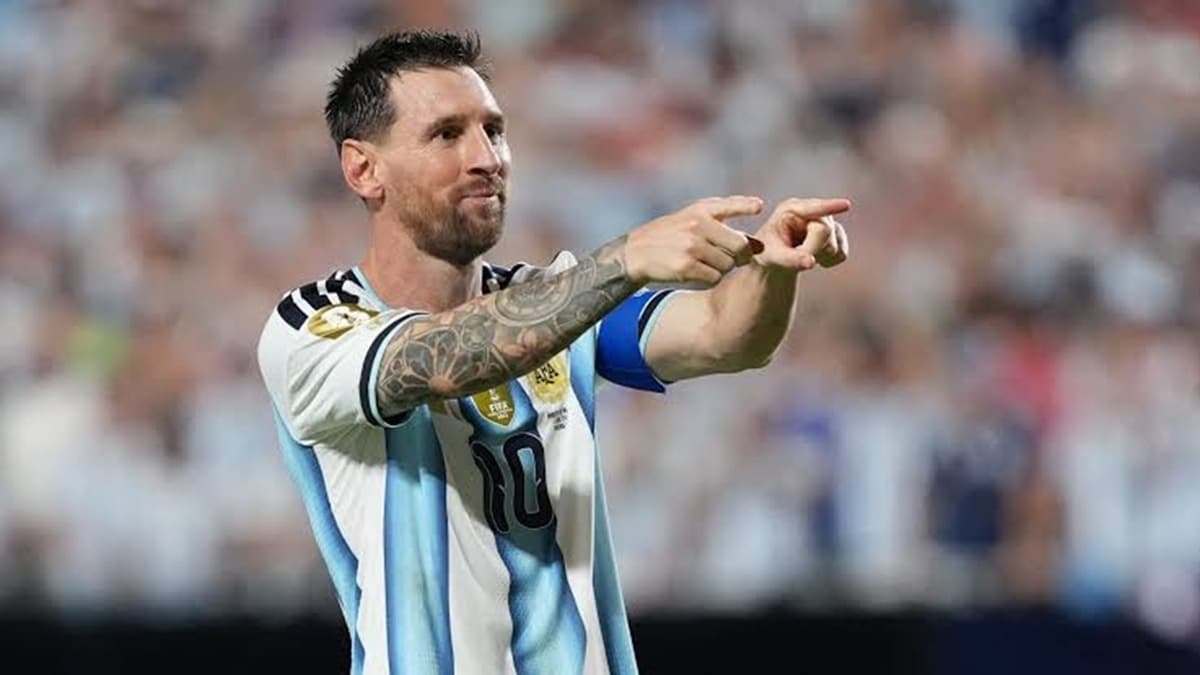
Peak human performance often reaches a structural limit, but Lionel Messi’s longevity in the 2026 final represents a calibrated defiance of athletic aging. Messi successfully established two new FIFA World Cup records at MetLife Stadium, proving that technical precision can outlast biological expectations. Although Argentina suffered a narrow 1-0 defeat against Spain after extra time, the Argentina captain solidified his legacy as a catalyst for professional endurance.
Calibrating Greatness: Breaking FIFA World Cup Records
At the age of 39 years and 25 days, Messi became the oldest outfield player to ever compete in a World Cup final. This achievement effectively bypassed the previous record held by Sweden’s Gunnar Gren, who set the baseline in 1958 at 37 years and 241 days. Consequently, Messi has redefined the strategic window for elite performance in international football.

Furthermore, the Inter Miami forward reached another historic milestone by appearing in his third World Cup final. This feat matches the record of Brazilian legend Cafu, who participated in the 1994, 1998, and 2002 finals. Messi’s appearances in 2014, 2022, and 2026 demonstrate a remarkable 12-year cycle of high-intensity competition. Unlike his triumph in Qatar four years ago, this tournament ended with Ferran Torres securing the decisive goal for Spain’s second title.
The Structural Shift in Athletic Longevity
- Elite Endurance: Competing in three finals across 12 years requires unmatched physical maintenance.
- Historical Comparison: Messi surpassed a 68-year-old record for outfield player age.
- Captaincy Impact: Messi maintained leadership across multiple generations of Argentinian talent.
The Translation: Contextualizing the Milestone
Beyond the surface-level statistics, these FIFA World Cup records signify a paradigm shift in how we view the “peak” of an athlete. In traditional sports science, 39 is considered the retirement phase for outfield players. However, Messi’s ability to anchor a world-class team in the 2026 final suggests that modern recovery protocols and strategic positioning can extend a player’s utility by nearly half a decade compared to historical standards.

The Socio-Economic Impact: Lessons for Pakistan
For the sports ecosystem in Pakistan, Messi’s longevity serves as a critical blueprint. As our nation looks to professionalize its sports infrastructure, the focus must shift from short-term “youth-only” investments to long-term health and precision-based training. Consequently, if Pakistani athletes adopt similar calibrated fitness regimes, we could see a rise in career longevity across domestic cricket, football, and athletics. This shift would maximize the ROI on talent development and provide stable icons for the next generation of youth.
The Forward Path: Our Expert Opinion
This development represents a Momentum Shift. While the loss to Spain marks the end of an era for Argentina’s dominance, Messi’s individual records prove that the age ceiling is a social construct rather than a biological one. We believe this will encourage global clubs and national federations to invest more heavily in aging stars who possess high tactical intelligence. For Pakistan, the takeaway is clear: precision and discipline are the ultimate stabilizers against the passage of time.