

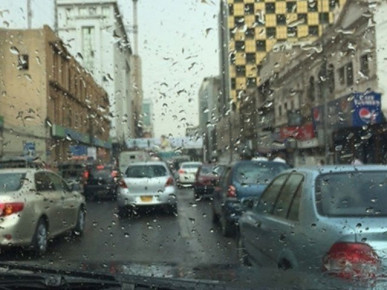
The Pakistan Meteorological Department (PMD) has calibrated a new Karachi rain prediction, signaling a marginal atmospheric shift as southwest winds influence the coastal megacity. Consequently, residents should prepare for intermittent drizzle during nocturnal hours and early mornings, offering a temporary reprieve from the current baseline of high humidity. Currently, the city maintains a humid profile with moisture levels peaking at 72 percent, necessitating precision in daily planning for all citizens.
Analyzing the Atmospheric Variance and Thermal Baseline
Karachi recently recorded a minimum temperature of 29.5°C, while daytime temperatures consistently reach approximately 31°C. Meteorological data suggests that maximum temperatures will oscillate between 34°C and 36°C during peak hours. Despite the strategic movement of southwest winds at 15 kilometers per hour, the thermal discomfort remains a significant factor for the urban population.

The Translation: Breaking Down the Humidity Index
While the forecast indicates “drizzle,” this technical classification refers to light precipitation that may not significantly lower the structural heat index. The Karachi rain prediction highlights a specific interaction between moist coastal winds and urban heat islands. Effectively, the high humidity traps heat near the surface, meaning the perceived temperature often exceeds the recorded Celsius baseline.
The Socio-Economic Impact: Productivity and Public Health
High humidity and fluctuating temperatures directly influence energy consumption patterns and worker productivity across Karachi’s industrial sectors. For the average professional and student, this atmospheric state demands calibrated hydration and strategic outdoor activity. Authorities have explicitly advised residents to take precautions against heat exhaustion, especially as humidity levels sustain uncomfortable conditions throughout the week.

The Forward Path: A Maintenance Move
From a meteorological standpoint, this development represents a Stabilization Move. While the drizzle serves as a psychological catalyst for relief, the underlying data suggests a system maintaining its seasonal baseline rather than a total climatic shift. We recommend that urban planners and citizens view these light showers as a brief pause in a broader high-humidity cycle.








