

Efficient national mobility relies on a calibrated and fair transport infrastructure. Recently, Punjab authorities launched a comprehensive Lahore bus terminals crackdown to address systemic irregularities in the intercity travel sector. This enforcement operation resulted in the sealing of more than 20 transport hubs, the arrest of six individuals, and the suspension of a terminal administrator. Led by Punjab Transport Minister Bilal Akbar, Adviser Zeeshan Malik, and Deputy Commissioner Muhammad Ali Aijaz, the mission targets illegal profiteering and hazardous boarding practices at the city’s primary Lari Adda.
Enforcing Regulatory Precision in Public Transport
The strategic intervention followed an influx of public grievances regarding unfair fare hikes and the dangerous practice of transporting passengers on vehicle rooftops. Consequently, enforcement teams conducted rigorous inspections to verify compliance with officially approved rates. During these visits, officials identified serious violations of transport regulations, leading to the immediate closure of non-compliant stands. Moreover, the detention of six suspects underscores the government’s commitment to penalizing those who breach the established legal framework.
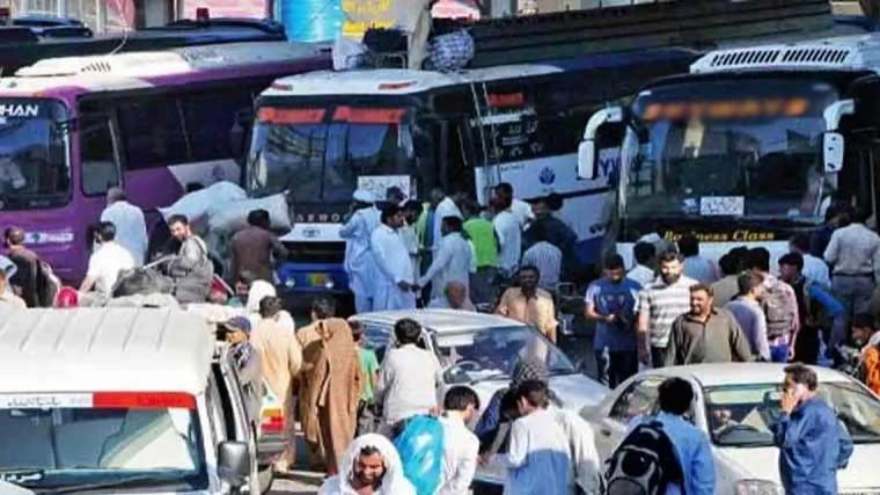
Minister Bilal Akbar emphasized that passenger exploitation will no longer be tolerated under the current administration. Strategically, the government aims to dismantle organized transport mafias that have long compromised the baseline of public service standards. By stabilizing fare structures, the state provides a necessary catalyst for protecting the economic interests of the average citizen.
The Translation: Decoding Regulatory Action
In this context, “sealing” a terminal represents a structural halt to operations until the facility meets stringent safety and pricing benchmarks. This Lahore bus terminals crackdown is not merely a reactive measure; it is a recalibration of the transport ecosystem. The government is shifting from passive observation to active enforcement, ensuring that private operators align with national safety protocols and price ceilings.

The Socio-Economic Impact: Daily Life and the Economy
This development directly impacts the daily lives of thousands of Pakistani students, professionals, and low-income households who depend on intercity travel. By curbing overcharging, the government effectively increases the disposable income of families by preventing arbitrary fare hikes. Furthermore, eliminating rooftop travel significantly reduces the risk of road fatalities, creating a safer environment for the workforce that fuels Lahore’s economy.
The Forward Path: A Momentum Shift
This operation represents a Momentum Shift in Punjab’s transport governance. While sealing terminals provides immediate relief, the long-term goal must be the digitization of fare collection and terminal management. Moving forward, the government should integrate GPS-based monitoring and digital ticketing systems to eliminate human error and corruption. This strategic enforcement is a vital first step toward a modernized, high-efficiency transport network for Pakistan.








