
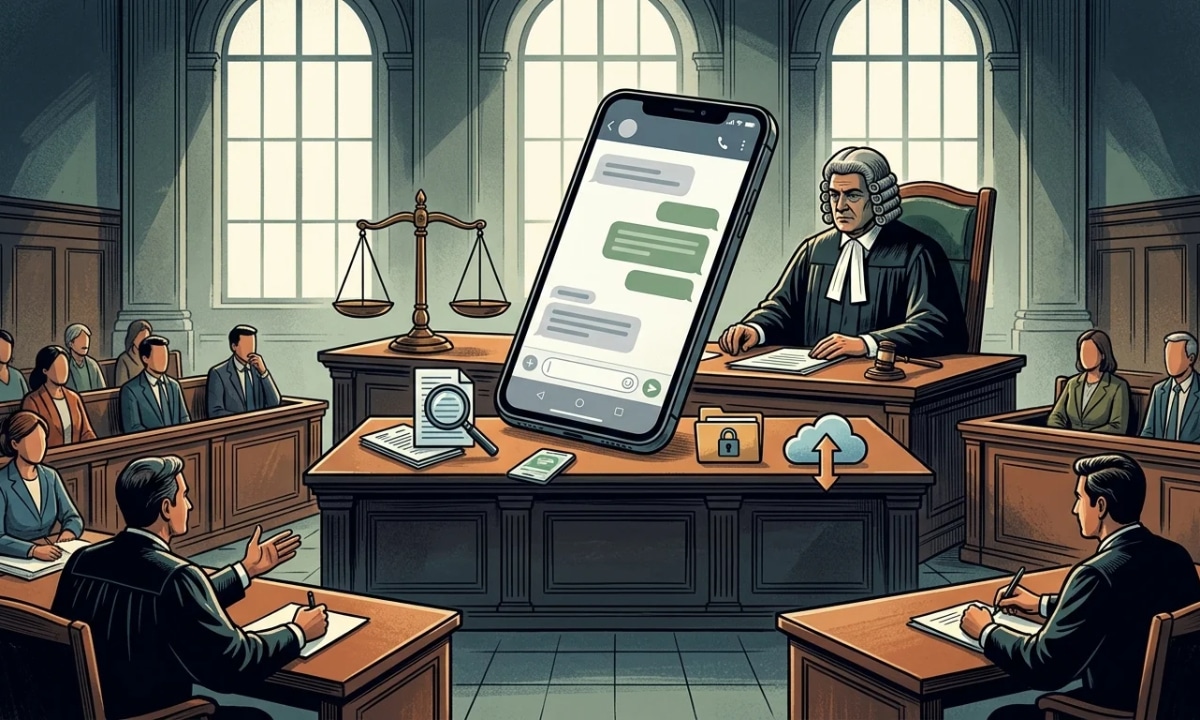
The Lahore High Court (LHC) recently established a critical legal baseline regarding WhatsApp group liability. Justice Tariq Saleem Sheikh ruled that administrators and members are not inherently responsible for content shared by others within a digital group. This decision strategically calibrates Pakistan\’s digital laws to distinguish between passive membership and active criminal participation.
Decoding WhatsApp Group Liability and Individual Intent
The court specifically observed that merely creating or managing a group does not trigger criminal liability under the Pakistan Penal Code (PPC) or the Prevention of Electronic Crimes Act (PECA). Consequently, the law now protects individuals who might passively receive messages without participating in illegal acts. Criminality requires identifiable actions, such as uploading, forwarding, or intentionally circulating unlawful content.
The Technical Limitations of Administrators
Furthermore, the judgment highlighted that WhatsApp administrators lack the structural tools to moderate or approve messages before they appear. Therefore, the court dismissed the concept of vicarious liability unless the prosecution provides evidence of conspiracy, abetment, or common intention. This precision in legal interpretation ensures that “status” as an admin does not equate to “guilt.”
The Translation: Legal Logic Simplified
In “Next Gen” terms, this ruling separates the architect (the admin) from the occupant (the member). In a physical building, a landlord isn\’t jailed if a tenant commits a private crime. Similarly, the LHC has ruled that the digital “room” creator isn\’t the culprit for a member\’s independent choice. Liability only shifts to the admin if they actively facilitate or agree to the illegal act through specific digital footprints.
The Socio-Economic Impact: Stability for 50 Million Users
This development directly impacts the daily lives of millions of Pakistani professionals, students, and families. Previously, the fear of “admin liability” hindered the formation of community and educational groups. Now, group leaders can operate with structural confidence. This clarity acts as a catalyst for digital networking, reducing the risk of arbitrary legal harassment for innocent citizens who simply manage communication hubs.
The Forward Path: A Momentum Shift
We categorize this ruling as a significant Momentum Shift. By aligning legal accountability with technical reality, the LHC has moved Pakistan toward a more sophisticated digital jurisprudence. While the specific bail petition in this case was dismissed due to forensic evidence found in the suspect\’s “sent” folder, the broader legal precedent protects the digital ecosystem from systemic overreach. It is a necessary calibration for a tech-driven future.








