
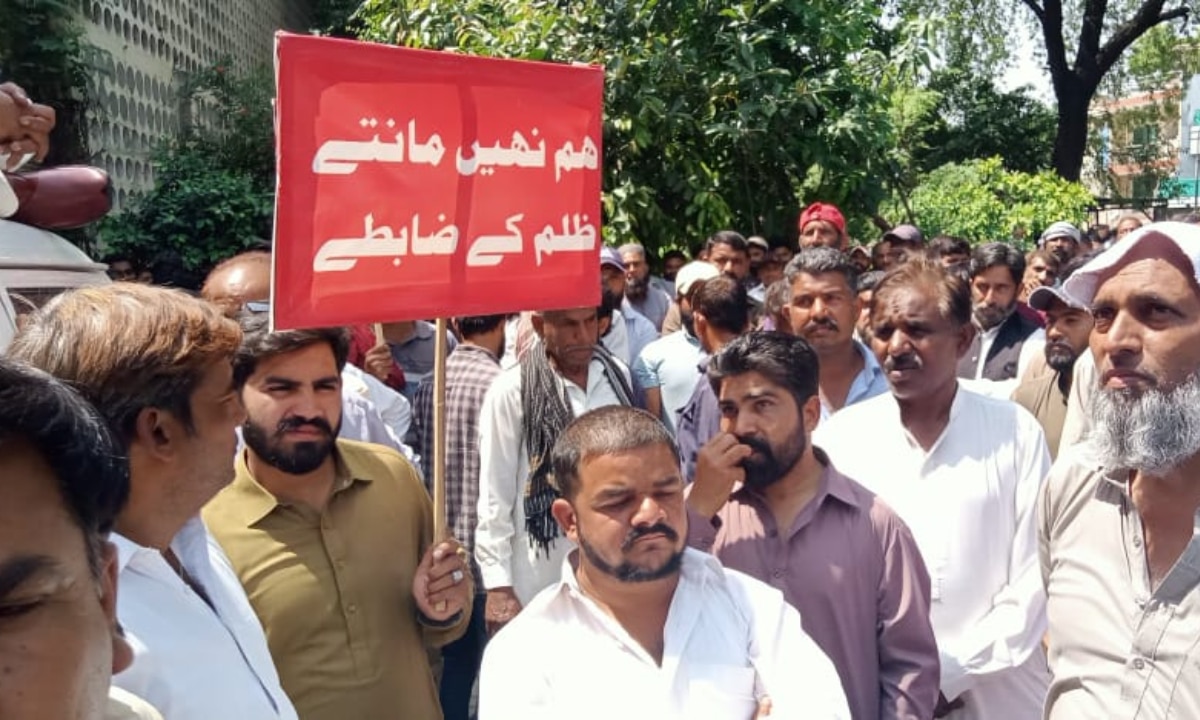
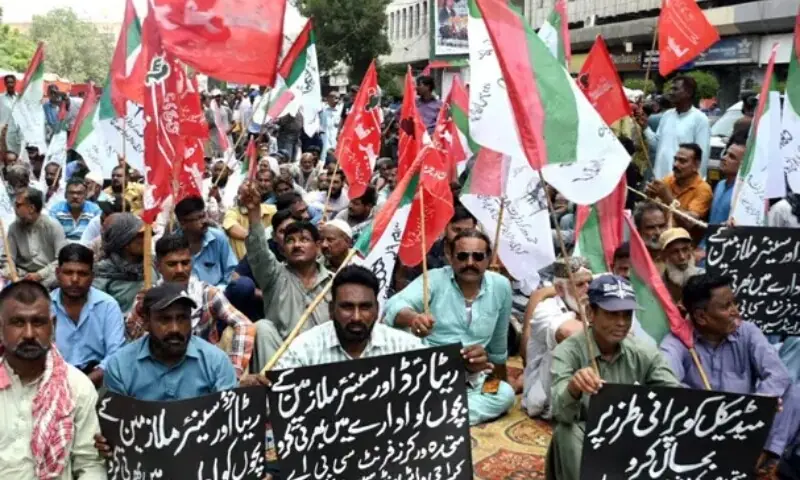
Structural efficiency in Karachi’s water management depends entirely on the stability and precision of its workforce. Recently, a significant KWSC worker protest erupted outside the Karachi Press Club as employees demanded a strategic calibration of their salary structures and medical benefits. Consequently, the demonstration highlighted deep-seated grievances regarding employee welfare and institutional transparency.
The Structural Catalyst for Reform
The Karachi Water and Sewerage Corporation Collective Bargaining Agent (CBA) organized the demonstration alongside the Muttahida Workers Federation. Specifically, the participants called for the immediate restoration of the previous medical facility system. Furthermore, they urged the prompt payment of outstanding dues to retired staff and the families of deceased employees. These demands represent a baseline requirement for maintaining a functional utility system.
Budgetary Discrepancies and Medical Oversight
Chairman Irshad Khan identified severe irregularities within the medical services budget. While the institution allocated a medical budget of Rs340 million, documented payments to private insurance providers reached Rs740 million. Therefore, workers are demanding a structural audit to address this financial gap. They argue that these outsourced services have created significant barriers to healthcare access for thousands of families.
- Restoration of the legacy medical facility framework.
- Approval of the formal Charter of Demand.
- Inflation-adjusted salary enhancements.
- Prompt settlement of retirement and death benefits.
The Translation: Contextualizing the Conflict
In “Next Gen” terms, this conflict is not merely about a KWSC worker protest; it is about the failure of outsourced management systems. When a public utility shifts medical services to private insurance without proper oversight, the “system efficiency” drops for the end-user—the employee. The discrepancy between the allocated budget and actual payments suggests a strategic failure in financial governance that requires immediate rectification.
The Socio-Economic Impact
How does this change the daily life of a Pakistani citizen? For the 20 million residents of Karachi, a demoralized KWSC workforce directly threatens the city’s water and sewerage security. When workers face financial instability and healthcare barriers, the maintenance of critical infrastructure suffers. Consequently, households may face prolonged water shortages and sanitation crises, further straining the urban economy and public health.
The Forward Path: Innovator’s Perspective
This development represents a Momentum Shift for labor rights within public institutions. While the immediate protest addresses grievances, it highlights the need for a more calibrated, transparent approach to employee benefits in the digital age. Moving forward, the Sindh government must implement automated, transparent payroll and medical benefit systems to prevent future budgetary irregularities and ensure the uninterrupted flow of essential services.








