
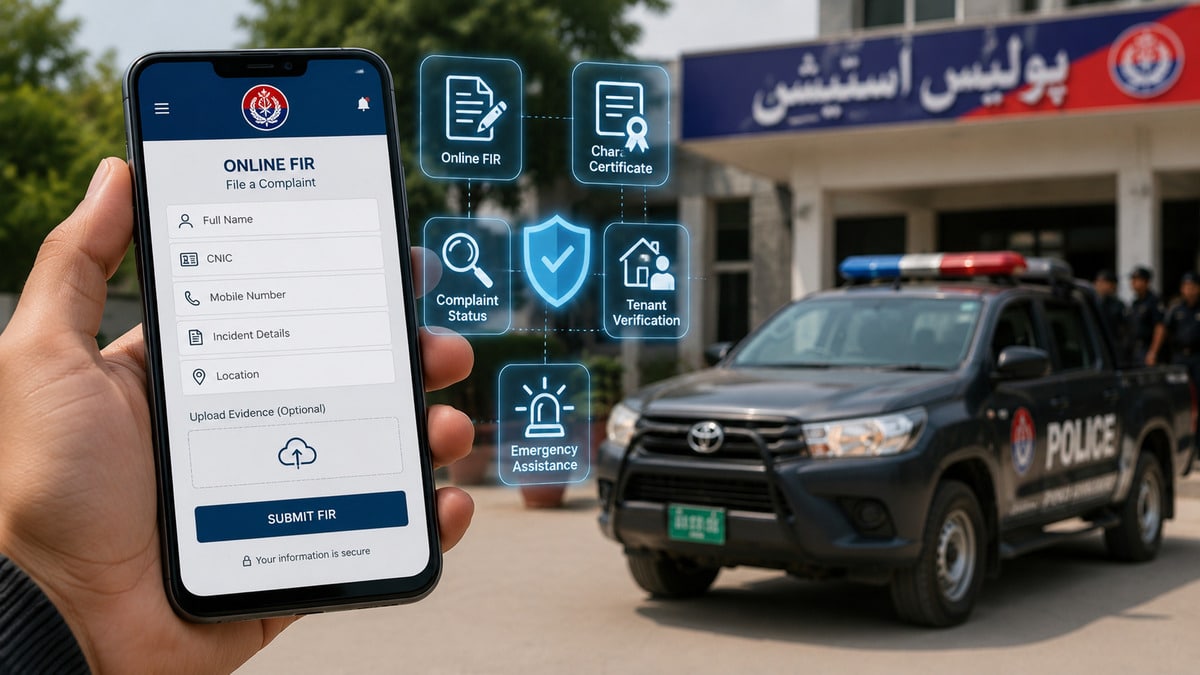
The Khyber Pakhtunkhwa government recently calibrated its law enforcement framework by launching comprehensive Digital Policing Reforms. Chief Minister Sohail Afridi inaugurated the Police Service Management App, integrating online FIR registration and real-time monitoring to catalyze administrative precision. Consequently, this transition from manual legacy systems to a unified digital infrastructure reduces procedural friction and enhances transparency for millions of citizens across the province.
Engineering a Transparent Justice System
The core of this structural overhaul lies in the decentralization of police access. Citizens no longer need to navigate physical barriers to report grievances. Instead, the government has established a centralized online complaint management system. This platform facilitates reporting through diverse channels, including WhatsApp, SMS, and dedicated toll-free helplines. Furthermore, the introduction of online FIRs allows residents to initiate legal processes remotely, effectively eliminating the traditional delays associated with station-level bureaucracy.

Key Digital Assets and Services:
- Talash Gumshuda Portal: A specialized tool engineered to assist in the recovery of missing children.
- Biometric Verification: Residents can obtain character certificates and clearance certificates via remote biometric authentication.
- Digital Licensing: The reforms simplify the acquisition and renewal of driving licenses, providing digital versions accessible on mobile devices.
- Pink Button: A precision-engineered emergency feature designed for women and children facing urgent safety threats.
Precision Monitoring and Operational Oversight
To ensure systemic accountability, the government deployed the Kinetic Police Action Dashboard. This digital monitoring platform enables real-time reporting and field monitoring via the KPCOP mobile application. In contrast to previous manual reporting, these Digital Policing Reforms provide leadership with a baseline of data to evaluate personnel performance. Additionally, special portals now serve transgender persons and minority communities, ensuring that the protective umbrella of the state is inclusive and calibrated to the needs of all demographics.
The Situation Room Analysis
The Translation (Clear Context)
This initiative deconstructs the traditional, often opaque, police-citizen interaction. By digitizing paperwork and utilizing biometric verification, the system replaces manual gatekeeping with automated validation. Essentially, the government is moving the “Police Station” into the citizen’s pocket, reducing the potential for administrative corruption and human error.
The Socio-Economic Impact
For the average Pakistani professional or student, these reforms represent a massive gain in “Time Efficiency.” Eliminating the need for multiple physical visits for character certificates or license renewals reduces the hidden economic cost of governance. Specifically, the ‘Pink Button’ and dedicated gender-based violence channels provide a strategic safety net that encourages greater public participation from women in the workforce and education sectors.
The Forward Path (Opinion)
We categorize this development as a definitive Momentum Shift. While technology is the catalyst, the true victory is the structural pivot toward citizen-centric governance. If implementation remains consistent, this framework will serve as a national baseline for system efficiency, moving Pakistan closer to a modernized, STEM-driven public safety model.








