
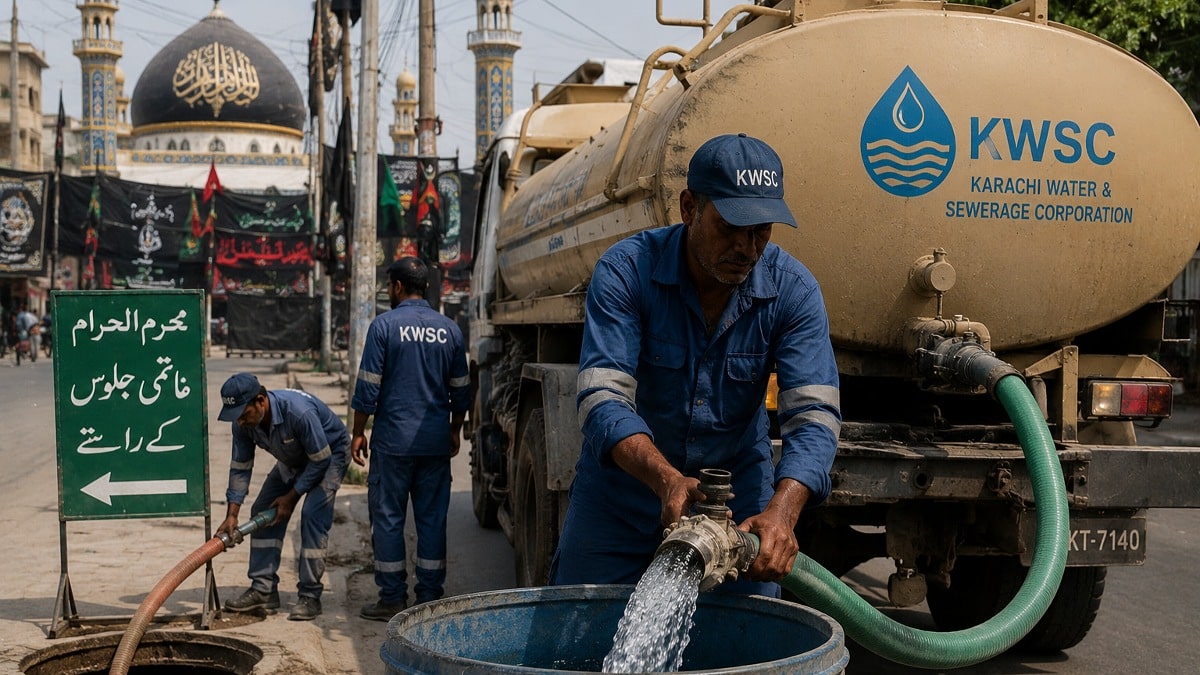
The Karachi Water and Sewerage Corporation (KWSC) recently deployed a comprehensive Karachi water supply plan to manage the heightened municipal demands of Muharram-ul-Haram. This strategic initiative ensures uninterrupted water distribution and optimized drainage services throughout the metropolitan area. Consequently, Karachi Mayor Barrister Murtaza Wahab and KWSC CEO Ahmed Ali Siddiqui have placed all operational staff on high alert. This calibrated approach aims to maintain structural integrity in the city’s infrastructure during high-density religious gatherings.
Strategic Infrastructure Readiness for Ashura
Efficient resource allocation remains the cornerstone of the current Karachi water supply plan. Chief Operating Officer Engineer Asadullah Khan issued a formal circular mandating the completion of all critical sewerage and water projects before the commencement of Ashura. Specifically, teams are prioritizing areas surrounding mosques, imambargahs, and procession routes. Furthermore, KWSC maintains rigorous coordination with district administrations and law enforcement to ensure logistical precision during the 10-day period.
Operational Precision and Emergency Response
The corporation has mobilized heavy machinery, including jetting and suction units, to address potential drainage bottlenecks immediately. To safeguard citizens, workers are actively repairing and covering manholes along major thoroughfares. Additionally, the Hydrants Cell has received specific instructions to prioritize water delivery to sabeels and majalis venues. These measures establish a baseline for urban safety during significant cultural events.
The Situation Room Analysis
The Translation
Beyond the simple provision of water, this plan represents a “high-load” stress test for Karachi’s aging infrastructure. By pre-clearing sewerage lines and establishing dedicated duty rosters, the KWSC is shifting from a reactive maintenance model to a proactive, event-driven management system. This ensures that the sudden influx of people into specific geographic corridors does not collapse the local utility grid.
The Socio-Economic Impact
For the average Pakistani citizen in Karachi, these measures provide a critical safety net. Efficient drainage prevents the stagnation of water, which significantly reduces the risk of waterborne diseases in crowded areas. Moreover, for households located on procession routes, the uninterrupted water supply ensures that daily life continues with minimal disruption. This operational stability is vital for maintaining the social fabric and public health of the city.
The Forward Path
This development represents a Stabilization Move. While the emergency measures demonstrate a capacity for short-term logistical excellence, they highlight the ongoing need for permanent structural upgrades. The KWSC’s ability to coordinate across multiple departments is a catalyst for future urban planning, but the long-term goal must be to make this level of efficiency the standard baseline, rather than an emergency exception.








