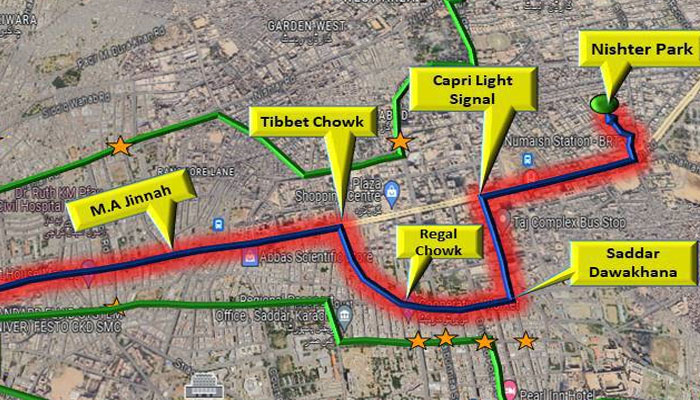
Effective urban management relies on the precise calibration of human movement and structural assets. The Karachi Traffic Police finalized a strategic Karachi traffic plan for the Hazrat Imam Hussain Chehlum procession today. Starting from Nishtar Park and concluding at Imambargah Hussainia Iranian in Kharadar, this calibrated movement requires the total closure of MA Jinnah Road from Gurumandir to Tower. Consequently, officials have established a comprehensive network of diversions to maintain urban mobility across the metropolis.
The Translation: Interpreting the Karachi Traffic Plan
Authorities have implemented a strict security perimeter, meaning no unauthorized vehicles can enter the route beyond Gurumandir Chowk. Instead, the Karachi traffic plan redirects small and large vehicles toward Bahadur Yar Jang Road and Soldier Bazaar. Furthermore, only participants with official procession stickers on their windscreens may enter via Shahrah-e-Quaidin and the Society Light Signal. This systematic segregation ensures that the spiritual gathering proceeds without compromising the structural safety of the city’s core.
Calibrated Alternate Routes for Commuters
To mitigate congestion, the police have designated specific bypasses for different districts:
- District Central: Drivers from Nazimabad must use Lasbela Chowk to reach Nishtar Road. Meanwhile, traffic from Liaquatabad will divert from Teen Hatti toward Lasbela and Central Jail.
- District East: Commuters moving from Hassan Square to Peoples Chowrangi should utilize Kashmir Road and the Jail Flyover. Additionally, Shahrah-e-Faisal traffic will be diverted at the light signal toward Kashmir Road.
- District South: Vehicles from Garden Zoo will move through Anklesaria and Gul Plaza to reach Holy Family Hospital.
Heavy and Commercial Logistics
Logistical efficiency remains a priority for the Karachi traffic plan. Heavy vehicles entering from the Super Highway will be diverted from Liaquatabad No. 10 to Nazimabad No. 2. From there, they will proceed via SITE and Estate Avenue to Mauripur. Similarly, National Highway traffic must follow a calibrated route through Rashid Minhas Road and Stadium Road to avoid the city center. Officials emphasize that parking on the procession route is strictly prohibited to prevent any systemic bottlenecks.
The Socio-Economic Impact
How does this change the daily life of a Pakistani citizen? For the average Karachi commuter, these diversions represent a temporary shift in the baseline of urban travel. Professionals and students in Districts Central and East should expect a 30-40% increase in travel time due to the redirected load on secondary arteries like Kashmir Road. However, the clear designation of heavy vehicle corridors prevents the complete gridlock often associated with large-scale events, protecting the economic flow of goods to the port.
The Forward Path: Strategic Analysis
This development represents a Stabilization Move. While the Karachi traffic plan demonstrates high-level tactical coordination, it highlights the city’s reliance on reactive diversions rather than permanent, flexible infrastructure. A momentum shift would require the integration of smart-grid traffic signaling that automatically adjusts to real-time procession data. For now, the police have delivered a precise, necessary blueprint for maintaining public order and safety during a major cultural milestone.