
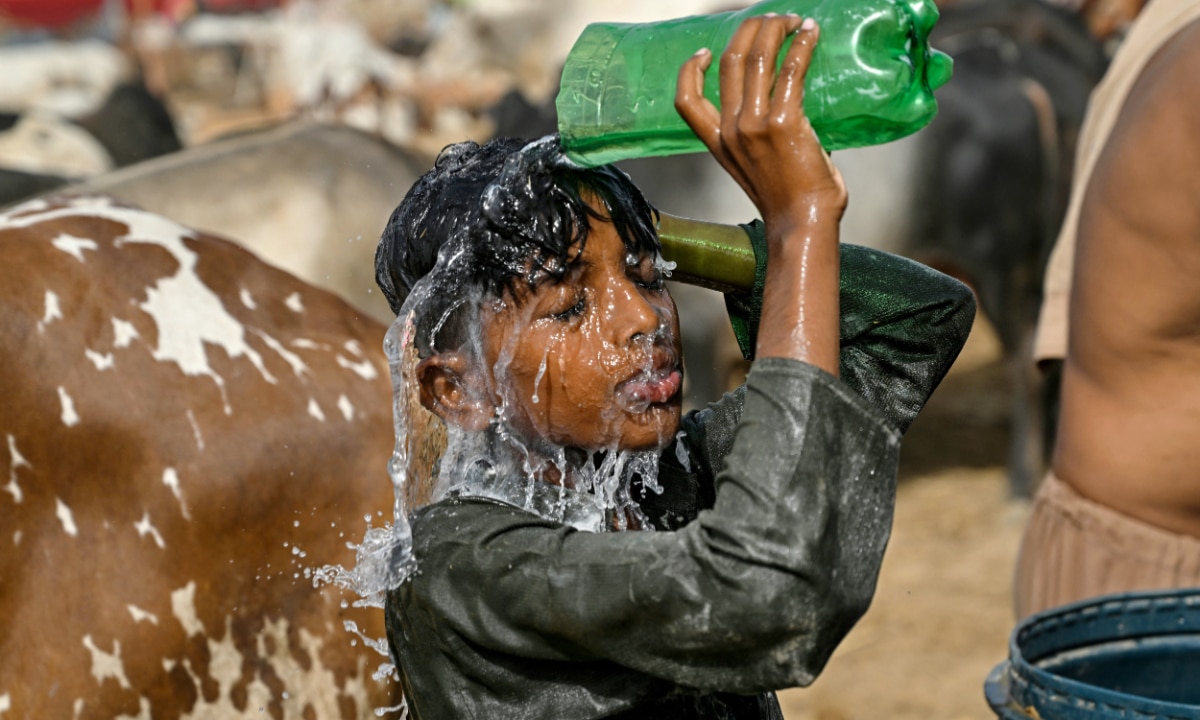
The metabolic rhythm of Pakistan’s industrial heart, Karachi, faced a severe structural challenge this Wednesday as the Karachi heatwave pushed the “feels-like” temperature to a staggering 54°C. Although the Pakistan Meteorological Department recorded a maximum ambient temperature of 37.4°C, the calibrated heat index surged due to extreme atmospheric moisture. Consequently, the urban landscape transformed into a high-pressure thermal zone, testing the limits of public health and infrastructure efficiency.
The Mechanics of the 54°C Heat Index
Data indicates that the heat index climbed steadily from 49°C at 1 PM to its peak of 54°C by 3 PM. This precision monitoring reveals that high humidity served as the primary catalyst for the surge. Relative humidity reached 79% in the morning before stabilizing at 65% by the evening. Furthermore, the baseline minimum temperature remained at a stifling 30°C, providing little nocturnal relief for the city’s inhabitants.

Regional Thermal Volatility Across Sindh
While Karachi battled humidity, other districts in Sindh experienced higher raw temperatures. Jacobabad led the region with a recorded 49.5°C, while Dadu followed closely at 49°C. Additionally, Sukkur and Paddidan reached 47°C, highlighting a systemic thermal crisis across the province. Chief Meteorologist Ameer Hyder Laghari expects a strategic shift after Friday as the high-pressure system begins to weaken.
The Translation: Understanding Atmospheric Loads
In technical terms, a “feels-like” temperature is not a raw measurement but a calculated index of thermal stress. When humidity is high, the human body cannot evaporate sweat efficiently to cool down. Therefore, the perceived temperature is significantly higher than the actual thermometer reading. This Karachi heatwave represents a critical intersection of high moisture and stagnant air pressure, effectively trapping heat at the ground level.
Socio-Economic Impact: The Cost of Extreme Heat
This thermal volatility directly impacts the daily lives of Karachi’s 20 million residents. For students and office workers, the heat index reduces cognitive precision and increases physical fatigue. Furthermore, manual laborers in the construction and logistics sectors face immediate health risks, potentially slowing down economic output. For households, the increased demand for cooling systems puts a structural strain on the power grid, leading to potential stabilization moves by utility providers.
The “Forward Path” (Opinion)
This development represents a Momentum Shift toward a new climate reality for Pakistan. We must move beyond reactive health alerts and toward structural urban cooling strategies. Precision urban planning—such as increasing green canopies and implementing “cool roof” technologies—is no longer optional. This heatwave serves as a catalyst for local authorities to calibrate long-term climate resilience frameworks to protect the nation’s human capital.
Strategic Health Precautions
- Calibrated Hydration: Prioritize water over caffeinated or sugary beverages that accelerate fluid loss.
- Thermal Shielding: Limit outdoor exposure between 11 AM and 4 PM to avoid peak solar radiation.
- Vulnerability Monitoring: Families must conduct regular welfare checks on the elderly and children.
- Symptom Awareness: Seek immediate medical intervention for dizziness, rapid pulse, or nausea.








