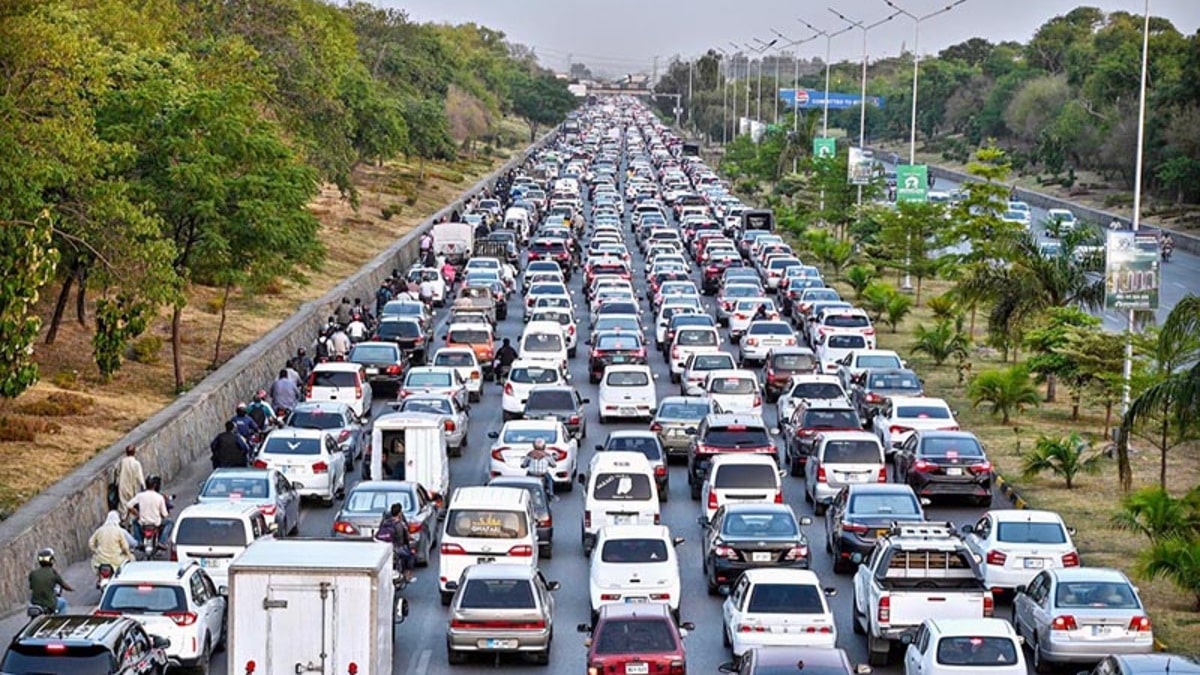
Interior Minister Mohsin Naqvi recently announced that the Islamabad Expressway Motorway transition will finalize upon the completion of the current 9-kilometer service road expansion. This strategic overhaul aims to optimize the capital’s busiest artery, integrating six-lane infrastructure and advanced flyovers to eliminate persistent bottlenecks. Consequently, the administration is prioritizing an accelerated timeline to minimize commuter disruption and maximize urban mobility.
Structural Evolution of the Islamabad Expressway Motorway
The Capital Development Authority (CDA) initiated construction on a new six-lane arterial road along the eastern flank of the existing route. This project spans from Faizabad to Gulberg Greens, incorporating a sophisticated flyover at the Faizabad junction to facilitate seamless connectivity. Furthermore, the plan includes a strategic underpass at the Lethrar Road-Khanna Bridge intersection, specifically designed to bypass local traffic congestion and maintain high-speed throughput on the main corridor.
The Translation: Structural Clarity
Converting an “expressway” into a motorway is not merely a nomenclature update; it represents a fundamental recalibration of traffic logic. By constructing a dedicated service road, the CDA effectively segregates local, low-speed traffic from high-velocity transit. This isolation ensures the Islamabad Expressway Motorway adheres to international safety standards, allowing for higher speed thresholds and reduced braking requirements for long-distance travelers.
The Socio-Economic Impact
This infrastructure upgrade directly influences the daily efficiency of thousands of Pakistani professionals and students. A more fluid transit system reduces fuel consumption and lowers the baseline for vehicle maintenance costs. In urban centers like Islamabad, time-savings translate into increased economic productivity. Additionally, the stabilization of traffic flow at the Khanna Bridge intersection will likely catalyze property value growth in surrounding residential sectors, enhancing the overall quality of life for Islamabad residents.
The Forward Path: Momentum Shift
In our expert assessment, this development represents a significant Momentum Shift for the capital’s infrastructure. While the project was originally calibrated for a 12-month completion cycle, the government’s push for an early delivery signals a shift toward proactive system management. Successful execution will serve as a baseline for future high-velocity transit projects across Pakistan, provided the CDA maintains precision in the engineering of the new six-lane service lanes.