
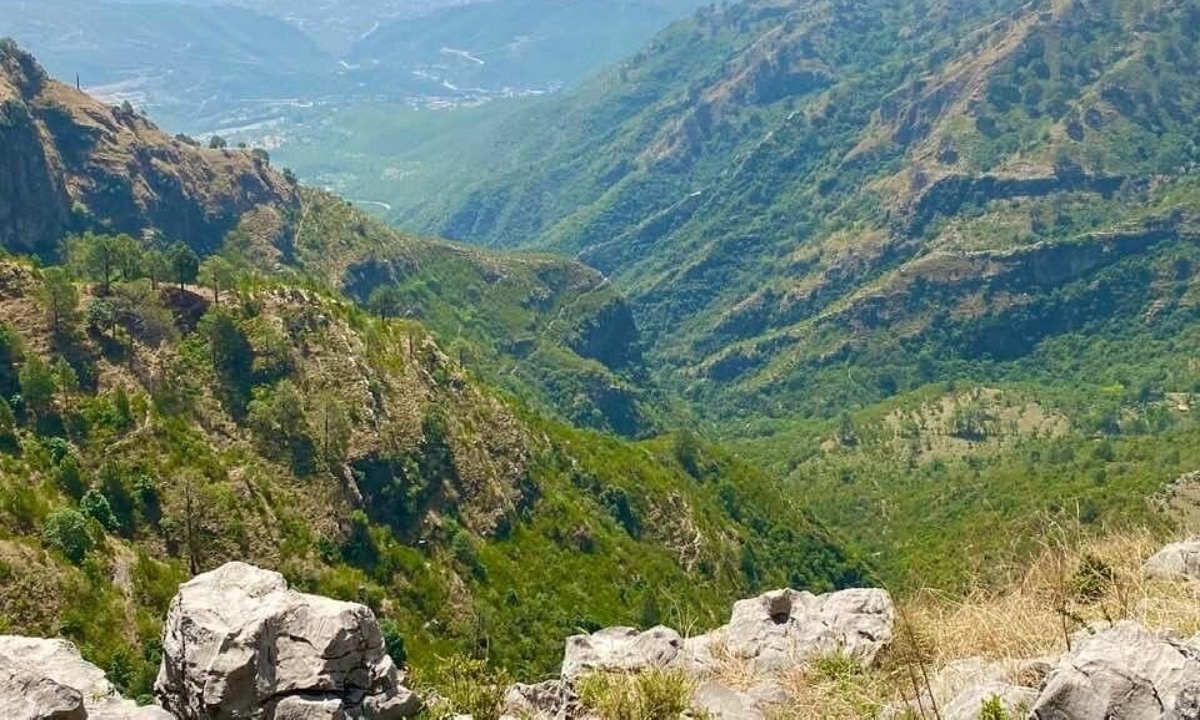
The strategic advancement of Pakistan’s capital requires a precision-based balance between urban density and environmental resilience. Interior Minister Mohsin Naqvi recently unveiled a calibrated initiative to establish an Islamabad New Forest, a project designed to exceed the existing F-9 Park in both scale and ecological density. Consequently, this initiative serves as a structural catalyst for the city’s long-term sustainability goals.
Engineering the Islamabad New Forest: Scaling Beyond F-9 Park
Government officials have already identified a significant land corridor for this expansion. This site will undergo a transformation into a dense forested area, intentionally designed to outperform existing parks in biodiversity. Furthermore, Minister Naqvi emphasized a strict replacement protocol: if infrastructure needs require the removal of one tree, the system mandates the immediate planting of multiple replacements. This calibrated approach ensures that the net green cover remains on an upward trajectory.

The Translation: Decoding the Sustainability Protocol
In technical terms, the administration is shifting from a passive preservation model to an active expansionist strategy. The “one-for-many” planting rule acts as a structural algorithm to mitigate the risks of urban sprawl. By prioritizing the Islamabad New Forest, the state is treating green cover as critical infrastructure rather than an aesthetic luxury.
The Socio-Economic Impact: Benefits for the Pakistani Citizen
This development directly influences the “Urban Heat Island” effect, potentially lowering average temperatures for Islamabad households during peak summer months. For the average professional or student, this forest provides a calibrated space for mental rejuvenation and biological study. Additionally, increasing the city’s biomass improves air quality, which reduces long-term healthcare costs associated with respiratory issues in urban centers.
The Forward Path: An Expert Assessment
This development represents a Momentum Shift. Moving beyond the mere maintenance of existing parks like F-9 and transitioning into the creation of massive, managed ecosystems shows a proactive mindset. If executed with precision, the Islamabad New Forest will serve as a baseline for future urban planning across other Pakistani metros.








