
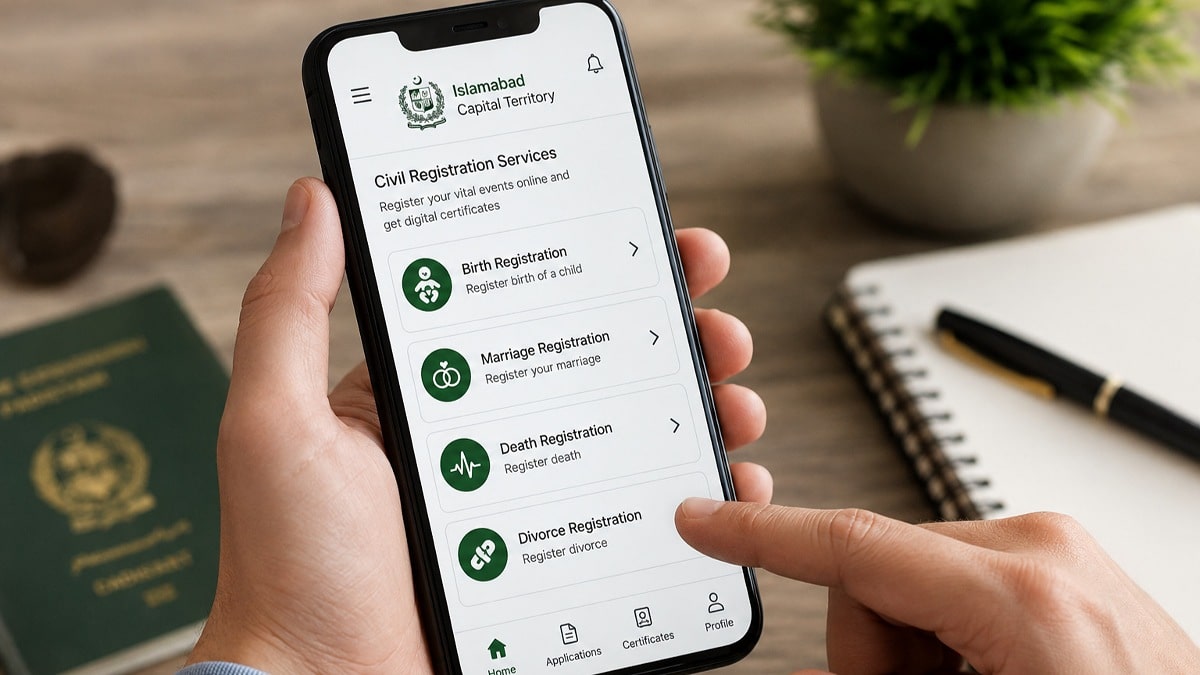
The Capital Development Authority (CDA) has initiated a strategic shift in urban administration through the Islamabad digital registration framework. In a calibrated move toward system efficiency, the CDA, in collaboration with NADRA and the Metropolitan Corporation Islamabad (MCI), integrated vital civil services into the Pak ID mobile application. This precision-driven update allows residents to register births, marriages, deaths, and divorces without the traditional requirement of visiting Union Council offices in person.
Calibrating Public Services via Islamabad Digital Registration
This digital evolution streamlines the administrative baseline for the Islamabad Capital Territory. Citizens can now complete full registrations online, execute secure mobile payments, and receive digitally verified certificates directly through their devices. Consequently, this initiative reduces the bureaucratic friction that often hampers urban growth. Furthermore, the CDA confirmed that the service remains accessible across every Union Council, ensuring a standardized experience for all residents regardless of their location.
The Translation: Beyond the Paperwork
Technically, this move represents the “API-fication” of local governance. By migrating civil records to the NADRA-backed Pak ID infrastructure, the government creates a single source of truth for identity management. Specifically, this means your legal status—whether birth or marriage—is no longer tied to a physical ledger in a specific office. Instead, it exists as a secure, portable digital asset. This structural transition eliminates the “document chase” that has historically defined Pakistani bureaucracy.
The Socio-Economic Impact: Empowering the Modern Citizen
The impact of Islamabad digital registration extends beyond mere convenience; it is a catalyst for economic productivity. For the working professional, it saves hours of lost labor previously spent in government queues. For families in rural areas of the ICT, it removes the transport costs associated with multiple office visits. Strategically, digital certificates also facilitate smoother international documentation processes, such as apostille services for students and workers moving abroad.

The Forward Path: A Momentum Shift
Next Generation Pakistan views this development as a clear Momentum Shift. While many administrative updates serve as simple stabilization moves, the Pak ID integration represents a fundamental redesign of how the state interacts with the citizen. This is a baseline for a future “Smart City” where the physical presence of a citizen is no longer a prerequisite for service delivery. However, the next challenge remains ensuring data privacy and maintaining 100% system uptime during peak traffic periods.
- System Efficiency: Minimal paperwork and zero physical queues.
- Security: NADRA-verified encryption for all civil data.
- Accessibility: 24/7 service availability via mobile devices.








