

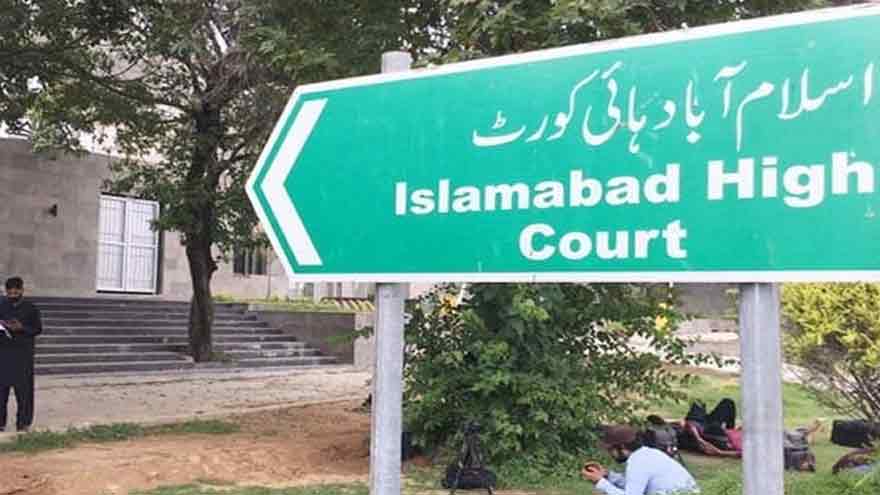
The Islamabad High Court (IHC) recently initiated a calibrated baseline adjustment to national campus security protocols. Consequently, Justice Raja Inaam Ameen Minhas directed the Higher Education Commission (HEC) to integrate specialized personnel from the Anti-Narcotics Force (ANF) and local police into its monitoring framework. This strategic intervention serves as a catalyst for curbing rising student drug use across schools, colleges, and universities in the federal capital.
Beyond the oversight of the HEC, the court also issued mandates to the Ministry of Federal Education and Professional Training. The judiciary emphasized the urgent requirement for secured federal approval regarding new anti-drug regulations. This structural alignment ensures that legal frameworks keep pace with the evolving logistics of narcotics distribution within the city’s academic perimeter.
Strategic Oversight to Address Student Drug Use
During the proceedings, Advocate Kashif Malik presented data indicating that narcotics supply chains have significantly diversified. Specifically, the petitioner highlighted the use of delivery riders and campus-bound transport personnel as primary logistics conduits. In response to these vulnerabilities, HEC officials confirmed that educational institutions have established precision-based screening zones for all delivery staff entering campuses.
Furthermore, the court expressed profound concern regarding the age demographics involved in these incidents. Reports indicate that the baseline of substance exposure has descended into middle schools, affecting students as young as the seventh and eighth grades. Justice Minhas observed that narcotics accessibility at small grocery stores represents a critical systemic failure that requires immediate administrative correction.
The Situation Room Analysis

The Translation
Essentially, the IHC is moving from a policy of “passive observation” to “active interdiction.” By forcing the HEC, ANF, and Police into a single monitoring committee, the court is eliminating the bureaucratic silos that previously allowed drug traffickers to exploit communication gaps. This move formalizes the accountability of campus administrators for what happens within their gates.
The Socio-Economic Impact
For the average Pakistani household, this represents a vital layer of protection for human capital. When student drug use penetrates middle schools, it destabilizes the future economic productivity of the nation. By securing the academic environment, the state protects the investments made by parents and ensures that students remain focused on STEM-driven advancement rather than predatory influences.
The Forward Path
This development represents a significant Momentum Shift. The judiciary’s decision to question the transfer of efficient officers, such as DSP Legal Sajid Cheema, signals a demand for institutional memory and continuity. For this reform to hold, the Islamabad administration must now sustain high-precision monitoring operations without succumbing to the administrative inertia of the past.








