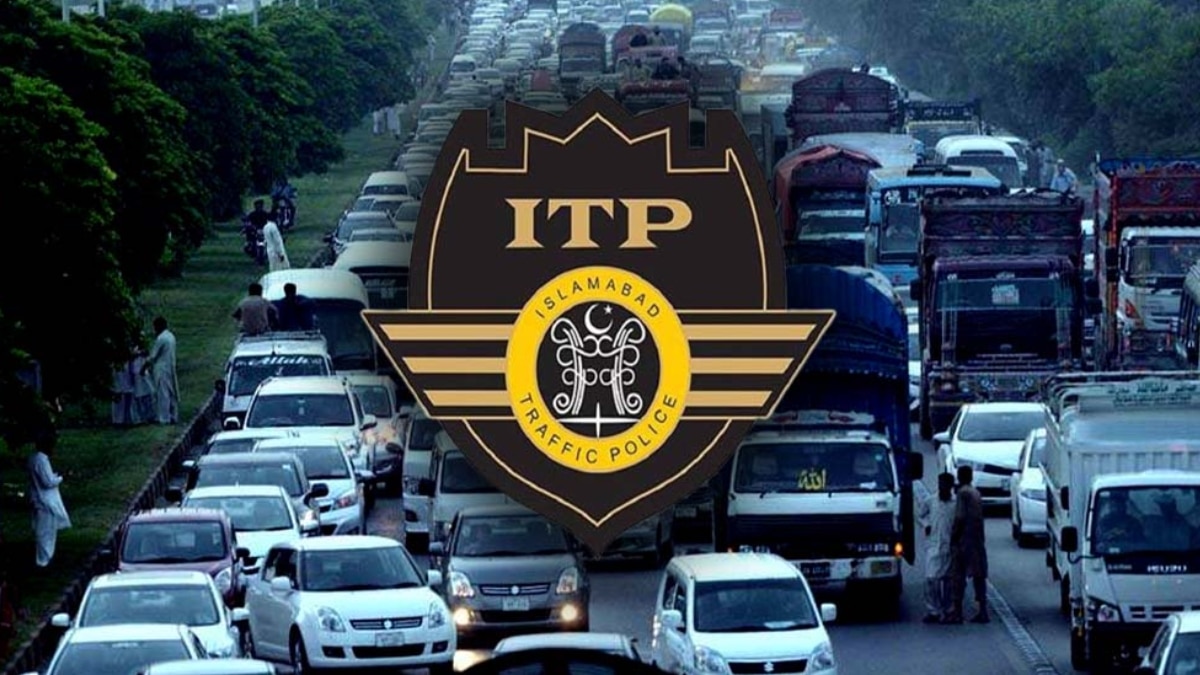
The Islamabad Capital Police (ICT) has engineered a strategic Islamabad traffic plan to manage the upcoming Iranian presidential tour. Consequently, this initiative aims to balance high-level security protocols with the necessary baseline of urban mobility across the twin cities. Authorities have implemented strict road closures, mandatory diversions, and a complete ban on heavy traffic to maintain system efficiency during this diplomatic catalyst.
Strategic Heavy Traffic Restrictions
Starting at 12:00 AM, the ICT police will enforce a total ban on heavy traffic entering the capital. Specifically, this restriction applies to all routes and will remain active until further notice. Furthermore, officials have secured the Red Zone, closing all entry points to standard traffic. Commuters can only access this perimeter through Marriott and Margalla Road, which serve as the calibrated entry nodes for the duration of the visit.
Key Diversions within the Islamabad Traffic Plan
Precision routing is now in effect for the Expressway, stretching from Koral to Faizabad. Similar diversions impact Murree Road and Club Road. Meanwhile, the Srinagar Highway is completely inaccessible from Zero Point to Dhokri Chowk. To maintain traffic flow, authorities recommend the following alternate routes:
- Faisal Avenue to Zero Point: Commuters should divert toward 9th Avenue to bypass the primary closure.
- Zero Point to Koral Chowk: Utilize Srinagar Highway, then transition through 9th Avenue, Stadium Road, and Murree Road via Chandni Chowk.
- Bharakahu to Rawalpindi: Use Korang Road, Bani Gala, and Lehtrar Road as the primary structural alternates.

GT Road Logistic Calibration
A specialized diversion plan has also been activated for heavy vehicles on the GT Road. Vehicles traveling from Peshawar to Lahore must redirect from Taxila to the Motorway, passing through the Chakri Interchange and Chak Beli Road before rejoining the GT Road at Rawat. Conversely, Lahore-to-Peshawar traffic will utilize the same Chak Beli Road and Chakri Interchange route in reverse. This logistical shift ensures that supply chains remain functional while avoiding the high-security zones in the city center.
The Situation Room Analysis
The Translation
The Islamabad traffic plan is not merely a set of closures; it is a structural redesign of urban movement to accommodate a high-stakes diplomatic visit. By redirecting heavy traffic to the Motorway and Chakri nodes, the ICT is isolating the metropolitan core from potential logistical bottlenecks and security vulnerabilities. This precision ensures that the state visit proceeds without compromising the safety of the foreign delegation or the internal stability of the capital.
The Socio-Economic Impact
For the average Pakistani citizen, these closures represent a temporary disruption in daily commute efficiency. Professionals and students in Islamabad and Rawalpindi should anticipate an increase in travel time of approximately 45-60 minutes on alternate routes like 9th Avenue. However, the systematic redirection of heavy traffic to the Motorway prevents a total gridlock of essential goods, ensuring that food and fuel supplies reach the cities with minimal delay.
The Forward Path
This development represents a Stabilization Move. While the closures are disruptive, the ability of the ICT Police to communicate a granular, multi-nodal diversion plan reflects an improvement in systemic coordination. Future advancements should focus on integrating real-time digital traffic updates into national mobility apps to further reduce the friction of such high-security events on the public.