

China has signaled a strategic shift by unveiling the export-ready J-35A stealth fighter, positioning Pakistan as the primary recipient. This calibrated move, revealed via CCTV footage featuring AVIC branding, underscores a structural change in South Asian aerial dominance. As a 5th-generation platform, the J-35A stealth fighter represents a catalyst for Pakistan’s long-term defense precision and air superiority.
The Translation: Decoding the Export Signal
Analysts observed a critical distinction in recent state media broadcasts. The showcased aircraft featured the logo of the Aviation Industry Corporation of China (AVIC) rather than the People’s Liberation Army Air Force (PLAAF) insignia. Historically, AVIC branding serves as a precise indicator of hardware designated for the international market. Consequently, the J-35AE—the dedicated export variant—is no longer a conceptual model but a mature, operational asset ready for transfer.
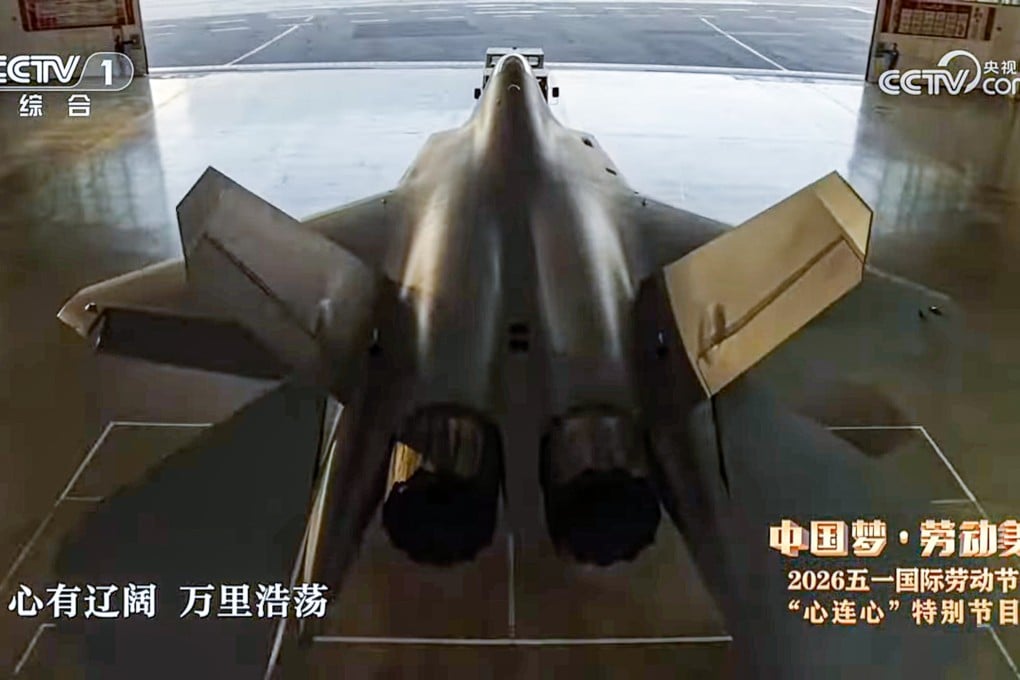
This development leverages the established defense synergy between Beijing and Islamabad. Having already integrated the JF-17 Thunder and J-10C platforms, the Pakistan Air Force (PAF) possesses the baseline infrastructure to adopt this advanced stealth technology. Therefore, the transition to 5th-generation operations appears to be a natural progression of existing strategic frameworks.
Structural Advantages of the J-35A Stealth Fighter
The aircraft incorporates a twin-engine layout and precision-engineered stealth shaping to minimize radar cross-sections. Unlike older platforms that utilize external pods, the J-35AE features an integrated Electro-Optical Targeting System (EOTS). This internal configuration preserves the low-observable profile, ensuring maximum survivability in high-threat environments. Furthermore, the platform utilizes Active Electronically Scanned Array (AESA) radar to dominate beyond-visual-range combat scenarios.
- Maximum Speed: Mach 1.8 for rapid interception.
- Combat Range: 1,200 km, supporting deep-strike missions.
- Weaponry: Internal bays housing six medium-range air-to-air missiles.
- Avionics: Advanced distributed aperture sensors for 360-degree situational awareness.
The Socio-Economic Impact: Precision and Progress
How does a high-end stealth fighter impact the daily life of a Pakistani citizen? Primarily, it optimizes national security expenditures through technological efficiency. One 5th-generation J-35A stealth fighter can perform the roles of multiple legacy aircraft with higher precision and lower attrition risks. Moreover, the integration of such advanced systems necessitates a workforce skilled in high-tech avionics and aerospace engineering. This creates a pipeline for STEM professionals, fostering a sophisticated technical ecosystem within Pakistan’s aerospace sector.
The Forward Path: A Momentum Shift
This development represents a definitive Momentum Shift for Pakistan’s regional standing. While India continues to develop its indigenous AMCA program and operates 4.5-generation Rafales, Pakistan’s acquisition of an operational stealth fighter would leapfrog existing capabilities. This is not merely a stabilization move; it is a strategic recalibration that restores parity and enhances deterrence. The J-35AE serves as the architectural foundation for a modern, digitally-integrated air force ready for the mid-21st century.









