
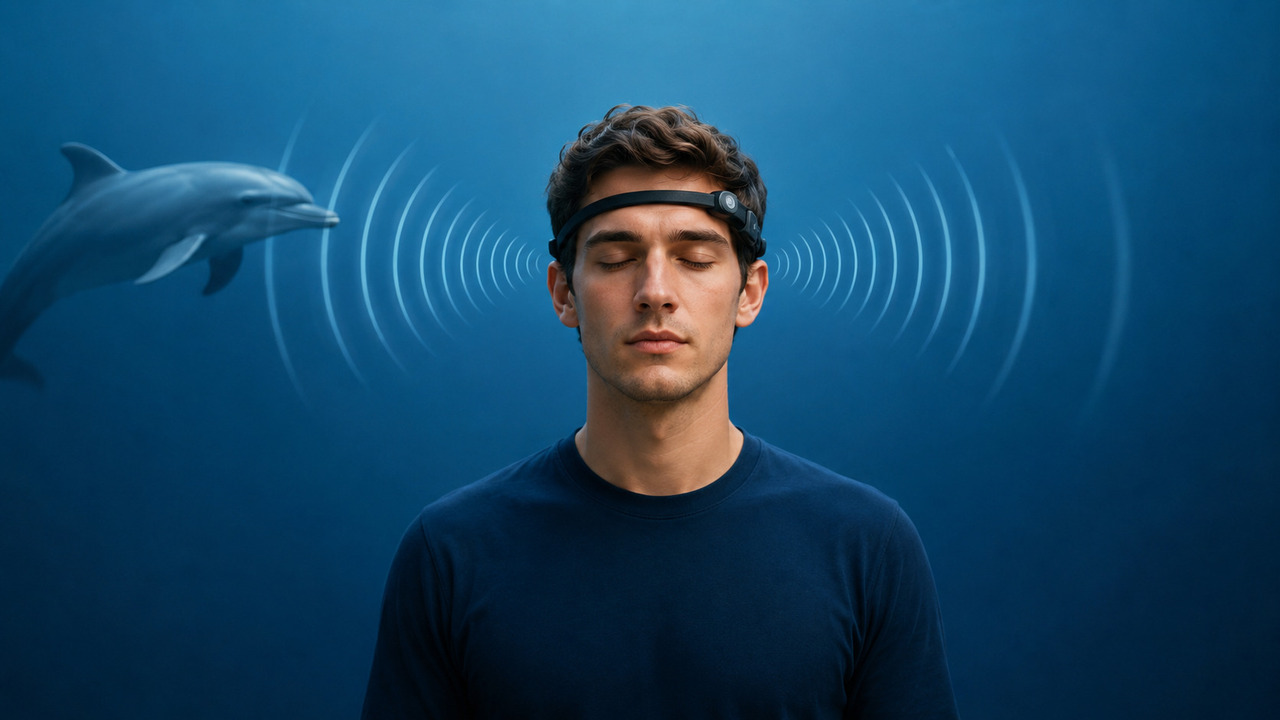
Human capability is undergoing a strategic recalibration. Recent data proves that individuals can learn echolocation within just ten weeks, effectively utilizing mouth clicks to navigate complex environments. This breakthrough suggests that the adult brain retains far more architectural flexibility than previously established. Consequently, both sighted and visually impaired participants in recent trials have demonstrated a precision-based ability to map their surroundings without traditional visual input.
The Situation Room: Understanding Sensory Sonar
The Translation
In technical terms, echolocation is a biological sonar system. Participants produce high-frequency clicks with their mouths; subsequently, they listen for the acoustic reflections bouncing off nearby objects. While we historically associated this skill with dolphins or bats, this research indicates it is a dormant human faculty. By calibrating the ears to interpret the delay and intensity of echoes, humans can effectively ‘visualize’ the shape, distance, and density of their environment.
The Socio-Economic Impact
For the visually impaired community in Pakistan, this represents a catalyst for radical independence. In high-density urban environments like Karachi or Lahore, where infrastructure often lacks accessibility features, mastering this skill can reduce reliance on external aid. Furthermore, the ability to learn echolocation regardless of age means that older citizens can regain mobility, potentially reducing the domestic care burden and empowering a new segment of the workforce.
The Forward Path
This development represents a Momentum Shift. We are moving beyond stagnant “assistive” tech toward active “human augmentation.” If we integrate these training modules into national rehabilitation programs, we can structurally improve the quality of life for thousands. This is not merely a scientific curiosity; it is a blueprint for expanding the human baseline.
Neurological Recalibration: Why You Can Learn Echolocation
Researchers at Durham University utilized MRI technology to monitor structural changes in the brain’s baseline. Specifically, they focused on the primary visual cortex (V1) and the primary auditory cortex (A1). Traditionally, science maintained that these sectors served exclusive purposes. However, the 2024 follow-up study published in Cerebral Cortex proved otherwise.
After the 10-week protocol, both blind and sighted subjects showed a strategic increase in V1 activity while processing echoes. Essentially, the brain ‘recruits’ the idle visual processing hardware to analyze sound-based spatial data. Moreover, structural scans revealed changes in grey-matter density in auditory regions, confirming that the adult brain can undergo rapid, precision-driven reconfiguration.
Importantly, these findings challenge the rigid silos of sensory perception. Because the brain can adapt so efficiently, the potential for sensory substitution technologies is now limitless. Whether for emergency responders in zero-visibility environments or for citizens with visual impairments, the capacity to learn echolocation is a verified catalyst for a more resilient society.








