

The structural integrity of a nation’s education system depends on the baseline caliber of its educators. Recent data from Gallup Pakistan indicates a significant calibration shift in the country’s academic landscape. A nationwide analysis reveals that teacher qualification standards in the public sector now significantly exceed those in private institutions. Specifically, 52.4% of government teachers hold a master’s degree or higher, while only 39.1% of private sector teachers reach this academic threshold.
The Translation: Contextualizing the Data
This data does not imply a lack of effort from the private sector. Instead, it highlights a difference in systemic recruitment. Government schools operate under a rigid, meritocratic framework that mandates specific academic benchmarks. Consequently, the public sector filters for high-level degrees as a prerequisite for entry. In contrast, private schools often prioritize flexibility and lower overhead costs. Therefore, they frequently employ individuals with intermediate (18.9%) or bachelor’s level (30.6%) qualifications to fill immediate vacancies.

The Professional Credential Metric
Academic degrees are only one variable in the equation of teaching efficacy. Professional training remains a catalyst for classroom success. The survey shows that 41.3% of government teachers hold a Bachelor of Education (B.Ed), compared to 33.4% in private schools. Furthermore, 23.4% of public sector educators possess a Master of Education (M.Ed). The private sector lags at 15.3% for this advanced professional credential. These figures suggest that public sector teachers are strategically equipped with pedagogical theory and structured teaching methodologies.
The Socio-Economic Impact
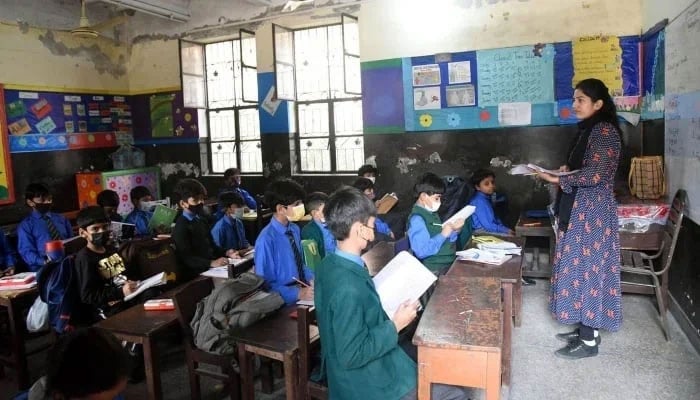
How does this disparity change the daily life of a Pakistani citizen? For urban and rural households, it challenges the common perception that private education is inherently superior. When teacher qualification standards are higher in government schools, students in the public system benefit from more rigorous academic oversight. This development could bridge the gap for low-income families, providing them access to highly qualified instructors without the financial burden of private tuition. Moreover, it underscores the need for private schools to recalibrate their hiring precision to remain competitive.

The Forward Path: Strategic Momentum
This development represents a Momentum Shift for the public sector. The data confirms that the government has successfully established a high-caliber baseline for human capital. However, the challenge now lies in translating these qualifications into measurable student learning outcomes. We must move beyond mere certification and focus on the precision of classroom delivery. Consequently, the private sector must formalize its recruitment to meet these evolving teacher qualification standards or risk a decline in pedagogical credibility.









