

Calibrated Framework: Understanding the Civil Servants Conduct Rules 2026
Pakistan’s federal government has strategically introduced the Civil Servants Conduct Rules 2026, marking a significant structural overhaul in public administration. This new framework imposes stringent regulations on asset declarations, mandates rigorous conflict of interest protocols, establishes clear guidelines for social media engagement, and prohibits political activities among government employees. Approved by the Prime Minister and issued by the Establishment Division under the Civil Servants Act 1973, these rules are immediately applicable to all civil servants both domestically and abroad. They represent a fundamental shift towards enhanced transparency and accountability within the national governance system.
The Translation: Defining New Baselines for Public Service
These Civil Servants Conduct Rules replace the previous 1964 regulations, signaling a modernized approach to public service ethics. Essentially, every government employee must now operate under a newly calibrated set of expectations designed to foster integrity and efficiency. The shift ensures that civil servants uphold the highest standards of professional conduct, aligning their actions with the broader objectives of national advancement. This reframing clarifies permissible and impermissible behaviors, ensuring consistent application across the public sector.
The Socio-Economic Impact: Bolstering Trust and Efficiency
The implementation of these rules directly impacts the daily life of a Pakistani citizen by enhancing public trust in government institutions. When civil servants adhere to strict ethical guidelines, the efficiency of public service delivery inherently improves. This translates into fairer processes for students seeking admissions, more equitable opportunities for professionals, and a more responsive administration for households in both urban and rural Pakistan. Consequently, the public experiences a governance system that is demonstrably more accountable and transparent.
The “Forward Path”: A Strategic Momentum Shift
This development undeniably represents a Momentum Shift for Pakistan. By systematically addressing long-standing issues of conduct and accountability, the government is laying a robust foundation for future administrative excellence. This strategic recalibration is not merely about maintenance; it actively propels the nation towards a more integrated, ethical, and efficient public service model, critical for sustained national progress.
Precision in Practice: Asset Declarations and Accountability
Under the new framework, all government employees are now obligated to declare their assets. Furthermore, officers at Grade 17 and above must submit annual asset details through a secure digital portal. The Federal Board of Revenue meticulously audits these declarations to ensure accuracy and compliance. Select information may be made public, thereby enhancing overall governmental transparency and fostering public confidence in financial integrity.
The Translation: Ensuring Financial Transparency
This mandate means that financial disclosures are no longer optional but a baseline requirement for all civil servants. It systematically creates an auditable trail, making it significantly harder for illicit financial activities to go undetected. Moreover, the digital submission process streamlines data collection and analysis, facilitating more efficient oversight by regulatory bodies. Consequently, this measure directly combats corruption by establishing clear financial accountability.
The Socio-Economic Impact: Protecting Public Resources
For Pakistani citizens, robust asset declarations directly safeguard public resources. This prevents the diversion of funds intended for essential services like education, healthcare, and infrastructure. Households and professionals benefit from the assurance that tax revenues are managed with utmost integrity, leading to improved public services and a more equitable distribution of national wealth. This commitment strengthens the socio-economic fabric of the nation.
The “Forward Path”: A Foundational Stabilization Move
This specific measure represents a Stabilization Move. While critical for reform, asset declarations primarily fortify existing financial oversight mechanisms. It bolsters integrity and reinforces a baseline of accountability, yet it serves to stabilize a fundamental aspect of governance rather than introduce entirely new operational paradigms. It’s a necessary structural reinforcement.
Eliminating Conflict: Integrity in Official Duties

The updated rules rigorously address potential conflicts of interest, requiring civil servants to maintain a clear separation between personal financial interests and official duties. In instances of potential conflict, officers are systematically required to recuse themselves from relevant decision-making processes. Additionally, employees and their families face strict prohibitions against accepting gifts or incentives that could unduly influence official responsibilities. Receiving foreign honors or titles now necessitates prior, explicit government approval.
The Translation: Upholding Impartial Decision-Making
This directive ensures that personal gains do not compromise public service. It means that a civil servant’s judgment must remain unswayed by external pressures or individual financial opportunities. The recusal requirement is a critical mechanism, ensuring that decisions impacting citizens are based solely on merit and public benefit. Furthermore, the controls on gifts and foreign honors prevent subtle forms of undue influence, maintaining the integrity of official positions.
The Socio-Economic Impact: Fairer Governance for Citizens
For everyday Pakistanis, these rules guarantee a fairer and more impartial governance system. Students applying for scholarships, entrepreneurs seeking licenses, and families accessing public services can expect decisions free from personal bias or external influence. This commitment to ethical conduct cultivates a level playing field, fostering a more equitable society where meritocratic principles prevail, thereby reducing systemic corruption.
The “Forward Path”: Reinforcing Ethical Baselines
This is a definitive Stabilization Move. By systematically codifying and enforcing stringent conflict of interest and gift policies, the government is reinforcing critical ethical baselines. These measures are essential for maintaining the operational integrity of public service and ensuring that foundational principles of fairness and impartiality are consistently upheld across all governmental tiers.
Digital Discipline: Regulating Social Media Presence
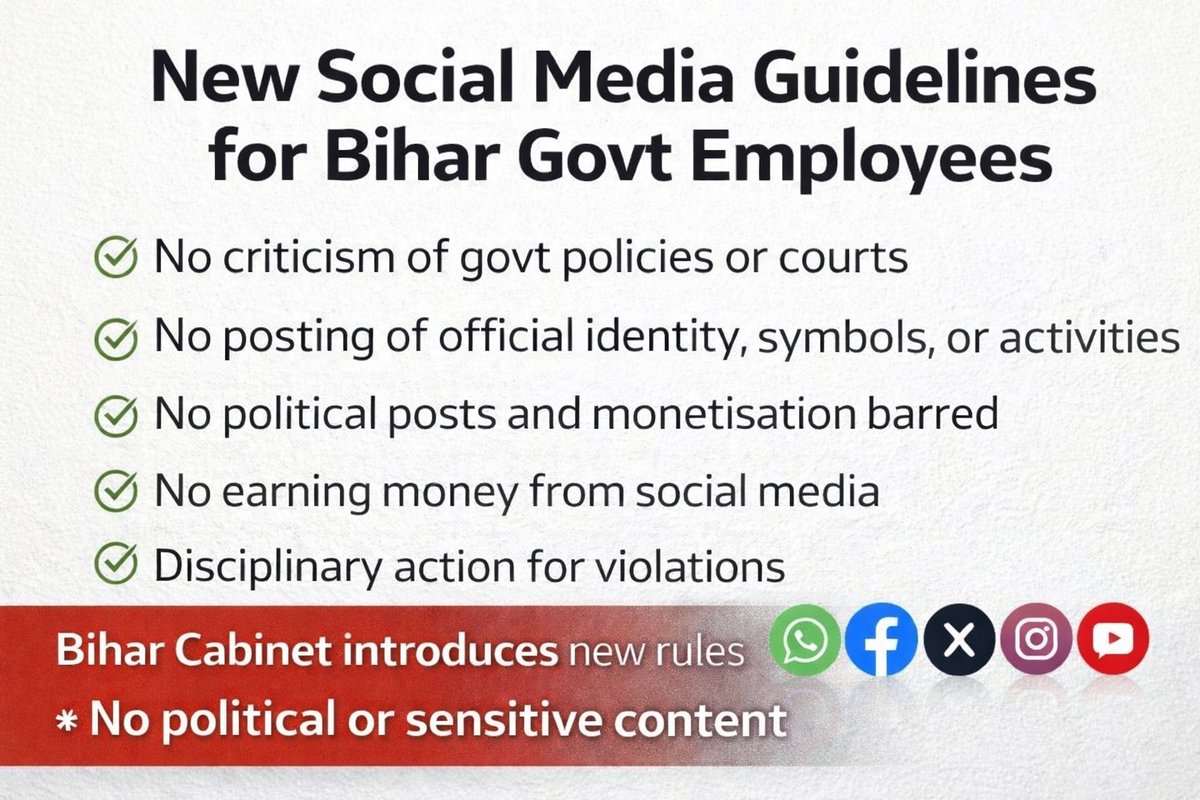
The government has imposed precise limits on civil servants’ social media activities. Employees cannot initiate or operate blogs, vlogs, or media platforms without explicit prior permission. They are also strictly barred from sharing official, confidential information on personal accounts. Officials must meticulously separate personal and official social media presences, with authorities reserving the right to request details of personal accounts at any time. Publishing content related to official duties for personal promotion remains strictly prohibited under these revised rules.
The Translation: Defining Permissible Digital Engagement
This translates to a disciplined digital footprint for public servants. It establishes clear boundaries on what can be shared and how, preventing the inadvertent or deliberate leakage of sensitive information. The mandate for separate accounts reinforces the distinction between an individual’s private life and their public role. Consequently, this policy safeguards national security and preserves the confidentiality essential for effective governance, thereby mitigating digital risks.
The Socio-Economic Impact: Safeguarding Official Information
These social media regulations protect the integrity of official communications, which is vital for all citizens. Confidential policy discussions, security information, and sensitive data remain secure, preventing misinformation or exploitation. This directly benefits professionals who rely on accurate government data, and safeguards the public from potential breaches that could compromise national interests or individual privacy. Thus, it reinforces secure digital environments.
The “Forward Path”: A Necessary Adaptive Measure
This provision represents a Momentum Shift, adapting governance structures to the digital age. It acknowledges the evolving landscape of information dissemination and proactively establishes controls. While enforcing discipline, it also facilitates a controlled integration of digital platforms into the public service framework, signaling an adaptive and forward-thinking approach to modern challenges.
Undivided Focus: Banning Political Activity and External Employment

The Civil Servants Conduct Rules explicitly prohibit government employees from engaging in political activities, supporting political groups, or publicly criticizing government policies. This ensures a non-partisan civil service dedicated solely to national objectives. Furthermore, civil servants are now barred from taking up part-time or full-time employment in private organizations, banks, NGOs, or foreign entities during their service tenure, except under very specific, officially approved conditions. This ensures their undivided commitment to public duties.
The Translation: Ensuring Non-Partisan Service
This measure means civil servants must maintain strict political neutrality. Their role is to implement policy, not to shape political discourse or align with specific factions. The prohibition on external employment ensures that a civil servant’s energy, focus, and loyalties remain exclusively dedicated to their public responsibilities. This eliminates potential conflicts of interest arising from divided allegiances or external financial incentives, thus optimizing public service delivery.
The Socio-Economic Impact: Dedicated Public Service Delivery
A non-partisan and fully dedicated civil service directly translates to more consistent and reliable public service delivery for all Pakistanis. Citizens can trust that administrative decisions are made without political bias, and that officials are fully committed to their roles. This enhances the quality of services across all sectors, from urban infrastructure projects to rural development initiatives, ultimately accelerating national progress and fostering stability.
The “Forward Path”: Calibrating Professional Boundaries
This is a clear Stabilization Move. These prohibitions systematically reinforce established boundaries between political involvement and impartial public administration. They solidify the operational framework ensuring a dedicated, non-partisan civil service, crucial for maintaining the structural integrity of governance. This move calibrates professional expectations, rather than introducing entirely new operational methodologies.
Holistic Accountability: Professional Conduct and Confidentiality

The new Civil Servants Conduct Rules emphasize integrity, discipline, punctuality, and responsible behavior across both official duties and online presence. This holistic approach ensures consistent ethical standards. Civil servants are also explicitly restricted from publishing memoirs or any writings that disclose confidential information acquired during their service. This critical measure safeguards sensitive governmental data and preserves the sanctity of official communications, reinforcing national security protocols.
The Translation: Broadening the Scope of Responsible Behavior
This means that professional conduct extends beyond the office, encompassing all public interactions and personal publications. It codifies the expectation that civil servants act as exemplary representatives of the state at all times. The memoir restriction is particularly crucial; it prevents the unauthorized release of classified information, maintaining the trust inherent in governmental operations. Therefore, these rules mandate a comprehensive and continuous commitment to ethical behavior and discretion.
The Socio-Economic Impact: Elevating Standards of Public Interaction
These enhanced conduct rules elevate the overall standard of interaction between citizens and government officials. When civil servants consistently demonstrate integrity and discipline, public interactions become more efficient and respectful. This positively impacts areas like legal processes, public grievance redressal, and information access for students and professionals. Consequently, the improved conduct reinforces public confidence in governmental institutions, creating a more harmonious civic environment.
The “Forward Path”: A Comprehensive System Upgrade
This aspect of the rules represents a Momentum Shift. By integrating comprehensive behavioral expectations and robust confidentiality clauses, the government is not merely stabilizing but upgrading the entire system of professional conduct. It’s a proactive enhancement designed to foster a culture of unwavering integrity and meticulous discretion, crucial for advancing Pakistan’s administrative efficacy on a global stage.








