
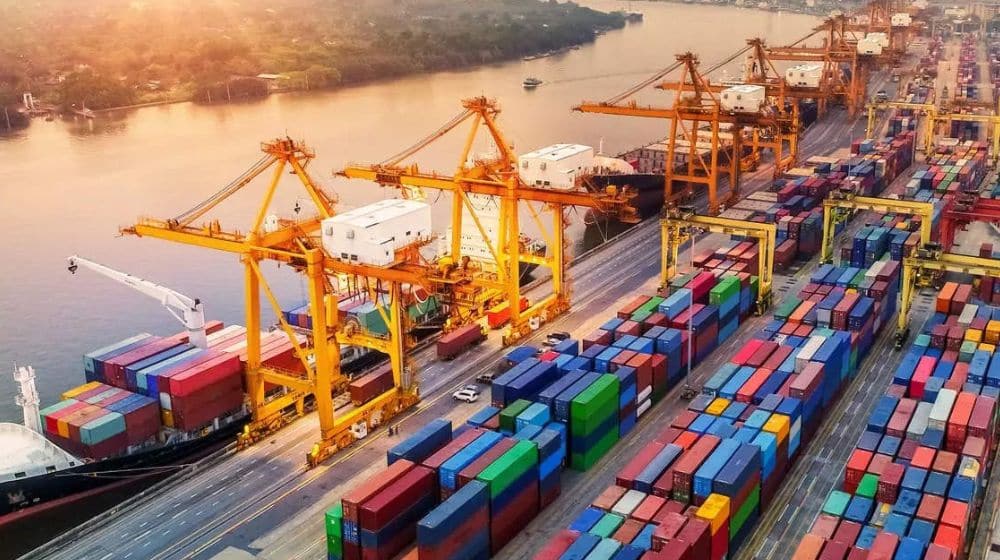
The Government of Pakistan is recalibrating the national economic baseline by implementing import duty relief and removing trade barriers in the forthcoming federal budget. This strategic move aligns with International Monetary Fund (IMF) benchmarks to enhance market liquidity. Consequently, the administration aims to dismantle 2,600 non-tariff barriers by June 2026, starting with a precision focus on 76 critical HS codes. This architectural overhaul will prioritize systemic efficiency over short-term protectionist measures.
Calibrating the National Tariff Policy
The Ministry of Finance has structured a multi-phase review of export and import policy orders. Officials intend to integrate the National Tariff Policy 2025-2030 directly into the upcoming Finance Bill. This integration ensures that the import duty relief remains a permanent fixture of Pakistan’s trade architecture rather than a temporary fix. Key sectors, including textiles, leather, and pharmaceuticals, will receive prioritized support to lower input costs and catalyze industrial output.
Strategic Removal of Trade Barriers
Removing non-tariff barriers is a core component of the government’s commitment to the IMF. By simplifying regulatory procedures, the state reduces the compliance burden on private enterprises. Furthermore, the Cabinet Committee on Regulatory Reforms will oversee the removal of these obstacles to ensure a transparent marketplace. This precision-driven approach aims to align Pakistan’s trade regime with global standards by November 2026.
The Translation: Clear Context
In “Next Gen” clarity, the government is essentially cutting the “red tape” and hidden taxes that make raw materials expensive for local factories. By eliminating specific codes and lowering duties, Pakistan is making it cheaper for companies to manufacture goods. This logic dictates that when it costs less to build something, the final product becomes more competitive both at home and in the international market.
Socio-Economic Impact
For the average Pakistani citizen, these reforms act as a catalyst for price stabilization. When the automobile and pharmaceutical sectors receive import duty relief, the cost of manufacturing vehicles and essential medicines should theoretically decrease. Furthermore, a more efficient trade system creates job stability in the textile and leather industries, which are the backbones of Pakistan’s export economy. This shift helps secure the financial baseline for households across both urban and rural centers.
The Forward Path: Expert Opinion
This development represents a clear Momentum Shift for Pakistan. Moving away from a protectionist trade stance toward a more liberalized, competitive framework is a bold but necessary evolution. While these measures are anchored in IMF commitments, their long-term success depends on the disciplined execution of the National Tariff Policy. If maintained, this strategy will transform Pakistan from a restricted market into a dynamic hub for regional trade.








