Optimizing Pakistan’s Energy Grid: A Strategic Approach to Electricity Loadshedding
To ensure national advancement and system efficiency, the Power Division has initiated a calibrated daily electricity loadshedding Pakistan schedule. This structural adjustment, implemented during evening peak hours, strategically averts substantial increases in consumer electricity tariffs. By precisely managing demand, authorities aim to stabilize the energy market and mitigate reliance on expensive imported fuels, thereby safeguarding economic stability for millions of households.
The Translation: Calibrating Power Distribution via Strategic Load Management
The government’s measure is not merely a traditional power cut; it represents a strategic pivot in national energy policy. Rather than allowing electricity tariffs to escalate due to global fuel price volatility, the Power Division is implementing controlled load management. This entails approximately 2.25 hours of daily power regulation, specifically targeting the period between 5:00 PM and 1:00 AM. Consequently, this precise intervention minimizes financial burdens on citizens while maintaining a baseline of supply stability.

Socio-Economic Impact: Calibrating Household Costs
How does this directly change the daily life of a Pakistani citizen? For students and professionals, this means predictable, albeit managed, evening power access. Furthermore, households across urban and rural Pakistan will experience tangible relief from potentially prohibitive electricity bills. Without these strategic measures, tariffs could have risen by Rs. 5 to Rs. 6 per unit. This current strategy is projected to limit the potential increase to roughly Rs. 1.5 per unit, preventing an additional hike of nearly Rs. 3 per unit. Therefore, the calibrated electricity loadshedding Pakistan acts as an economic shield, protecting disposable incomes.
Authorities confirm that all distribution companies have received instructions to publish feeder-wise outage schedules. This transparency allows families and businesses to plan their activities with greater precision. Such proactive management is critical for operational continuity and public convenience.

Data-Driven Reforms: Sustained Tariff Reduction
A structural analysis reveals that between July 2025 and February 2026, electricity consumers received Rs. 46 billion in cumulative power relief. Moreover, the average electricity price declined by 71 paisas per unit, defying increasing global fuel prices. This reduction was achieved through a series of system reforms and strategic operational adjustments. Specifically, the Power Division attributes this success to:
- Strict enforcement of the merit order in power dispatch.
- Improved planning and greater reliance on low-cost generation sources.
- Enhanced utilization of existing generation capacity.
- Structural improvements in transmission and administrative management.
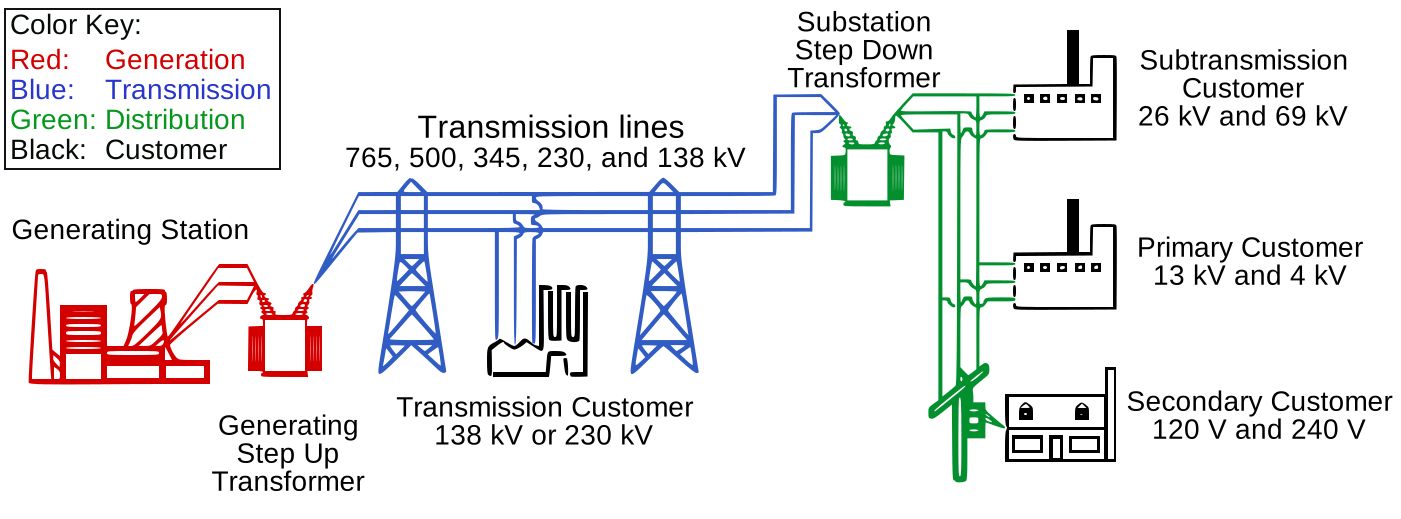
These actions collectively reduced operational losses, demonstrating a commitment to system optimization and efficiency. The biggest challenge remains managing the evening peak demand window, when consumption rises sharply and hydropower generation naturally declines.
The Forward Path: Momentum Shift or Stabilization Move?
This development fundamentally represents a Stabilization Move. While implementing electricity loadshedding Pakistan is not a long-term growth catalyst, it is a crucial tactical maneuver. It precisely prevents a systemic shock to the national economy caused by escalating energy costs. This controlled intervention buys critical time for Pakistan to diversify its energy mix and invest in advanced grid infrastructure. Consequently, it provides a stable baseline from which future, more transformative energy policies can be launched, ensuring calibrated progress rather than reactive crisis management. This strategic stability is essential for sustained national advancement.