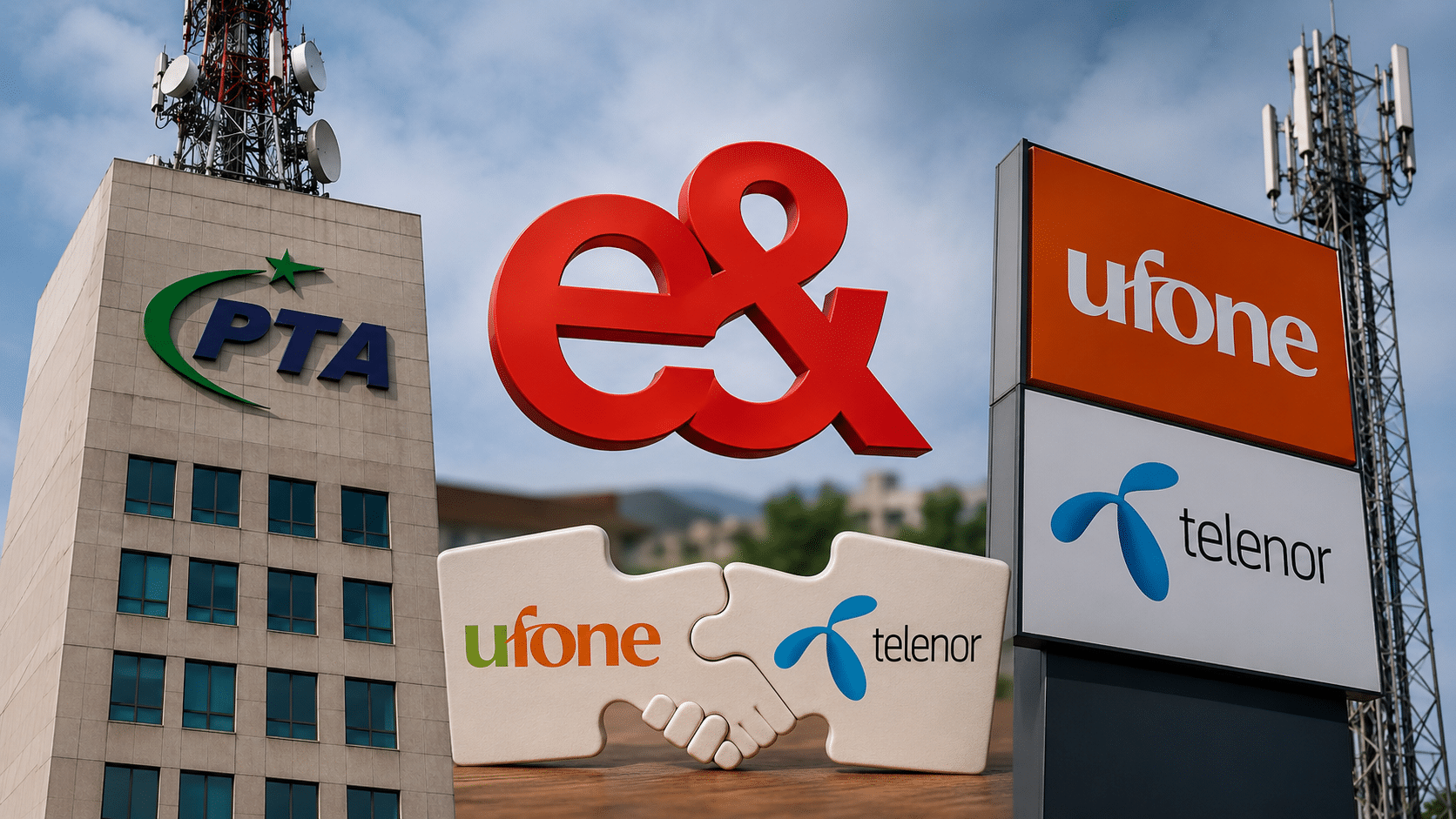
National identity serves as the calibrated foundation for sovereign digital infrastructure. Consequently, the federal government recently intervened to halt the Ufone-Telenor rebranding initiative. This strategic move addresses mounting legal concerns regarding the removal of “Pakistan” from the corporate identity. Furthermore, the decision highlights critical questions about the Ufone board’s authority to approve such a significant structural shift independently.
Strategic Identity and Regulatory Oversight
The intervention occurred after the Ufone board approved the global “e&” brand name for the merged entity. Notably, the board includes a sitting senator and two federal secretaries. However, the Pakistan Telecommunication Company Limited (PTCL) board had previously deferred this specific proposal. This discrepancy triggered immediate alarm at the highest levels of the state leadership. Consequently, officials are now seeking a formal opinion from the Law Division to clarify the boundaries of board authority during a merger.
The rebranding exercise remains suspended until the Law Division provides a definitive legal baseline. This pause reflects a broader commitment to ensuring that strategic state assets comply with national interest protocols. The government holds a decisive 67 percent stake in the merged entity, giving it the ultimate authority over corporate trajectory.
Governance Standards in State-Owned Enterprises
This controversy has reignited a necessary debate regarding governance standards in state-owned enterprises (SOEs). Specifically, critics are scrutinizing the accountability of government-nominated directors who receive significant compensation for board oversight. The current administration insists that these directors must ensure every decision aligns with precision-driven legal frameworks and the national interest. Consequently, the $800 million in liabilities linked to “e&” in Pakistan adds another layer of financial complexity to the ongoing integration.
The Situation Room Analysis
The Translation: Corporate Governance vs. Board Autonomy
In technical terms, the government is questioning the “delegated authority” of subsidiary boards. While boards typically manage branding, the integration of Telenor Pakistan into PTCL’s framework creates a unique legal entity. The government argues that a subsidiary board cannot unilaterally erase a national identifier before the regulator, the Pakistan Telecommunication Authority (PTA), confirms the legal completion of the amalgamation.
The Socio-Economic Impact: Protecting National Equity
For the average Pakistani citizen, this decision maintains a sense of local ownership over vital communication channels. Branding influences consumer trust and the perceived “location of accountability.” By retaining the word “Pakistan,” the government ensures that the largest telecom operator in the country remains architecturally linked to the domestic economy. This prevents a “identity drain” that often precedes the offshoring of profits and strategic control.
The Forward Path: A Stabilization Move
This development represents a Stabilization Move. While global branding offers modern appeal, the government’s intervention reinforces the rule of law and corporate discipline. By demanding legal clarity before marketing, the state prevents a chaotic transition that could destabilize the telecom sector. Moving forward, expect more rigorous oversight of SOE directors to ensure they act as catalysts for national stability rather than just corporate expansion.