
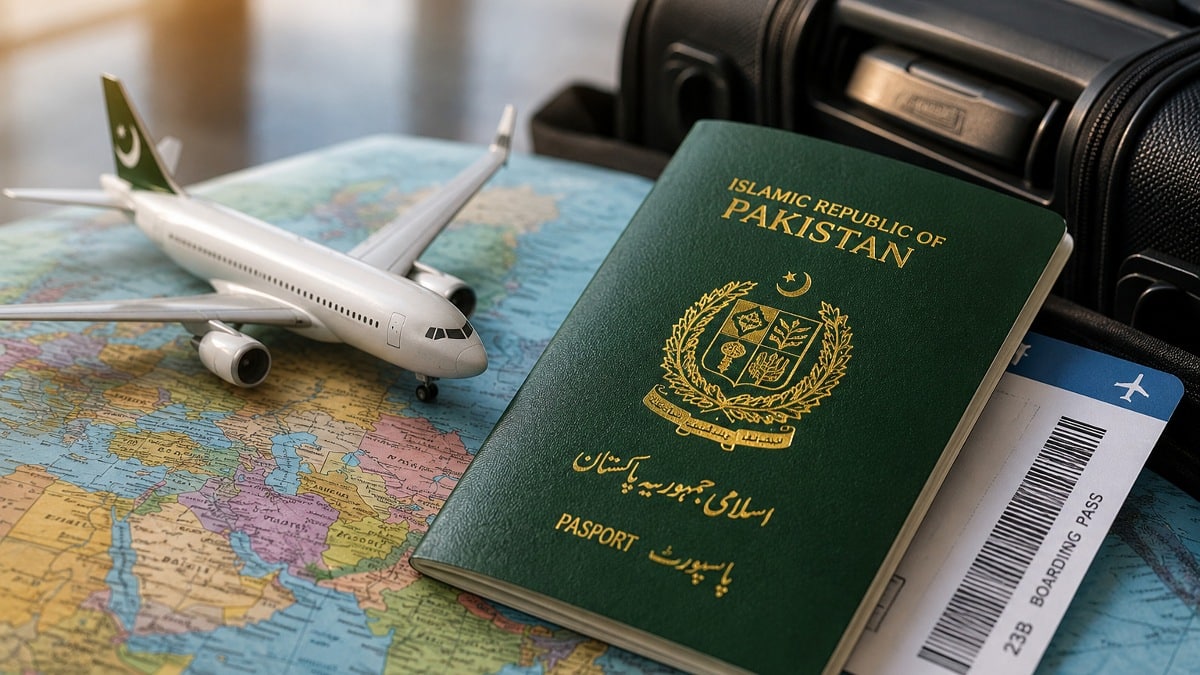
Pakistan is fundamentally re-engineering its national identity framework by transitioning from legacy machine-readable passports to a high-efficiency digital e-passport system. Consequently, this calibrated move eliminates the friction of manual processing, allowing citizens to secure documentation through mobile platforms and digital payment gateways. Furthermore, the Director General of Passports, Muhammad Abdul Khaliq, confirmed that this initiative synchronizes Pakistan’s travel credentials with the most rigorous international security standards.
The Translation: Precision in Digital Identity
Technically, the shift involves replacing older analog data storage with advanced embedded chips and laser-engraved identification markers. In contrast to the previous system, the 2025 upgrade utilizes digital security certificates that act as a structural barrier against forgery. Specifically, the integration with NADRA’s Pak ID platform allows the system to verify biometrics remotely. Therefore, the physical presence requirement is now a secondary fallback rather than a primary necessity for most applicants.
Structural Security and Global Compatibility
Additionally, the government is finalizing registration with the International Civil Aviation Organization (ICAO). This strategic alignment ensures that the new Pakistani credentials are compatible with global e-gates. Once completed, the digital e-passport system will facilitate rapid, automated immigration clearance for Pakistani travelers at international hubs. Consequently, this reduces the administrative burden on both the traveler and the foreign customs authorities.
The Socio-Economic Impact: Efficiency for the Citizen
How does this structural shift change the daily life of a Pakistani citizen? Primarily, it restores the most valuable currency: time. By enabling online passport applications and home delivery, the government has effectively removed the “middleman” and the physical logistics of urban travel for thousands. Families and professionals in both urban centers and rural areas can now interact with the state through a calibrated, digital interface. Furthermore, the inclusion of mobile banking and digital wallets for fee payments democratizes access to state services, ensuring that the system is inclusive of the digital-first generation.
- Reduced Bureaucracy: Minimal physical visits to government offices.
- Financial Transparency: Direct digital payments eliminate hidden service charges.
- Global Mobility: Faster processing at international airports via e-gate technology.
The Forward Path: A Momentum Shift
In our expert assessment, the transition to a digital e-passport system represents a significant Momentum Shift for Pakistan’s digital frontier. It is not merely a stabilization move to fix a broken process; it is a proactive leap toward a paperless, data-driven governance model. While legacy options remain for those with biometric challenges, the baseline has shifted toward automation. To maintain this trajectory, the government must ensure the baseline server infrastructure remains robust against the increased load of the Pak ID integration. Ultimately, this move positions Pakistan as a modern player in the global digital identity landscape.








