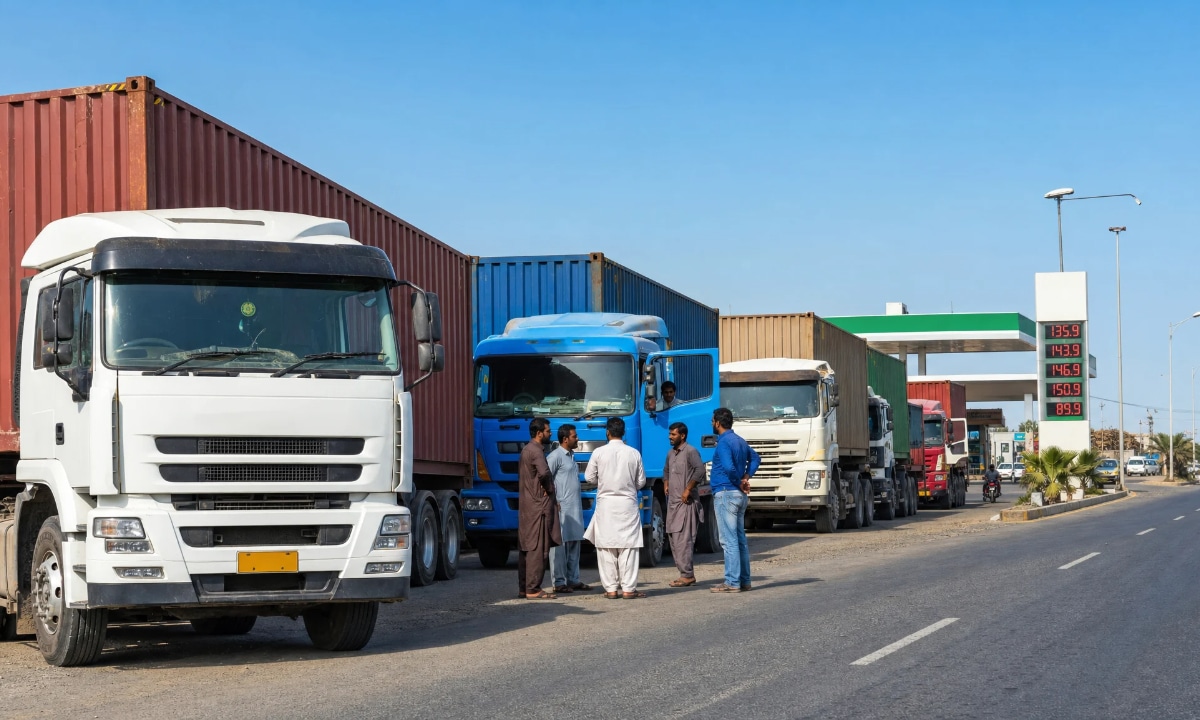
National logistics systems require a precise equilibrium between fuel input and operational output to sustain economic momentum. Consequently, the Pakistan Goods Transport Alliance has calibrated a 15% freight rates increase to offset the latest surge in petroleum prices. This structural adjustment follows a significant hike in high-speed diesel and petrol costs, which serve as the primary fuel baseline for the nation’s transport fleet.
The Logic Behind the 15% Freight Rates Increase
Alliance President Malik Shahzad Awan recently addressed the media in Karachi to clarify the necessity of this price revision. He noted that the government has failed to provide strategic relief to transporters despite the escalating overheads. Specifically, the government adjusted petroleum prices between July 18 and July 20 as follows:
- High-Speed Diesel: Increased by Rs. 31.05 per liter (New price: Rs. 354.35).
- Petrol: Increased by Rs. 5.44 per liter (New price: Rs. 316.15).
- Kerosene: Increased by Rs. 34.33 per liter (New price: Rs. 276.66).
The Translation: Recalibrating Operational Margins
In “Next Gen” clarity, the freight rates increase is a survival mechanism rather than a profit-seeking move. Transporters face a compound crisis where fuel is only one variable. Operating costs also include toll taxes, withholding taxes, and heavy traffic fines. When diesel prices jump by over Rs. 31 per liter, the cost of moving a single container across the country rises exponentially. Furthermore, many operators have already grounded their vehicles because the current economic framework makes logistics unsustainable.
Socio-Economic Impact: The Daily Reality
How does this 15% surge change the life of a Pakistani citizen? Since logistics is the backbone of the supply chain, this freight rates increase will likely trigger a “domino effect” on essential commodities. Households in both urban centers like Lahore and rural regions will observe a rise in the retail price of groceries, construction materials, and medicine. Effectively, the increased cost of moving goods becomes a hidden tax on the end consumer, tightening the budget for students and professionals alike.
The Forward Path: Momentum Shift or Stabilization?
This development represents a Stabilization Move necessitated by a lack of systemic support. While the 15% increase protects the transport sector from immediate collapse, it does not solve the underlying inefficiency of our energy-dependent logistics. To regain momentum, the government must consider the Alliance’s demands to abolish withholding taxes and reform the toll system. Without these structural catalysts, the transport sector will continue to react to fuel shocks rather than driving economic growth.