
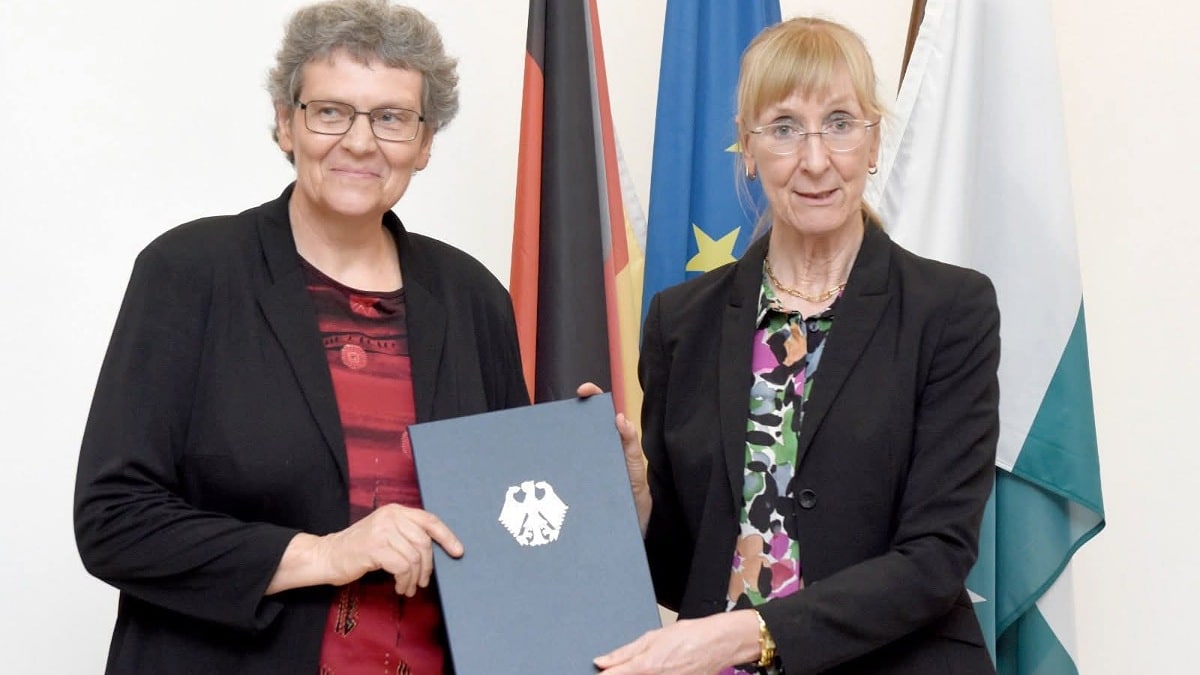
The structural stability of a nation’s healthcare system often depends on the calibrated commitment of dedicated individuals. Sister Annette Dimigen’s recent receipt of the German Order of Merit represents a significant milestone, honoring her 30 years of surgical and administrative precision at the Rawalpindi Leprosy Hospital. This recognition, bestowed by German President Frank-Walter Steinmeier, underscores a baseline of humanitarian excellence that has stabilized thousands of lives across Pakistan since 1997.
The Strategic Impact of the German Order of Merit
Ambassador Ina Lepel formally presented the prestigious medal to Sister Annette during a disciplined ceremony at the German residence in Islamabad on June 17. Consequently, this award highlights the deep-rooted bilateral cooperation in the healthcare sector. Sister Annette currently serves as the secretary-general of the Aid to Leprosy Patients (ALP) Association. Furthermore, she has been a catalyst for operational efficiency at the 97-bed facility, colloquially known as the German Leprosy Hospital.
Healthcare Metrics and Operational Scale
The hospital operates as a high-volume hub for specialized care, managing an annual caseload that includes:
- 180,000 to 200,000 total annual patient consultations.
- Critical treatments for Leprosy and Tuberculosis (TB).
- Specialized management of Multidrug-Resistant TB.
- Frontline care for Cutaneous Leishmaniasis.
The Situation Room: Analysis
The Translation (Clear Context)
In technical terms, the Order of Merit is Germany’s only federal decoration, awarded for achievements that serve the collective interest. Specifically, Sister Annette’s role transcends traditional nursing; she has managed the administrative logistics of a massive healthcare machine. By bridging German philanthropic support with Pakistani clinical needs, she has established a sustainable model for treating infectious diseases that are often neglected in mainstream urban healthcare.
The Socio-Economic Impact
This development directly impacts the most vulnerable socio-economic demographics in Pakistan. Leprosy and TB disproportionately affect low-income households where living conditions are cramped. By providing high-precision, specialized care to 200,000 patients annually, the hospital prevents a massive loss in national labor productivity. Consequently, families are spared the catastrophic financial burden of chronic disability, allowing students to remain in school and professionals to continue their economic contributions.
The Forward Path (Opinion)
This recognition is a clear Momentum Shift for the Pakistani-German healthcare partnership. While the award honors past service, it serves as a strategic signal for future cooperation. We must transition from a model of “individual humanitarianism” to “institutionalized precision.” The success of the Rawalpindi Leprosy Hospital should serve as a structural blueprint for provincial health departments to replicate efficiency in specialized disease management across rural Pakistan.








