
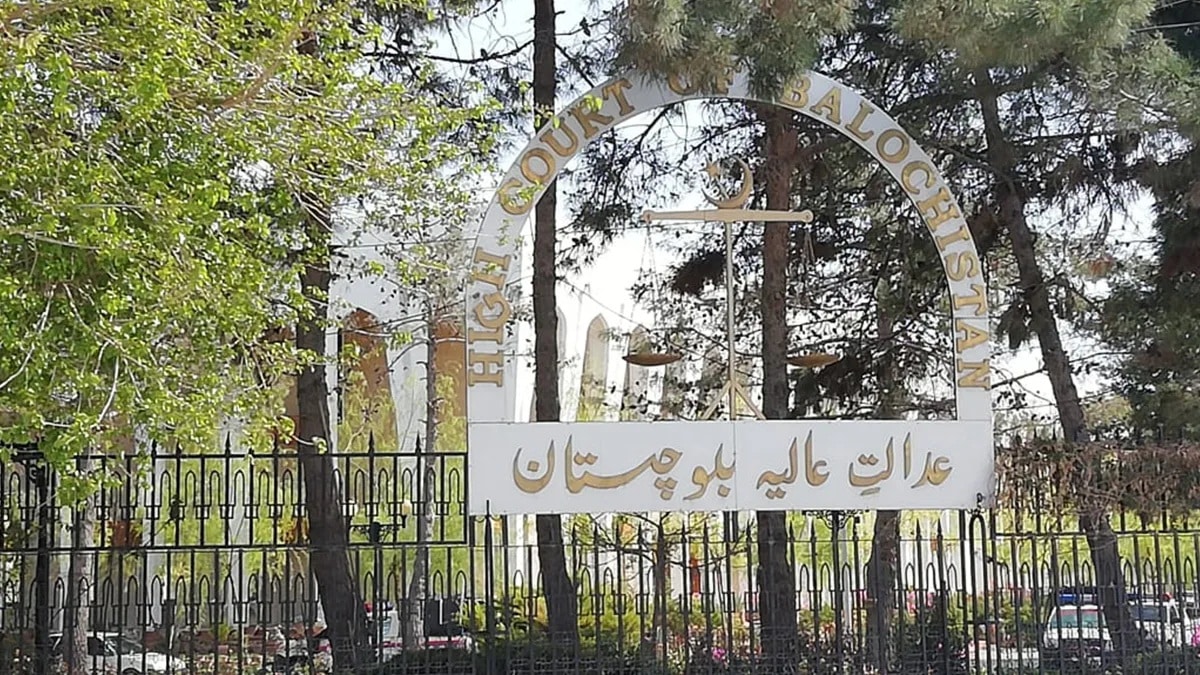
Former Balochistan Chief Minister Nawab Muhammad Aslam Khan Raisani has calibrated a high-stakes legal challenge against the Kalat Division abolition. Consequently, he filed a formal petition in the Balochistan High Court alongside senior political allies. This strategic maneuver aims to reverse the provincial government’s decision to merge the Mastung district into Quetta Division, a move Raisani describes as a violation of regional sovereignty.
The Legal Contest Over Kalat Division Abolition
Raisani, serving as the Chief of Sarawan, maintains that the government bypassed critical stakeholders before finalizing this administrative restructuring. Furthermore, he emphasizes that the decision ignored the views of local tribes and elected representatives. However, the petition highlights a deeper concern: the erosion of historical identity. By merging these districts, the state risks dismantling the unique cultural and administrative heritage of the Kalat region.
The Translation (Clear Context)
In precise terms, this legal battle is about the limits of executive power. While the provincial government frames the merger as an administrative optimization, the petitioners view it as a structural failure of democracy. Precision in governance requires consultation. Consequently, when the government acts unilaterally on land allocation or district boundaries, it disrupts the baseline of trust between the state and its citizens.
The Socio-Economic Impact
For the average citizen in Mastung and the broader Kalat region, this restructuring introduces significant uncertainty. Specifically, centralized administration in Quetta may increase the logistical burden on local residents seeking government services. Moreover, the lack of community input in these decisions often leads to misaligned resource allocation. This shift threatens to stall local development projects that were originally calibrated for the unique needs of the Kalat Division.
The Forward Path (Opinion)
This development represents a Momentum Shift for provincial politics. It signals that the era of top-down administrative mandates is facing a robust legal and social challenge. To achieve lasting stability, Balochistan requires a new social contract that prioritizes political precision over arbitrary restructuring. The court’s eventual decision will serve as a critical catalyst for how regional identity is balanced with state administration in the future.








