
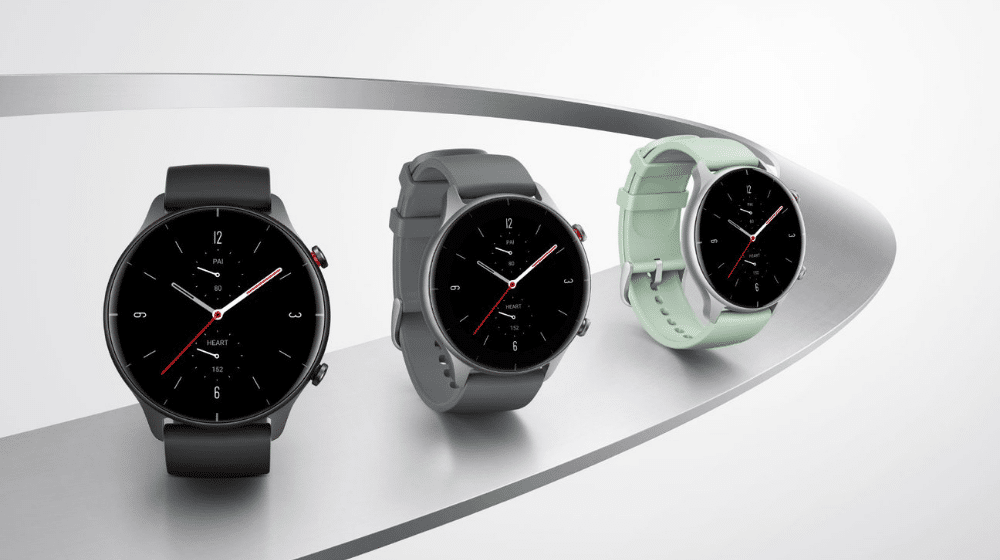
Efficiency in fiscal policy requires precise data integration. Consequently, the Federal Board of Revenue (FBR) has established revised customs values for imported smartwatches, smart bands, and smart rings. This calibrated adjustment aims to eliminate under-invoicing and secure the national exchequer against revenue leakage. The Directorate General of Customs Valuation issued these updates through Valuation Ruling No. 2076/2026, targeting non-GSM wearable devices across all global origins.
The Structural Logic of Revised Customs Values
The FBR finalized these valuations after a rigorous 90-day analysis of import data and market trends. Previously, inconsistent declarations by importers rendered standard transaction value methods ineffective. Therefore, authorities implemented Section 25(7) of the Customs Act, 1969, to create a stable baseline for taxation. During the consultative phase, stakeholders provided market evidence to ensure the new values reflect real-world economic conditions.
Furthermore, the ruling incorporates a freight adjustment mechanism. For air shipments, customs officials will now add the differential between air and sea freight to the assessable value. This precision ensures that the total tax base accurately represents the landing cost of the technology.
Brand Categorization and Pricing Matrix
The new valuation framework divides wearable brands into three distinct tiers. Specifically, the revised customs values for smartwatches are set at $5 for Category A, $3 for Category B, and $1.5 for Category C. For smart bands and rings, the values follow a similar graduated scale of $4.5, $2.5, and $1.25 respectively.
- Category A: Includes major players like Xiaomi, Realme, Amazfit, Honor, Infinix, and Huawei’s sub-brands.
- Category B: Covers regional brands such as Dany, Ronin, Faster, and Zero.
- Category C: Encompasses all other low-end or generic manufacturers.
Note: Premium entities including Apple, Samsung, Huawei, Garmin, and Google remain outside this specific matrix. Instead, collectorates will assess these brands at higher values under Section 25 to reflect their premium market positioning.
The Situation Room Analysis
The Translation
In technical terms, the FBR is moving away from “self-declared” values which were often manipulated to pay lower taxes. By setting a “minimum floor price” (the valuation ruling), the government creates a standardized tax environment. If an importer declares a value higher than this floor, the FBR accepts the higher value. However, they can no longer declare values lower than these calibrated benchmarks.
The Socio-Economic Impact
For the average Pakistani citizen, this move may lead to a marginal stabilization or slight increase in the retail price of mid-range smart wearables. However, the macro-benefit is significant. By curbing under-invoicing, the state captures its rightful revenue, which is a catalyst for reducing the national deficit. For the local tech industry, this levels the playing field for honest importers who previously struggled against competitors using undervalued invoices.
The Forward Path (Opinion)
This development represents a Momentum Shift toward a more transparent and automated trade ecosystem. While it adds a layer of structural cost to imports, it removes the “gray market” advantage that has long plagued Pakistan’s retail sector. Future success depends on the FBR’s ability to frequently update these values as global tech prices fluctuate, ensuring the system remains both fair and competitive.








