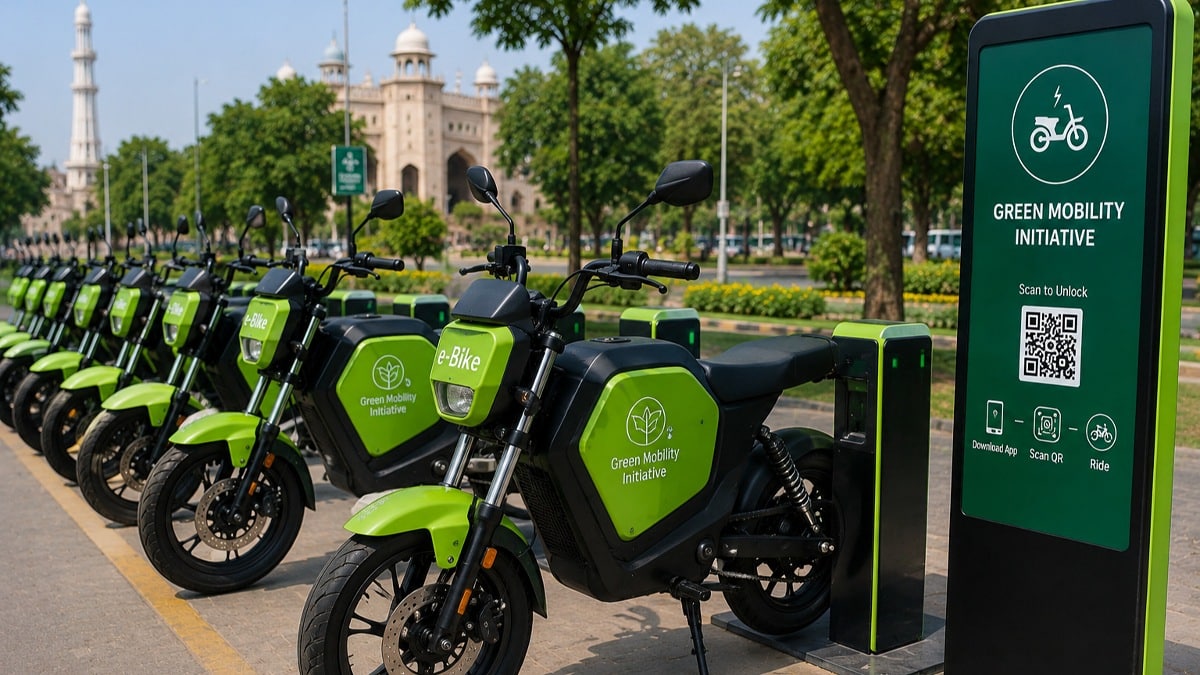
The Punjab government has calibrated a significant structural shift in urban logistics by formally launching the Lahore e-bike service under its Green Mobility Initiative. This strategic deployment integrates 50,000 electric vehicles into the metropolitan transit matrix to optimize efficiency and minimize carbon output. Consequently, commuters now have access to a tech-driven, affordable alternative to traditional fuel-dependent transport. The system utilizes a precise mobile application for GPS tracking and battery swapping, ensuring a seamless baseline for daily travel.
Strategic Infrastructure and Financial Calibration
The project represents a precision-engineered fiscal model, utilizing Rs. 8.1 billion in private investment. This structure ensures zero financial burden on the provincial government while catalyzing rapid infrastructure development. Over the next 18 months, the government will oversee the phased rollout of the fleet across the city.
- Phase 1 Deployment: 10,000 high-efficiency e-bikes.
- Docking Infrastructure: 1,500 smart docking stations at strategic city nodes.
- Security Protocols: Mandatory CNIC verification and real-time GPS monitoring.
The Fare Structure of the Lahore E-Bike Service
To ensure widespread adoption, the authorities have established a calibrated fare system. Users will pay Rs. 25 for the initial kilometer and Rs. 15 for every subsequent kilometer. This pricing strategy positions electric mobility as a competitive catalyst against rising fuel costs.
The Translation: Decoding Urban Mobility
This initiative translates complex environmental goals into a functional “plug-and-play” system for the average citizen. By utilizing a battery-swapping mechanism, the service eliminates “range anxiety”—the fear that a vehicle will run out of power. Furthermore, the integration of smart docking stations creates a structured parking ecosystem, preventing the sidewalk clutter often seen in global ride-sharing models. It is a transition from disorganized commuting to a synchronized, data-backed transit network.
The Socio-Economic Impact: Empowering the Pakistani Commuter
The Lahore e-bike service directly impacts the financial baseline of students, low-income professionals, and urban households. By lowering the entry cost of personal transit, the project increases geographic mobility for the workforce. Consequently, students can reach educational institutions more reliably, while professionals can bypass traffic congestion, effectively increasing “productive hours” within the economy. This shift reduces the household expenditure on volatile petroleum products, redirecting capital toward essential needs.
The Forward Path: A Momentum Shift
This development represents a definitive Momentum Shift for Pakistan’s urban planning. It moves beyond theoretical sustainability into a tangible, large-scale implementation of green technology. While the reliance on private investment secures the project’s immediate viability, its long-term success depends on the consistent maintenance of the 1,500 docking stations. This is a bold catalyst for a cleaner, faster, and more precise Lahore.