
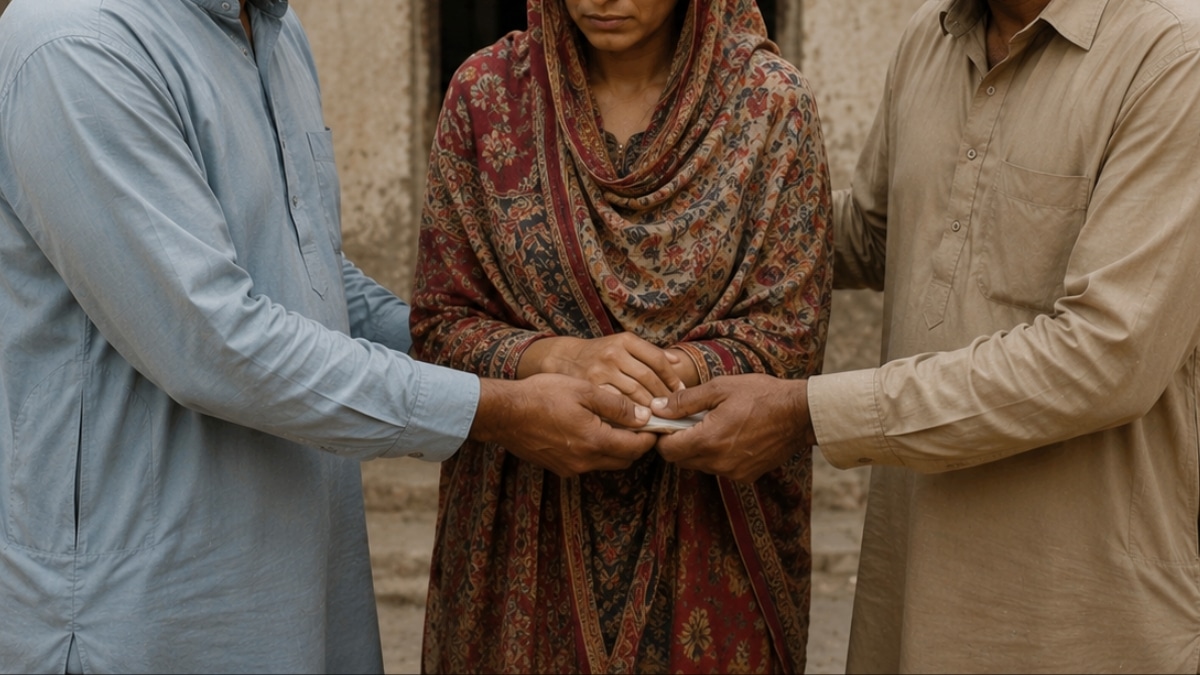
The recent Faisalabad trafficking case represents a catastrophic breach of the social contract and highlights a calibrated failure in our regional protection systems. In Kokianwala, a 33-year-old woman named Nadia alleges that her husband, Usman, traded her to a property dealer to settle a Rs. 70,000 debt. This incident underscores the extreme vulnerability of citizens when informal debt structures collide with a lack of legal literacy.
Structural Breakdown: The Mechanics of Exploitation
According to the victim, the exploitation began when Usman borrowed funds from his associate, Shehzad. Consequently, when the debt remained unpaid, Usman allegedly utilized his wife as a liquid asset to satisfy the creditor. This strategic betrayal led to Nadia’s forced confinement and the abduction of her children. Furthermore, the suspects allegedly fabricated legal documents, including a fake divorce dated August 7, 2025, to provide a veneer of legitimacy to their crimes.
The Institutional Response Baseline
Despite Nadia escaping her captors on June 17 with the help of her brothers, the institutional response remains stalled. She has formally petitioned the Faisalabad CPO, yet law enforcement has not yet secured the recovery of her four-year-old son, Shehryar. This delay in the Faisalabad trafficking case demonstrates a precision gap between reporting a crime and achieving justice within the current administrative framework.
The Situation Room: Strategic Analysis
The Translation
In technical terms, this is not merely a domestic dispute but a high-level human rights violation involving human trafficking, illegal confinement, and document forgery. The “deal” described is legally void under Pakistani law. However, the perpetrators used coercion and “legal theater”—fake stamp papers and forced thumb impressions—to bypass the victim’s agency. This tactic exploits the baseline fear of legal systems common in marginalized communities.
The Socio-Economic Impact
This development sends a chilling signal to the working-class households of Pakistan. When a Rs. 70,000 loan—a relatively small sum in macroeconomic terms—can dismantle a family unit, it exposes the fragility of our social fabric. For the Pakistani citizen, this highlights the absence of accessible micro-finance alternatives and the terrifying reality that without institutional oversight, the domestic sphere can become a site of unregulated commerce.
The Forward Path
We categorize this development as a Stabilization Move requiring urgent intervention. While the victim’s appeal to Punjab Chief Minister Maryam Nawaz and IG Punjab indicates a move toward accountability, the underlying catalyst—unregulated debt and police inertia—remains unaddressed. True momentum will only shift when the state implements a precision-driven tracking system for domestic abuse and debt-related trafficking cases to ensure no citizen is sold for a baseline loan.








