
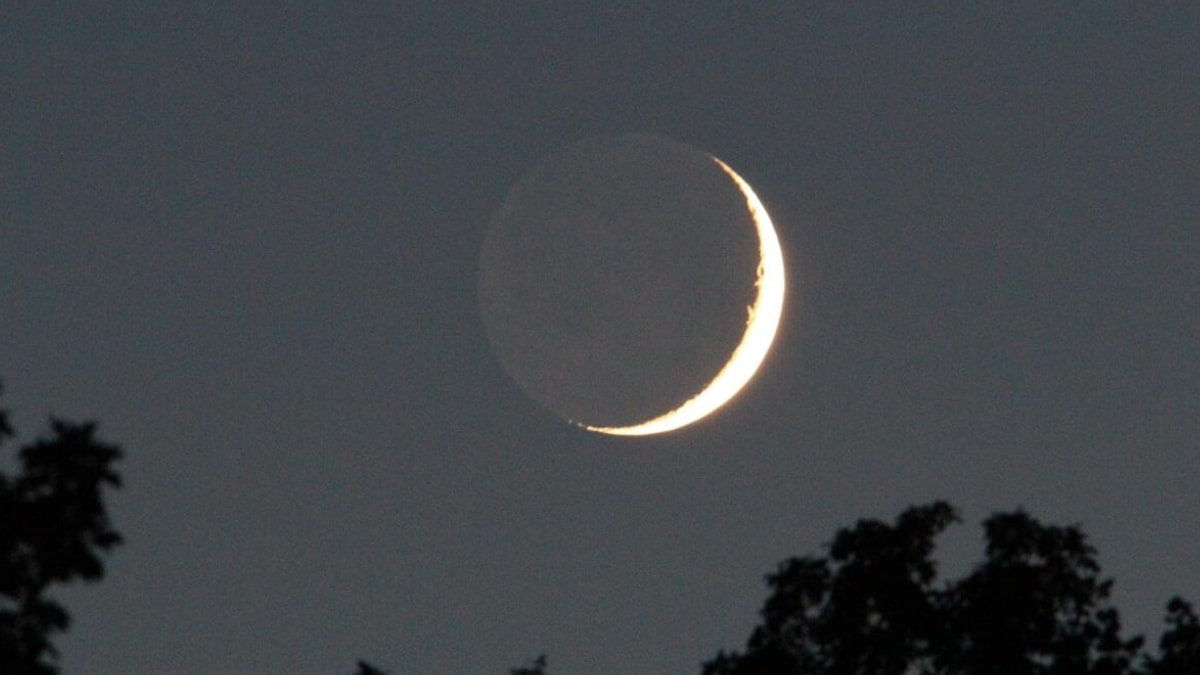
The precision of our lunar calendar serves as a foundational baseline for national logistics and cultural synchronicity. Recently, the Pakistan Meteorological Department (PMD) calibrated its astronomical data to announce the expected Safar moon sighting for the year 1448 AH. Based on current atmospheric models, the new moon will technically be born at 2:43 p.m. on July 14, 2026. Consequently, this timing creates the necessary geometric conditions for a visual sighting on the evening of July 15.
Calibrated Visibility Data and Regional Forecasts
Meteorological experts suggest a high probability of visibility across the southern corridor, particularly in Sindh. In Karachi, the crescent will likely remain above the horizon for approximately 64 minutes after sunset. Furthermore, observers in the city can expect the Safar moon sighting window to remain open until 8:28 p.m. provided that cloud cover remains minimal. While the PMD provides the scientific baseline, the Central Ruet-e-Hilal Committee maintains the structural authority to make the final religious declaration after verifying field reports.

The Situation Room: Analysis of the Safar Transition
The Translation (Clear Context)
We must distinguish between the astronomical “birth” of the moon and its “sighting.” The birth refers to the moment the moon aligns between the Earth and the Sun, becoming invisible. However, the Safar moon sighting requires the moon to move far enough from the sun’s glare to be visible to the naked eye. The PMD’s forecast essentially predicts when this physical separation becomes sufficient for human observation under standard atmospheric conditions.
The Socio-Economic Impact
Predictable lunar cycles are vital for the systematic planning of Pakistani households and businesses. Specifically, the start of Safar influences the scheduling of religious commemorations and personal milestones. For professionals and students, these forecasts allow for a calibrated approach to the second half of the year, ensuring that administrative deadlines do not conflict with significant cultural shifts.
The “Forward Path” (Opinion)
This development represents a Momentum Shift in our national infrastructure. By integrating advanced astronomical calculations with traditional moon-sighting protocols, Pakistan is moving toward a more predictable and data-driven civic life. This synergy between STEM-based forecasting and institutional authority reduces public ambiguity and enhances system efficiency across the country.








