The European Investment Bank (EIB) has formally expressed interest in the Reko Diq project, signaling a strategic alignment between Pakistan’s mineral wealth and Europe’s green energy transition. While officials challenge the $6 trillion valuation as premature, the mine remains a pivotal catalyst for national systemic efficiency. The EIB aims to finance critical infrastructure to secure a baseline supply of minerals essential for the global digital evolution. Consequently, this development positions Pakistan as a key player in the international technological supply chain.
Decoding the Mineral Frontier: EU Interest and Valuation
Director General Minerals Nawaz Ahmed Virk recently addressed the EU Pakistan Business Forum, providing a calibrated assessment of the site’s potential. Although he described the $6 trillion valuation as “highly exaggerated” due to a lack of detailed exploration data, he confirmed the immense mineral potential of the region. The EIB representative, Marco Arena, emphasized that the institution seeks “off-take” agreements. These agreements would grant Europe a share of the minerals produced to support their own sovereign digital transitions.

Strategic incentives are currently being deployed to stabilize foreign interest. The Ministry of Energy has offered tax exemptions during the development phase to attract international capital. However, structural friction remains, as contractors have raised concerns regarding sales tax and withholding levies. Discussions between the Finance Division and the Ministry of Energy are ongoing to defer these costs until production begins, ensuring a more favorable baseline for investors.
The Translation: Navigating Geo-Economic Interests
In precision terms, “off-take” agreements mean that in exchange for building roads, power grids, and water systems, Europe secures a guaranteed first-buy option on the raw materials. This is not just a loan; it is a strategic barter. The project is currently transitioning from a speculative asset to a functional industrial hub. Despite the high-stakes environment, the EIB is prioritizing “enabling infrastructure,” which reduces the risk profile for other secondary investors.
Socio-Economic Impact: Transforming the Daily Life of Pakistanis
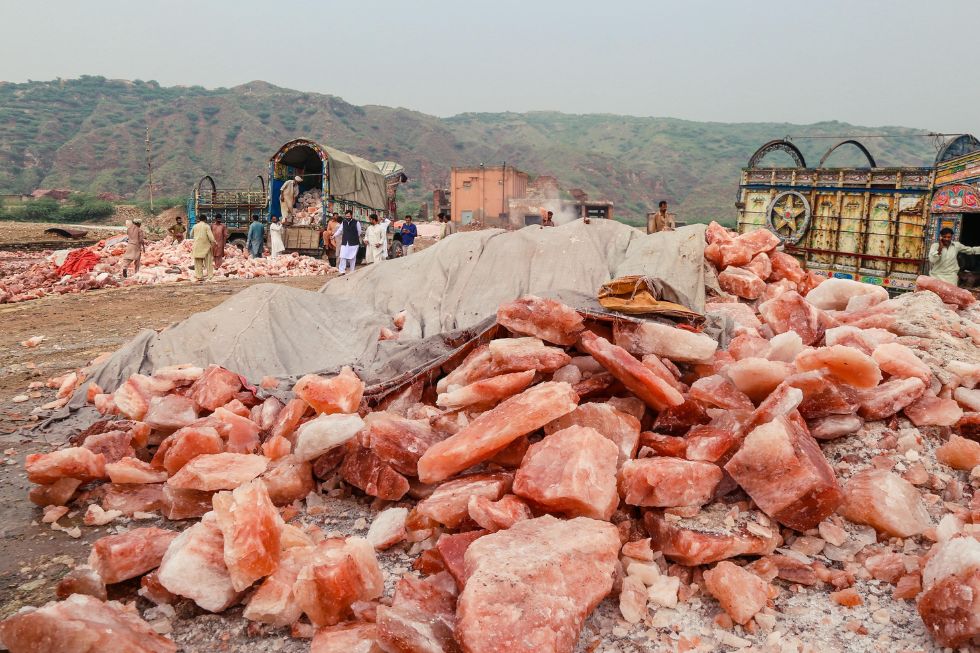
For the average Pakistani citizen, the Reko Diq project represents a structural shift toward sustainable currency stability. As billions of dollars in foreign direct investment (FDI) flow into the country, the demand for local engineering, logistics, and technical services will surge. This project acts as a catalyst for high-skilled employment in Balochistan and beyond. Furthermore, successful extraction and export will strengthen the national treasury, potentially alleviating the tax burden on urban households by diversifying the state’s revenue streams.
The Forward Path: Momentum Shift or Stabilization?
This development represents a Momentum Shift for Pakistan’s industrial sector. While Barrick Gold’s recent slowdown—driven by security concerns and financing requirements—highlights significant baseline risks, the EU’s interest provides a necessary geopolitical counterweight. The projected cost of $6 billion for the first phase requires disciplined execution. If Pakistan can resolve the current fiscal disputes with contractors and maintain a secure perimeter, the first production target of 2028 will serve as a milestone for national advancement.