

National health security requires a calibrated response to systemic threats. The Directorate of Drug Control recently triggered a counterfeit medicine alert, identifying four specific batches that jeopardize public safety. This structural intervention ensures that substandard pharmaceutical products do not compromise the baseline of our national healthcare system.
Tactical Breakdown: Affected Pharmaceutical Batches
Precision testing by the Central Drug Laboratory has exposed several counterfeit products infiltrating the market. Authorities confirmed that a batch of the pain-relief tablet Brexin failed authenticity protocols. Similarly, a batch of Danzen DS, commonly utilized for inflammation management, was flagged as fraudulent. Consequently, the Directorate has ordered an immediate market withdrawal to prevent further patient exposure.
Furthermore, the regulator identified counterfeit batches of Tonoflex-P and the antibiotic Novidat. These findings represent a serious breach of the supply chain. In response, the Directorate has commanded all distributors and pharmacies to purge these specific batches from their inventory without delay. This strategic recall is essential to maintain the integrity of clinical outcomes across Pakistan.
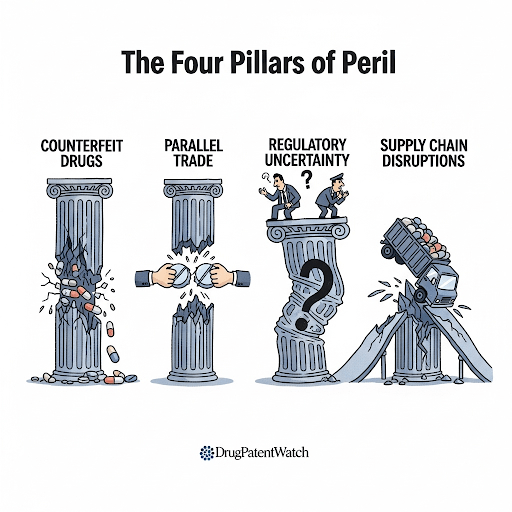
The Syringe Safety Crisis
Beyond the counterfeit medicine alert, the Drug Regulatory Authority of Pakistan (DRAP) expanded its crackdown to include medical devices. Specifically, 17 batches of auto-disable syringes from 11 different manufacturers failed safety compliance. Laboratory analysis revealed faults in the locking mechanisms, which allows for dangerous reuse of the equipment.
The reuse of syringes acts as a catalyst for the transmission of infectious diseases, including Hepatitis and HIV. By imposing an immediate ban on these 3ml and 5ml syringe batches, DRAP is implementing a necessary safety barrier. Provincial authorities are now executing a coordinated removal strategy to stabilize the medical supply chain.
The Translation: Contextualizing Regulatory Precision
In technical terms, “counterfeit” indicates that these products were not manufactured by the authorized entities or do not contain the stated active ingredients. This is not merely a labeling error; it is a structural failure of the supply chain. When a medicine is declared “fake,” it means the product has bypassed every safety baseline established by the state. The “Next Gen” logic here is clear: Regulatory vigilance is the only shield against the erosion of medical trust.

The Socio-Economic Impact: Protecting the Pakistani Household
For the average Pakistani citizen, these developments directly influence household safety and economic stability. When a family purchases medicine, they are investing in the health of a primary earner or a child. Counterfeit products lead to prolonged illness, increased hospital costs, and potential long-term disability. This crackdown protects the financial and physical well-being of urban and rural professionals alike by ensuring that every Rupee spent on healthcare delivers actual therapeutic value.
The Forward Path: A Stabilization Move
Our analysis categorizes this development as a Stabilization Move. While identifying fake drugs is a reactive measure, the scale of this crackdown signals a shift toward more rigorous market oversight. To transition this into a “Momentum Shift,” Pakistan must integrate blockchain-based tracking and AI-driven supply chain monitoring to prevent counterfeit products from ever reaching the shelf. For now, the Directorate has taken the necessary steps to clean the current environment.








