
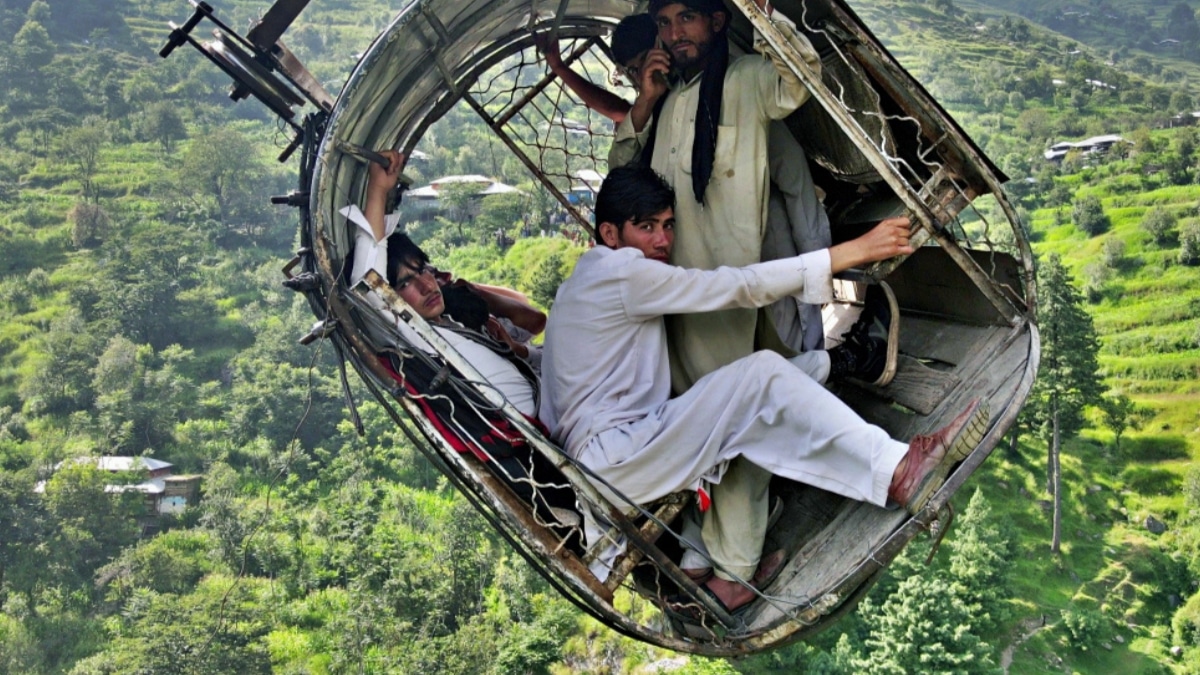
Technological precision and human grit often converge at the point of infrastructure collapse. The Battagram rescue documentary, titled Hanging by a Wire, serves as a cinematic calibrated analysis of the 2023 incident that captivated a global audience. Directed by Mohammed Ali Naqvi, this documentary thriller will premiere on the opening day of the 2026 Sundance Film Festival on August 28.
A Global Phenomenon Captured in Real-Time
The film revisits the harrowing 2023 emergency where a cable snapped on a school transport car, leaving six children and two adults suspended 900 feet above the Himalayan foothills. Notably, this event marked one of the first major rescue operations to unfold as a viral social media phenomenon. Consequently, drones and television crews provided an unprecedented archive of footage, allowing Naqvi to construct a high-intensity narrative that maintains the pacing of a Hollywood thriller.
Furthermore, the director consciously avoided traditional tropes of helplessness. Instead, he highlights the agency and resilience of the Battagram community. By positioning local residents as strategic actors rather than passive victims, the Battagram rescue documentary recalibrates the global perception of rural Pakistani society.
Confronting the Transport Infrastructure Gap
The Survival Logic of High-Risk Transport
Beyond the immediate rescue, the film analyzes the systemic reliance on makeshift cable cars. In mountainous regions where paved roads remain unavailable, these “sky bridges” serve as a vital but hazardous baseline for transportation. Naqvi personally experienced this danger during production, describing the journey as “petrifying.” This firsthand perspective emphasizes the urgent need for structural transport reforms in the region.
Local Expertise as a Catalyst for Success
The operation was a race against time, with experts predicting the remaining cable had a lifespan of fewer than ten hours. The film focuses on the precision of the rescuers, including local wire repairman Sahib Khan and gymnast Ali Swati. Additionally, police officer Sonia Shamroz is recognized for her strategic role in coordinating the 14-hour mission. These individuals represent the human capital capable of overcoming mechanical failures through sheer ingenuity.
The Situation Room Analysis
The Translation
This film transitions from raw emergency footage to a sophisticated structural analysis of survival. It identifies the 14-hour operation not merely as a localized accident, but as a catalyst for understanding the intersection of indigenous engineering and global media pressure. The term “documentary thriller” reflects the film’s ability to maintain high-stakes pacing while preserving factual integrity.
The Socio-Economic Impact
The Battagram rescue documentary highlights the baseline risks faced by rural Pakistani students and professionals daily. Effectively, the survival of these eight individuals forces a necessary national dialogue regarding the economic cost of infrastructure gaps. Improved safety protocols and road connectivity in mountainous districts would directly enhance the security and productivity of these neglected human corridors.
The Forward Path
This development represents a Momentum Shift for the Pakistani creative economy. By presenting high-stakes national events with architectural precision, Naqvi sets a new standard for documentary filmmaking. Constructively, the film acts as a baseline for future advocacy, pushing the government to stabilize transport systems before another cable snaps. This is progress through accountability.








