
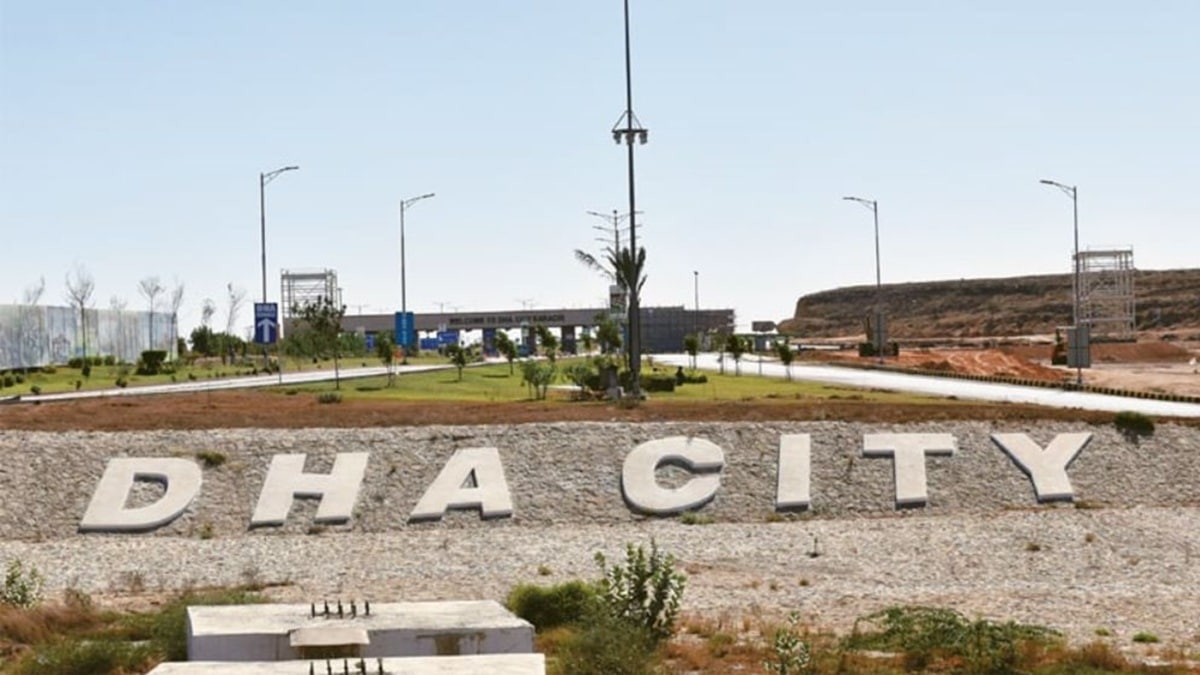
DHA City Karachi has achieved a structural milestone as the first private housing project authorized to distribute and supply its own electricity. This calibrated move by the National Electric Power Regulatory Authority (NEPRA) grants DHA Energy Supply Company (DESCO) two parallel licenses for a 21-year period. Consequently, the project now possesses the legal framework to manage its own power ecosystem independently of traditional provincial grids.
Breaking the Monopoly: A New Energy Baseline
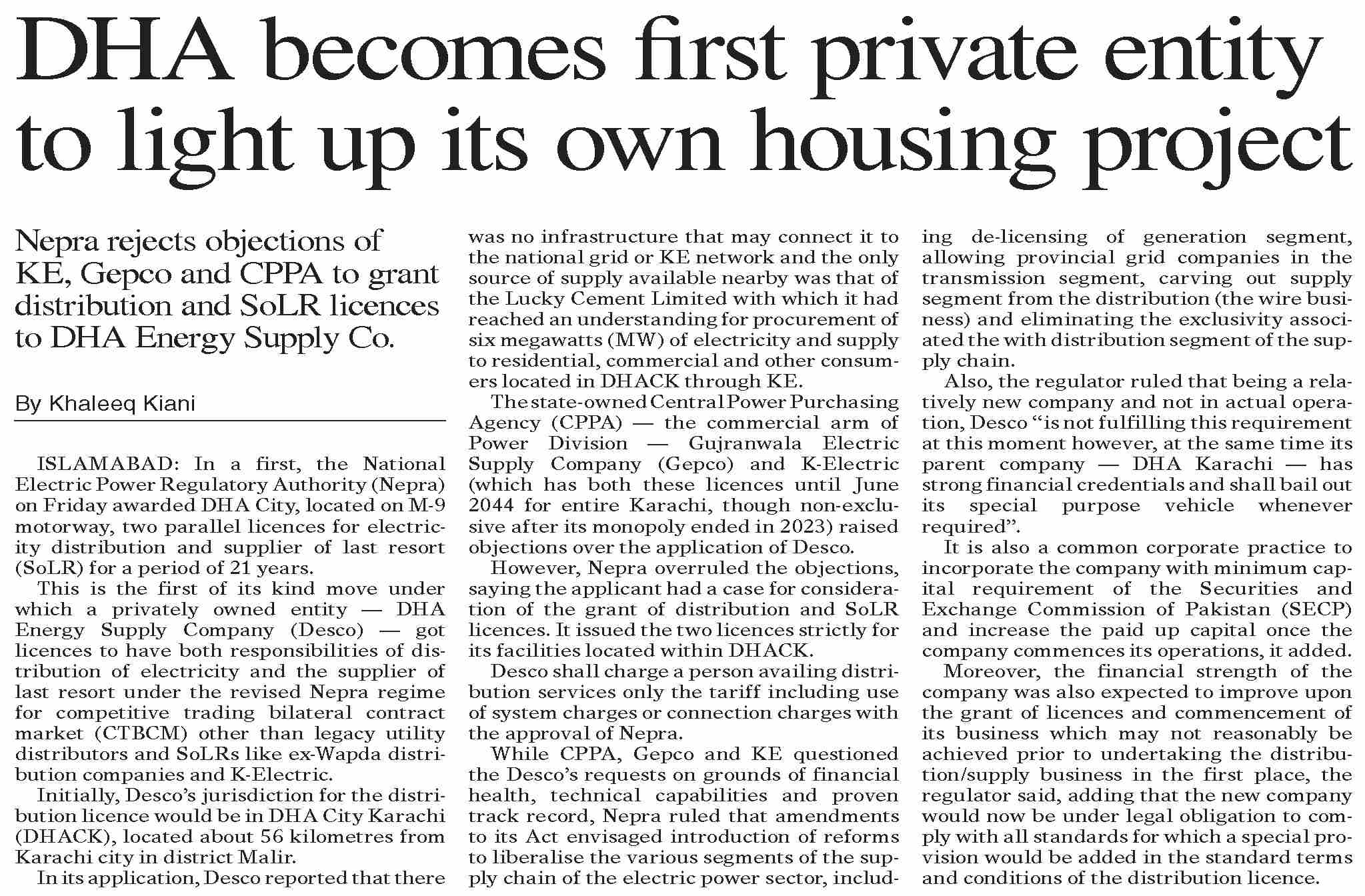
The decision establishes DESCO as the first privately owned entity to receive both distribution and Supplier of Last Resort (SoLR) licenses. Previously, these responsibilities were the exclusive domain of state-owned entities or K-Electric. Furthermore, the DHA City Karachi project currently operates without a direct connection to the national grid. To resolve this, DESCO will procure 6 megawatts of electricity from Lucky Cement Limited to sustain its residential and commercial sectors.
The Translation: Next-Gen Infrastructure Logic
In technical terms, NEPRA has authorized a “micro-grid” architecture within a Competitive Trading Bilateral Contract Market. This allows DHA City Karachi to act as its own utility provider. Instead of relying on a centralized, often strained national network, the community uses local procurement and distribution. Specifically, DESCO will manage the billing, maintenance, and technical standards directly under NEPRA’s oversight, ensuring a localized accountability loop.
The Socio-Economic Impact
How does this change the daily life of a Pakistani citizen? For the residents of DHA City Karachi, this move translates to increased energy security and potentially higher service precision. By decentralizing power distribution, the project mitigates the systemic risks of regional grid failures. Moreover, it creates a blueprint for other urban developers to follow, suggesting a future where localized energy clusters drive economic stability for households and businesses alike.
- Enhanced Reliability: Direct procurement reduces dependency on the overloaded Karachi main grid.
- Regulatory Protection: Consumers are protected by NEPRA-approved tariffs and connection fees.
- Economic Catalyst: Independent power supply increases property value and commercial viability in the Malir district.
The Forward Path: Momentum Shift or Stabilization?
We view this development as a significant Momentum Shift. While critics raised concerns regarding DESCO’s initial financial baseline, NEPRA’s approval signals a shift toward a deregulated energy market. This is not merely a stabilization move; it is a catalyst for structural competition. As K-Electric’s monopoly ends, the emergence of entities like DESCO represents the precision-led future of Pakistan’s infrastructure, where efficiency is prioritized over legacy monopolies.








