
DeepSeek founder Liang Wenfeng has officially secured his position as the richest AI founder globally, following a calibrated $50 billion revaluation of his Hangzhou-based laboratory. According to the Bloomberg Billionaires Index, Liang’s net worth skyrocketed to $36 billion, doubling his previous baseline of $16.7 billion. This structural shift in wealth places him ahead of prominent industry figures like OpenAI president Greg Brockman and Anthropic co-founder Dario Amodei.
Analyzing the Rise of the Richest AI Founder
The recent ranking specifically targets founders whose primary revenue originates from artificial intelligence models. Consequently, this precise definition excludes hardware giants or chip manufacturers, highlighting the pure software-driven growth of DeepSeek. Liang’s ascent is a direct result of the company’s recent funding round, which revalued his significant 78% stake in the enterprise.
Unconventional Capital and Strategic Control
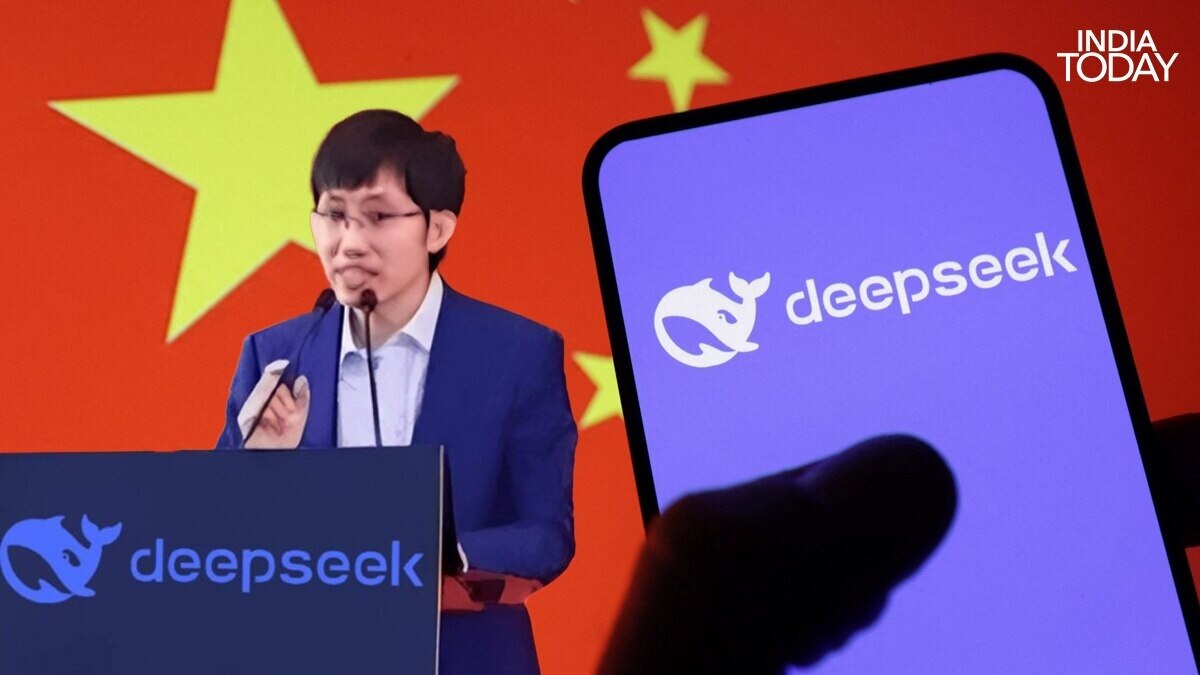
DeepSeek’s financial architecture remains distinct from its American counterparts. While OpenAI and Anthropic rely heavily on external venture capital, Liang utilized profits from his quantitative hedge fund, High-Flyer, to personally invest $3 billion into the latest round. Furthermore, this internal funding mechanism ensures that Liang maintains dominant shareholder control, whereas US founders often face diluted equity and complex governance structures.
- Strategic Independence: 78% ownership provides absolute decision-making power.
- Financial Baseline: High-Flyer profits acted as the primary catalyst for initial R&D.
- Operational Agility: Fewer outside investors allow for a continued open-source roadmap.
The R1 Model and Market Disruption
DeepSeek achieved global recognition in early 2025 with the release of the R1 model. This development served as a strategic catalyst, demonstrating that powerful AGI could be built with significantly lower development costs. Consequently, the release triggered a reassessment of US technology stock valuations, as investors began questioning the necessity of massive infrastructure spending compared to DeepSeek’s efficiency.

The Situation Room Analysis
The Translation (Clear Context)
In the technical ecosystem, DeepSeek represents a shift from “Capital-Heavy AI” to “Efficiency-First AI.” While traditional models require billions in cloud computing debt, Liang’s model uses high-frequency trading profits to fund precision engineering. He has effectively decoupled the growth of an AI model from the traditional VC-dependency cycle, maintaining a structural advantage in speed and governance.
The Socio-Economic Impact
For the Pakistani digital economy, this development is a critical signal. The richest AI founder is currently committed to open-source models, which lowers the barrier to entry for Pakistani developers and startups. By providing high-performance tools without the “walled garden” costs of US giants, DeepSeek enables local engineers to build sophisticated applications at a fraction of the previous cost, potentially accelerating Pakistan’s national AI adoption.
The Forward Path (Opinion)
This development represents a Momentum Shift. DeepSeek has proven that the AI race is no longer just about who has the most GPUs, but who has the most efficient architectural approach. Liang’s ability to maintain control while scaling to a $50 billion valuation suggests that the next phase of the AI revolution will be defined by founder-led precision rather than corporate committee oversight.








