

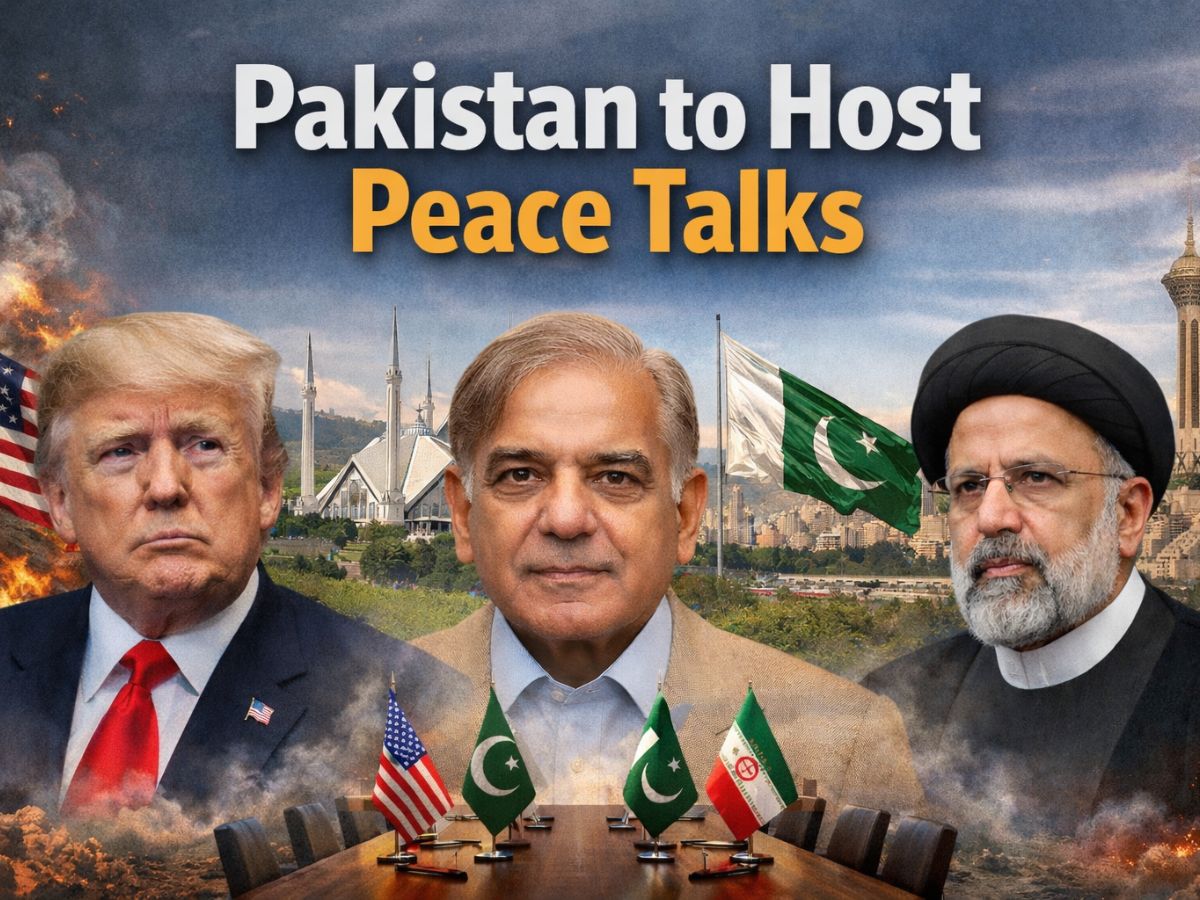
A strategic announcement from the White House confirms Islamabad will host critical Pakistan brokered peace talks between the United States and Iran on April 11. This high-level diplomatic engagement, led by Vice President JD Vance and a distinguished US delegation, follows a pivotal two-week ceasefire, a direct result of Pakistan’s calibrated involvement to de-escalate escalating regional tensions. Consequently, this summit aims to build upon the temporary truce, exploring pathways for tariff relief and the potential easing of sanctions, thereby signaling a structured approach to stabilizing volatile international relations.
The Translation: De-escalating Geopolitical Volatility
The core of this diplomatic initiative centers on translating high-stakes geopolitical maneuvers into concrete dialogue. Initially, tensions between Washington and Tehran intensified, pushing both nations towards a wider confrontation in the Strait of Hormuz. Prime Minister Shehbaz Sharif strategically intervened, advocating for an extension of diplomatic time and successfully securing a two-week ceasefire. This pause proved instrumental, establishing a baseline for direct negotiations. Furthermore, the US administration, under President Donald Trump, explicitly committed to working with Iran during this period, focusing on economic incentives like tariff relief and the potential reduction of sanctions. This systematic approach aims to dismantle immediate flashpoints, replacing confrontational posturing with a framework for structured engagement.

The Socio-Economic Impact: Calibrating Regional Prosperity
For the average Pakistani citizen, the success of these Pakistan brokered peace talks translates directly into enhanced regional stability and potential economic benefits. A reduction in US-Iran tensions inherently decreases volatility across the Middle East, a region critical for Pakistan’s trade routes and energy security. Professionals and businesses in urban centers could experience greater predictability in commodity prices and supply chains. Moreover, rural households, often vulnerable to inflationary pressures from global conflicts, could see a stabilization in essential goods costs. This strategic diplomatic calibration minimizes the risk of broader conflicts that often destabilize investment, disrupt trade, and burden national economies, ultimately fostering an environment conducive to sustained national development and economic growth.
The Forward Path: A Momentum Shift Towards Stability
This development undeniably represents a Momentum Shift. The precise, diplomatic efforts undertaken by Pakistan have demonstrably shifted the trajectory from potential confrontation to structured negotiation. While challenges persist, notably Israel’s continued actions in Lebanon and Iran’s concerns over truce violations, the establishment of direct dialogue in Islamabad is a foundational step. It signals an international recognition of Pakistan’s calibrated influence in regional conflict resolution. Consequently, this provides a vital mechanism for de-escalation, paving the way for a more predictable and stable geopolitical landscape. Sustained engagement through these talks is now critical to institutionalizing this nascent stability.









