
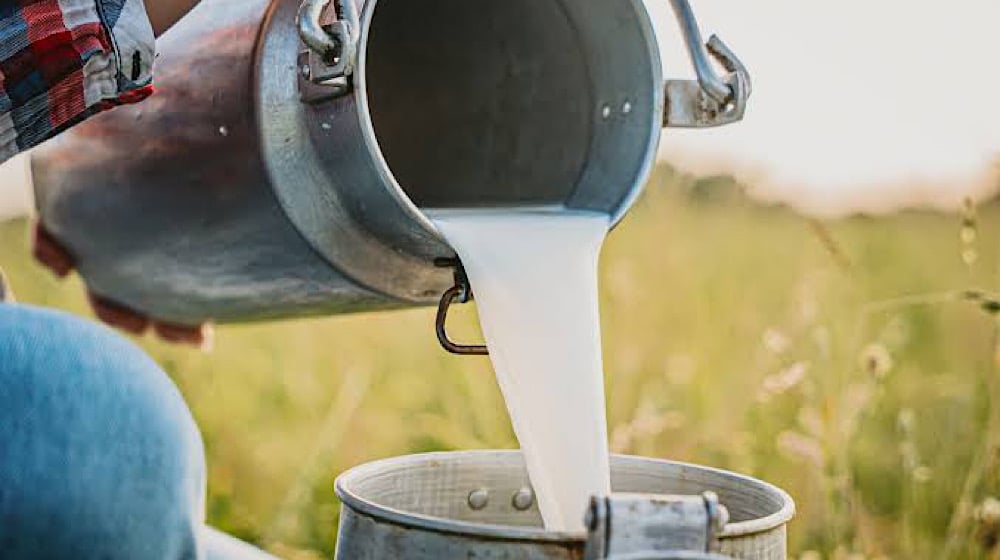
The Dairy and Cattle Farmers Association in Karachi has formally requested a strategic milk price increase of Rs. 100 per liter to counteract a structural surge in operational costs. This demand follows a 75% rise in the price of fodder and essential inputs, which has created a precision-level threat to the dairy sector’s baseline stability. Consequently, the association has petitioned the Commissioner Karachi to revise the official rates to prevent a systemic collapse of the local supply chain.
Structural Drivers of the Milk Price Increase
The dairy sector currently faces a severe financial crisis calibrated by skyrocketing utility and transport expenses. According to association spokesperson Shakir Gujjar, dairy businesses can no longer sustain operations under the existing price structure because electricity, petrol, and fodder costs have outpaced revenue growth. Furthermore, dairy farmers warn that a lack of working capital may soon disrupt the milk supply in Karachi. Mubashir Qadeer Abbasi highlighted that without immediate price adjustments, the infrastructure supporting urban dairy distribution could fail.
The Translation: Breaking Down the Logic
In technical terms, the dairy industry is grappling with “Cost-Push Inflation,” where the rising expense of inputs—specifically a 75% hike in fodder—forces a revision of the final product’s baseline price. The farmers are not merely seeking higher profits; rather, they are attempting to reach a new break-even point. When electricity and fuel costs rise, the entire cold chain and logistics network become more expensive to maintain. Therefore, the requested milk price increase represents a strategic attempt to recalibrate the industry against these macro-economic pressures.
The Socio-Economic Impact
The immediate impact of this adjustment will be felt most acutely by urban households in Karachi, where milk is a dietary staple. For the average citizen, a Rs. 100 increase per liter represents a significant expansion of the monthly grocery budget. In contrast, the dairy farmers argue that an unsustainable price ceiling will eventually lead to shortages, which would be even more detrimental to the public. Consequently, the city administration must balance the immediate financial burden on consumers against the long-term necessity of a functional dairy supply chain.
The “Forward Path” (Opinion)
This development represents a Stabilization Move rather than a growth-oriented momentum shift. The dairy sector is currently in a defensive posture, reacting to external inflationary shocks to ensure basic survival. To achieve a true momentum shift, Pakistan must invest in modernized fodder production and energy-efficient dairy cooling technologies. For now, the administration’s decision will determine whether the sector stabilizes or faces a forced contraction due to capital exhaustion.








